AI image prompt libraries simplify creating visuals with tools like Midjourney by providing pre-made, optimized commands. They save businesses time and ensure consistent, high-quality results. Two popular options are God of Prompt‘s Midjourney Bundle and PromptHero:
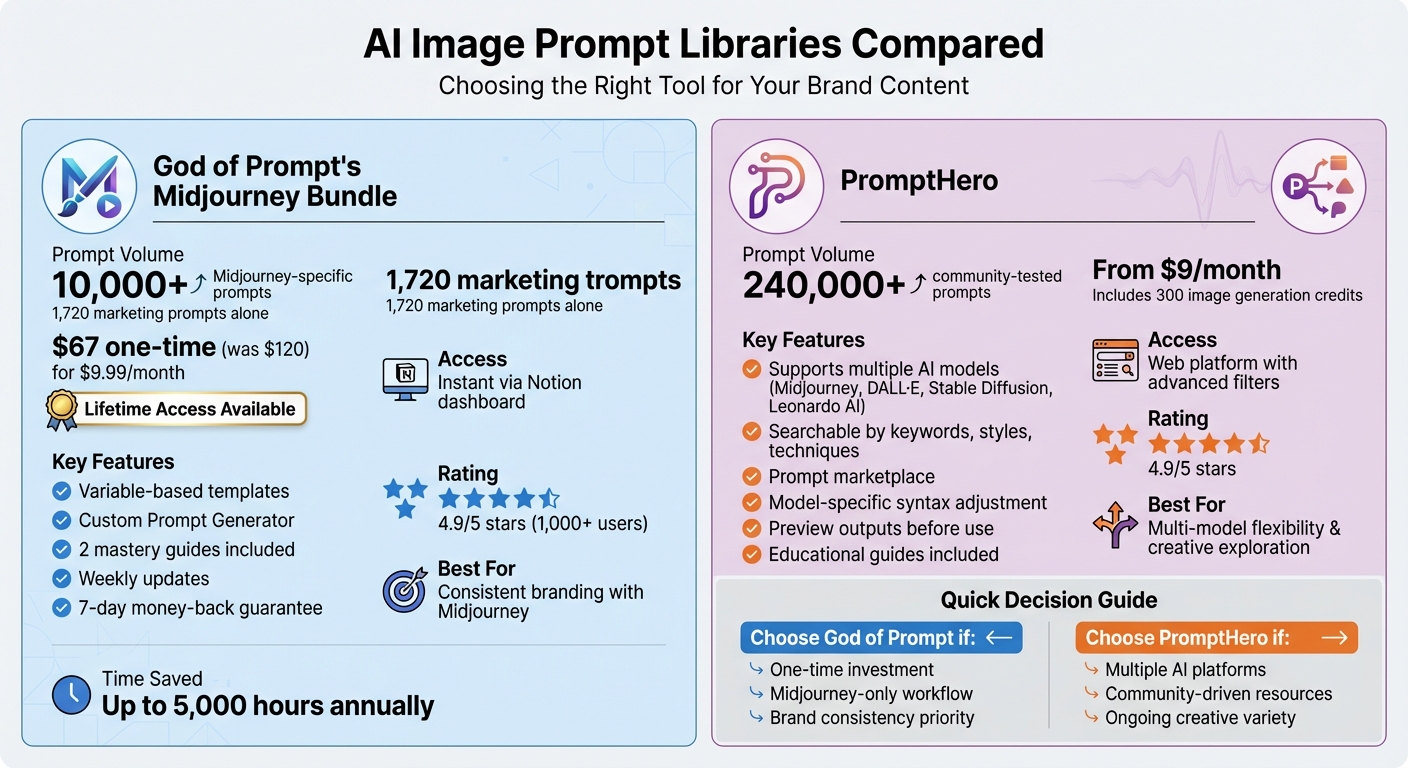
- God of Prompt’s Midjourney Bundle: Offers over 10,000 Midjourney-specific prompts for $67 (lifetime access). Includes templates for marketing, photography, and more, with tools for customization.
- PromptHero: A broader library supporting multiple AI models like Midjourney and DALL·E. Membership starts at $9/month, with access to 240,000+ community-tested prompts.
Quick Overview:
- God of Prompt is ideal for businesses needing consistent branding with Midjourney.
- PromptHero suits teams exploring various AI models and artistic styles.
Both tools streamline content creation but cater to different needs based on workflow and goals.
God of Prompt vs PromptHero: AI Image Prompt Library Comparison
1. God of Prompt‘s Midjourney Bundle
Prompt Volume
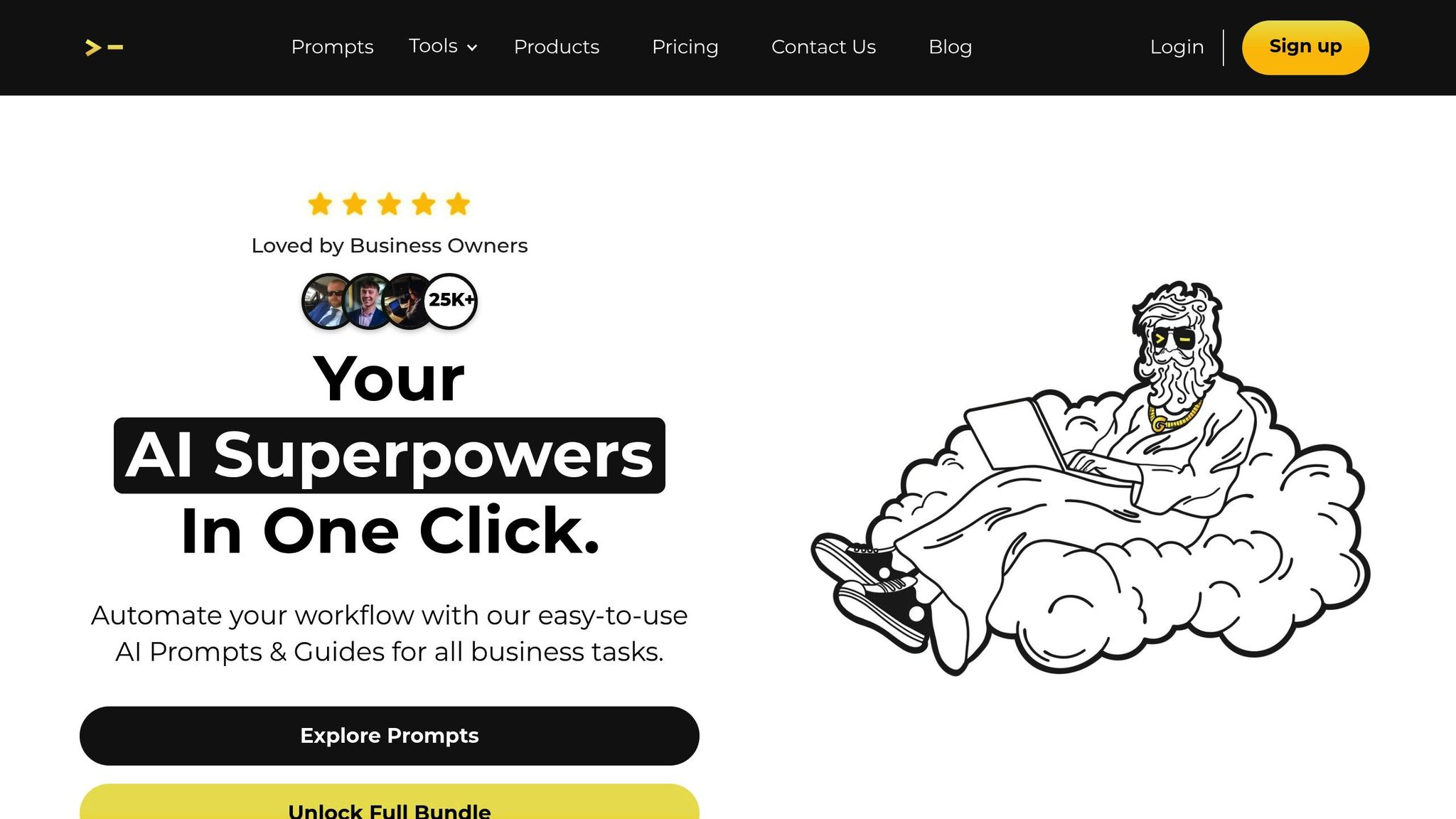
Unlock a treasure trove of over 10,000 ready-to-use Midjourney prompts, neatly organized into categories like Marketing, Photography, Web Design, Art, and Architecture. Just in Marketing alone, there are 1,720 prompts available. This expansive library empowers businesses to create a wide range of visual content, from eye-catching social media graphics to stunning architectural designs.
Customization Tools
Each prompt is designed as a variable-based template, allowing you to easily tailor them with your brand’s details while keeping the proven structure intact. The bundle also features a Custom Prompt Generator that transforms plain-language inputs into detailed Midjourney commands. To help you get the most out of these tools, two mastery guides are included, offering tips and tricks for refining your prompts. Together, these features make the bundle both powerful and flexible.
Pricing Model
The bundle is available for a one-time payment of $67.00 USD (down from $120.00 USD) or a monthly subscription of $9.99 USD. Both options come with weekly updates and a 7-day money-back guarantee. This pricing structure ensures you’re getting great value, whether you opt for lifetime access or a monthly plan.
Access Format
Accessing the bundle is simple and instant through Notion. The dashboard is user-friendly, searchable, and organized by category, making it easy to find and copy prompts. There’s no need to download or install anything – just log into the Notion platform and start creating visual content right away.
2. PromptHero
Prompt Volume
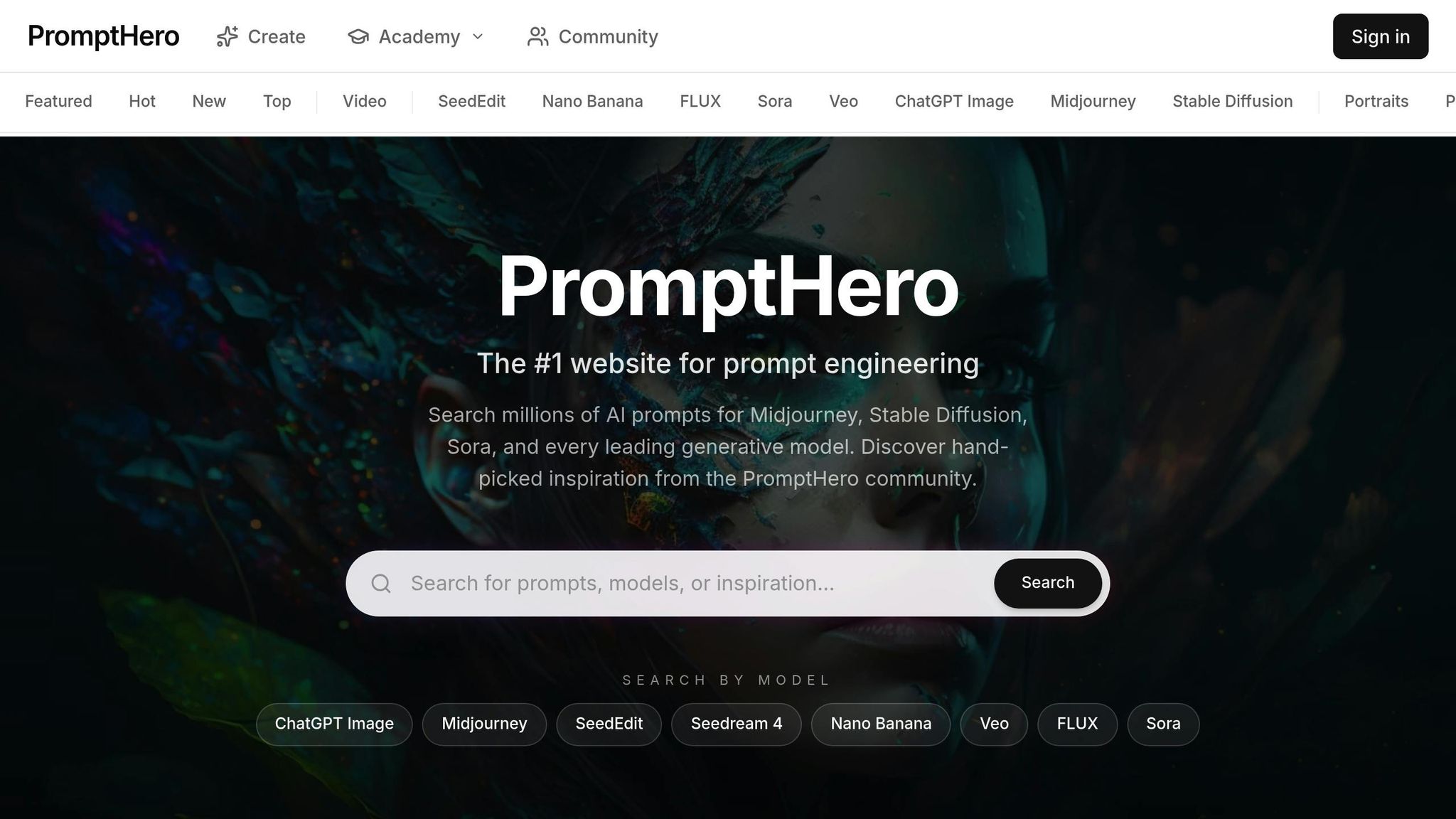
PromptHero functions as a search engine and a vast database for AI image prompts, supporting models like Midjourney, DALL·E, Stable Diffusion, and Leonardo AI. While it doesn’t specify a fixed number of prompts, it offers curated collections neatly categorized into areas such as fashion, portraits, landscapes, architecture, and product photography. Users can search by keywords, artist styles, or camera techniques, making it easier to find prompts that align with a specific visual identity. On top of that, PromptHero includes a marketplace where professional prompt engineers can display or sell their high-performing, original prompts.
Customization Tools
The platform adjusts prompt syntax to fit the requirements of different models, whether you’re working with Midjourney v5 or Stable Diffusion 1.5. Users can preview sample outputs before committing to a prompt, ensuring better alignment with their creative goals. To enhance usability, PromptHero also provides educational materials and guides that explain prompt structure, modifiers, and formatting, giving users more control over their results.
Pricing Model
PromptHero offers memberships starting at $9.00 per month, which includes credits for generating up to 300 images. This pricing structure is ideal for businesses needing consistent image generation without a hefty upfront cost. Additional features, such as professional tools or marketplace access, are available for those with more advanced needs.
Access Format
PromptHero is accessible through its web platform. The search tools allow users to filter prompts by AI model, subject, artist style, or camera technique. Members can also showcase their expertise by setting a featured image on their profile. The platform emphasizes well-structured prompts and model-specific customization, helping users maintain a consistent and professional visual narrative.
Next, we compare the advantages and drawbacks of these prompt libraries.
Top Midjourney PROMPTS RESOURCES to level up your AI Art! (Most FREE!)
sbb-itb-58f115e
Advantages and Drawbacks
Both prompt libraries offer unique benefits and challenges. Knowing the trade-offs can help businesses select the right tool to meet their content creation goals.
| Feature | God of Prompt’s Midjourney Bundle | PromptHero |
|---|---|---|
| Key Advantages | • Ready-to-use templates save time, potentially cutting up to 5,000 hours annually that users might otherwise spend on trial and error. • A one-time payment of $67.00 grants lifetime access to over 10,000 prompts with ongoing updates. • Customizable templates ensure consistent branding across logos, color schemes, and visual elements. • Highly rated (4.9/5) by over 1,000 users, particularly for its architecture and product photography templates. |
• Extensive library with over 240,000 community-tested prompts, covering various AI models like Midjourney, Gemini, and ChatGPT. |
| Main Limitations | • Focused exclusively on Midjourney, limiting use with other platforms. • Small changes in phrasing can significantly impact results, requiring detailed customization. • AI-generated visuals often need human review and editing. • Text rendering issues may require additional editing tools for clarity. |
• Trial-and-error is still necessary to achieve brand-specific results. • Without a refined prompt strategy, there’s a risk of inconsistent branding. • Using public platforms may pose privacy risks for sensitive business data. |
| Best For | Businesses focused on long-term brand consistency and efficiency using a dedicated Midjourney workflow. Ideal for teams needing assets for product photography, corporate visuals, and social media. | Companies looking for flexibility across multiple AI models and a resource-rich, community-driven platform. |
Experts agree that the choice between a structured, brand-focused template system and a flexible, community-driven library depends on the specific needs of your workflow. These comparisons are backed by industry professionals who highlight the strengths and limitations of both approaches.
Alex, the Founder of God of Prompt, explains the precision required for Midjourney prompts:
"Midjourney operates on precise code logic – the more complex the task, the more advanced the prompt required".
This insight aligns with the growing trend of marketers using AI for image creation, with over 50% already leveraging these tools. Frank Chen, Founding Member at Typeface, emphasizes the importance of refining prompts:
"With any AI tools, the key is to iteratively get to the result you want. Modify the prompt, generate it multiple times, and iterate until you get a set of images that you can then filter down to the ones you like".
Ultimately, success comes down to selecting the tool that best matches your brand’s goals and creative process.
Conclusion
Deciding between God of Prompt’s Midjourney Bundle and PromptHero ultimately comes down to your business needs and content creation priorities. If your focus is on producing consistent, scalable brand content, God of Prompt’s bundle could be the better fit. For a one-time fee of $67.00, it grants lifetime access to over 10,000 curated prompts, neatly organized into professional categories like marketing, product photography, and web design.
On the other hand, PromptHero shines for those who value flexibility and creative exploration. Its community-driven library boasts over 240,000 prompts, offering variety across multiple AI models. This makes it ideal for teams looking to experiment with unique artistic styles or tackle one-off creative projects.
For businesses with high-volume production needs under strict brand guidelines, God of Prompt provides customizable templates to maintain visual consistency. Meanwhile, PromptHero is a better match for teams prioritizing artistic freedom and variety, thanks to its expansive collection of prompts. While God of Prompt offers a cost-effective lifetime access model, PromptHero operates on a subscription basis, catering to those who prefer ongoing flexibility.
Both tools have earned stellar 4.9/5 ratings, reflecting their effectiveness in meeting different content creation goals. Whether you need structured templates for long-term campaigns or a diverse library for creative experimentation, the right choice depends on what aligns best with your workflow and objectives.
FAQs
How does the God of Prompt MidJourney Bundle differ from PromptHero?
The God of Prompt MidJourney Bundle is a thoughtfully assembled set of customizable prompt templates aimed at helping marketers create top-notch MidJourney images effortlessly. This bundle is specifically designed to produce visually appealing, brand-oriented content. Plus, it comes with a 7-day money-back guarantee, giving users peace of mind while trying it out.
While testimonials from both beginners and experienced users praise its ease of use and effectiveness, there’s no information provided about PromptHero’s features, pricing, or offerings to allow for a direct comparison.
How do customization tools make AI image prompts more effective for branding?
Customization tools take generic AI image prompts and transform them into visuals that truly reflect a brand’s identity. By tweaking elements like tone, color palette, visual style, and audience focus, these tools help marketers create images that align with brand guidelines – without needing to completely rewrite the original prompt.
Platforms like God of Prompt make this process even easier with customizable templates. These templates allow users to quickly adjust prompts to meet their brand’s visual standards. The result? Faster content creation and consistent visuals across campaigns. Plus, the option to save and reuse tailored prompts turns a single effort into a reusable resource, supporting long-term brand storytelling and marketing strategies.
Ultimately, these tools allow brands to scale their visual content production while keeping their look polished and aligned with their audience’s expectations.
What should businesses consider when choosing between lifetime access and a subscription plan for AI image prompts?
When choosing between lifetime access and a subscription plan for AI image prompts, it’s important to weigh your budget, content requirements, and future goals.
Opting for lifetime access means a single, upfront payment, which can simplify budgeting. This option works best for businesses with consistent visual needs, as it provides predictable costs. However, one drawback is the potential lack of ongoing updates, which might limit your ability to adapt over time.
A subscription plan, in contrast, spreads the expense across monthly or yearly payments, making it a more manageable option for businesses with tighter cash flow. Subscriptions often come with regular updates, customer support, and scalability – ideal for companies that need to keep pace with trends or adjust quickly to new campaigns.
To decide, think about your budget flexibility, the importance of staying updated, and your willingness to adapt. Lifetime access suits businesses with steady, long-term needs, while subscriptions are a better fit for those with dynamic and evolving marketing strategies.