
Best Multi-Model Prompt Libraries Supporting All Major AI Tools




If you're looking to maximize the potential of AI tools like ChatGPT, Claude, Gemini, or MidJourney, multi-model prompt libraries are a game-changer. These libraries offer pre-tested, ready-to-use prompts tailored to different platforms, saving time and ensuring consistent results. Whether you're a marketer, content creator, or entrepreneur, these tools simplify workflows by providing templates for tasks like writing, visual creation, or data analysis.
Key Highlights:
- God of Prompt: Features 30,000+ prompts compatible with ChatGPT, Claude, MidJourney, and more. Offers flexible pricing tiers, lifetime updates, and Notion integration.
- LangChain: Developer-focused with robust API integrations for managing prompts across multiple AI models.
- OpenPrompt: Open-source and user-friendly, with standardized templates and integrations like Slack and Google Workspace.
- PromptPerfect: Automatically refines prompts in real-time for better results across platforms.
- HIX AI: Aimed at content creation but lacks detailed public information on features and pricing.
Quick Comparison:
| Platform | Best For | Features | Pricing |
|---|---|---|---|
| God of Prompt | Businesses, marketers | 30,000+ prompts, Notion integration, updates | Free to $150 (Complete AI Bundle) |
| LangChain | Developers | API integrations, custom workflows | Custom pricing |
| OpenPrompt | Teams, businesses | Open-source, Slack/Workspace integration | Free to $99/month |
| PromptPerfect | Writers, developers | Real-time prompt refinement | Free + paid plans |
| HIX AI | Content creators | Limited public details | Undisclosed |
These libraries help streamline AI usage, reduce the time spent on prompt creation, and improve results across major platforms. Whether you're a beginner or an advanced user, there's a solution tailored to your needs.
Top 7 Prompt Libraries for Unlimited Prompts
1. God of Prompt
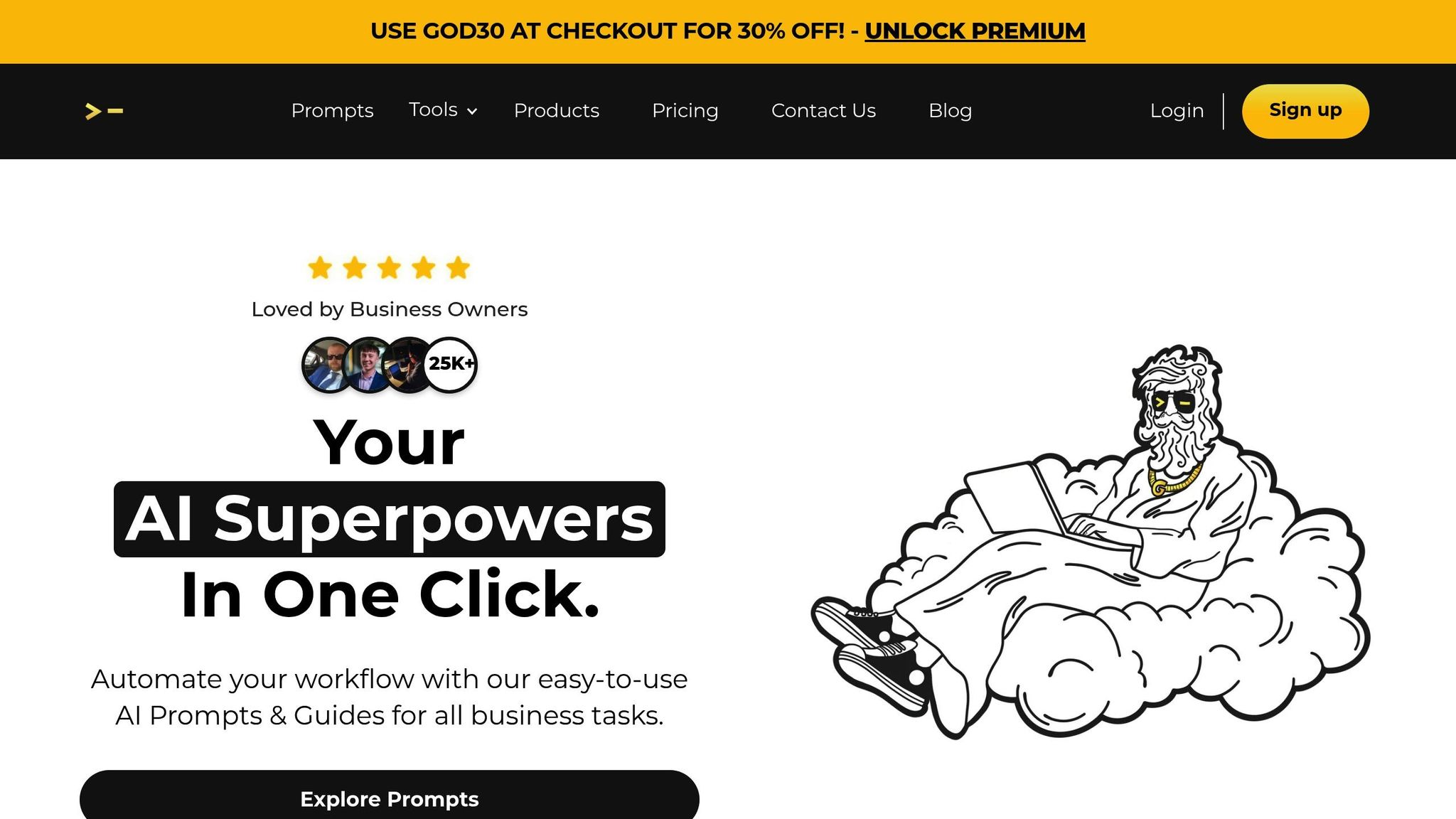
God of Prompt is a platform that boasts a massive library of 30,000+ AI prompts, designed to help businesses tap into the power of AI tools without the hassle of building prompts from scratch.
AI Model Compatibility
The platform works seamlessly with leading AI models like ChatGPT, Claude, Midjourney, and Gemini AI, alongside others such as Grok, Veo, and Sora. This broad compatibility ensures that teams can maintain a unified approach to prompt usage across multiple AI tools.
Prompt Library and Tools
The prompt collection is thoughtfully categorized by business functions - such as operations, marketing, finance, e-commerce, and education - making it easy for teams to find exactly what they need. For those looking to push boundaries, the platform includes a custom GPTs toolkit and prompt engineering guides. These features allow advanced users to tweak existing prompts or craft entirely new ones tailored to their specific industry needs.
Integration and Collaboration
God of Prompt integrates smoothly with Notion, offering a user-friendly way to access its content. Multiple team members can collaborate by accessing the same prompt library, sharing customized versions, and keeping track of updates with version control. Plus, with lifetime updates, users can stay ahead as AI models improve and evolve.
Pricing Options
God of Prompt offers flexible pricing to suit businesses of all sizes:
- Free Tier: Includes over 1,000 ChatGPT prompts and 100 Midjourney prompts - perfect for trying out the platform.
- Writing Pack ($37.00): Focused on content creation.
- ChatGPT Bundle ($97.00): Packed with over 2,000 mega-prompts.
- Midjourney Bundle ($67.00): Features more than 10,000 visual prompts.
- Complete AI Bundle ($150.00): Full access to the entire library of 30,000+ prompts, plus unlimited custom generation.
Every paid plan comes with a 7-day money-back guarantee, making it a risk-free option for businesses eager to refine their AI prompt strategies. With its expansive library and multi-model support, God of Prompt sets a high standard for AI prompt solutions.
2. LangChain
LangChain offers a developer-centric solution through its LangSmith platform, designed to streamline the integration of various AI tools. This platform provides a centralized and dependable system, making it easier for developers to manage prompt workflows across multiple AI models efficiently.
3. OpenPrompt
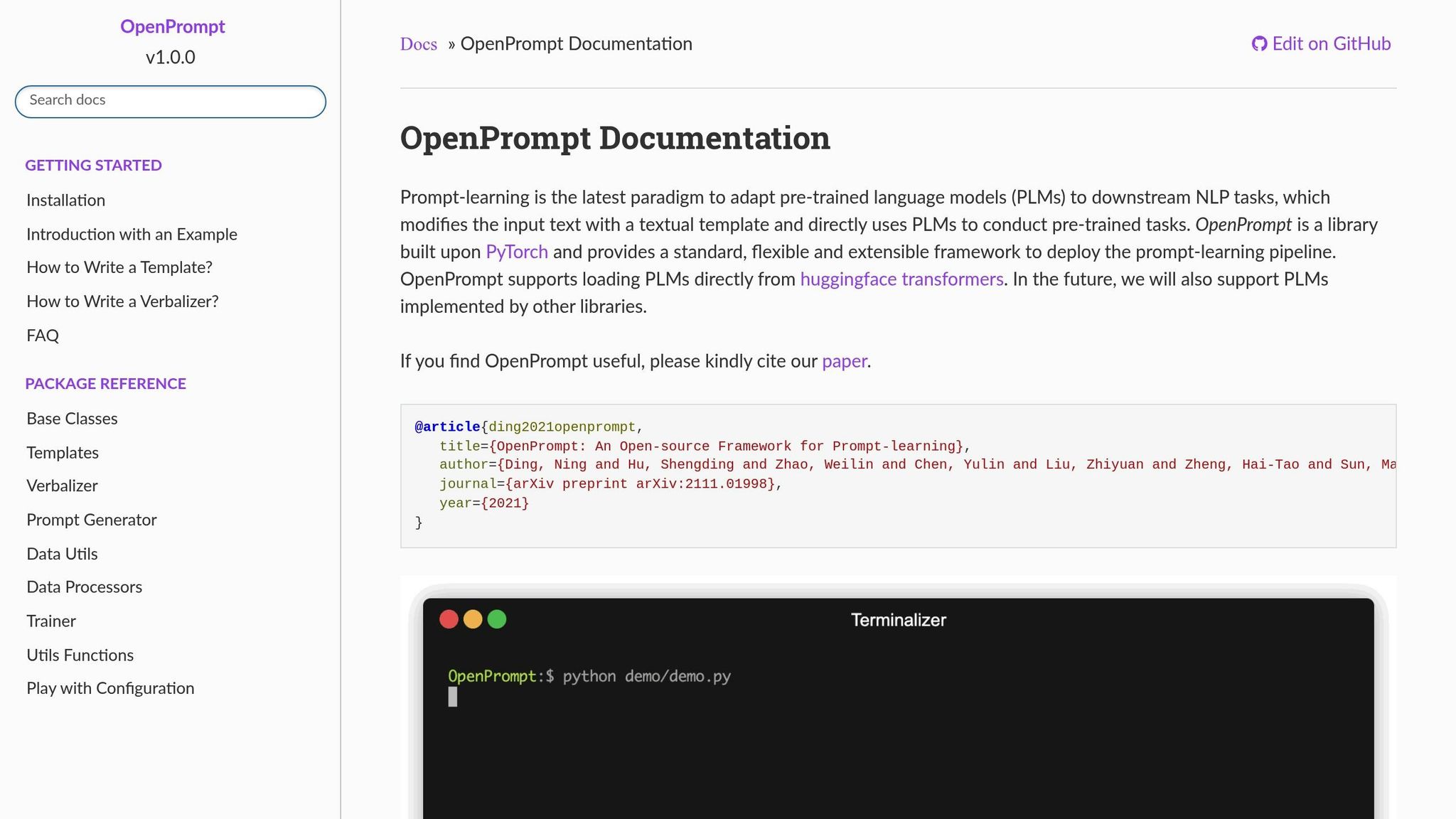
OpenPrompt takes a user-friendly approach to simplifying prompt management for various AI models, building on the developer-focused philosophy of LangChain. This open-source framework provides businesses with an adaptable platform to manage prompts across multiple AI tools, ensuring consistency and efficiency.
AI Model Compatibility and Features
OpenPrompt works seamlessly with major AI platforms like ChatGPT, Claude, Gemini, and MidJourney, offering a centralized interface for managing prompts. It stands out with its ability to standardize templates, making it easier to create reusable prompts that work effortlessly across different models. Thanks to its modular design, businesses can tailor prompt workflows to meet specific needs, whether for marketing initiatives or complex data analysis tasks.
Interface and Organization
The platform's web-based interface is designed with simplicity in mind. Prompts are neatly categorized by business use cases, complexity levels, and AI model compatibility, making it easy for users to find what they need. Features like search, filtering, and bookmarking add to its convenience, while a built-in version control system tracks changes and monitors performance. OpenPrompt also integrates smoothly with popular productivity tools, such as Slack, Microsoft Teams, and Google Workspace, allowing teams to access prompts directly within their daily workflows.
Pricing and Value Proposition
OpenPrompt offers a free community edition with basic features and limited storage for prompts. For more advanced capabilities, the Professional Plan ($29.00/month) includes features like advanced analytics, unlimited prompt storage, and priority customer support. Larger organizations can opt for the Enterprise Plan ($99.00/month), which includes custom integrations, dedicated support, and enhanced security.
What sets OpenPrompt apart is its ability to streamline workflows and help businesses get the most out of their AI tools. By standardizing prompt management across platforms, companies can save time on optimization efforts and achieve more reliable outcomes from their AI investments.
sbb-itb-58f115e
4. PromptPerfect
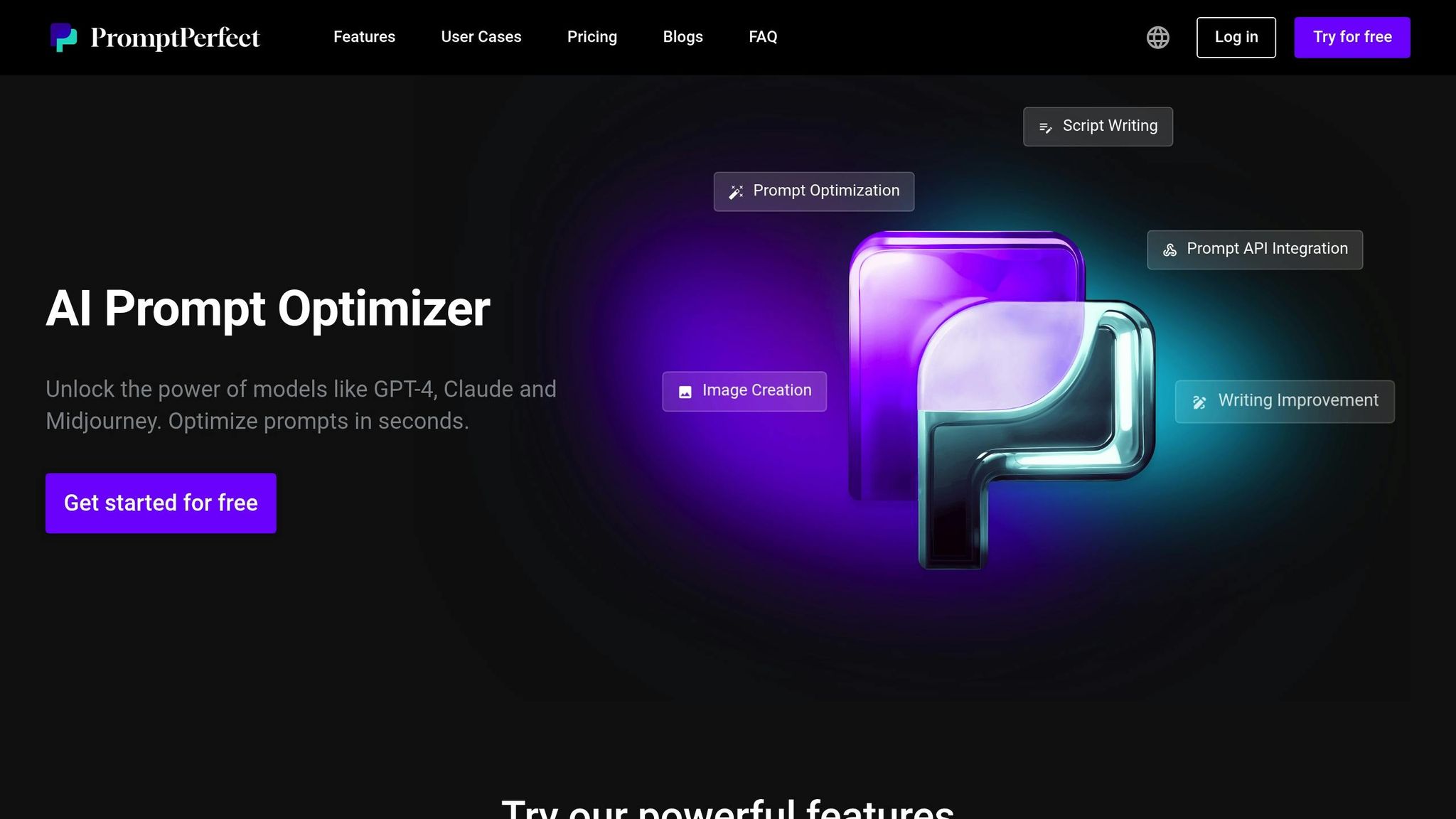
PromptPerfect is all about refining prompts in real time, helping users get better results across various AI platforms.
AI Model Compatibility
PromptPerfect works seamlessly with popular AI models like ChatGPT, Claude, Gemini, and MidJourney. It fine-tunes prompts automatically, enhancing clarity, precision, and effectiveness. This is especially useful for technical writers and developers juggling multiple platforms, as it eliminates the need for endless trial and error. This tool simplifies the process, making prompt refinement quick and efficient.
Prompt Collection Scope
Whether you're drafting a business email or planning a marketing campaign, PromptPerfect tailors prompts to fit a wide range of needs. You can start with a rough idea or a basic prompt, and the tool will refine it, offering suggestions that align with your goals and the unique strengths of the target AI model.
Integration Features
The platform’s automated system takes the guesswork out of prompt adjustments. It analyzes context, intent, and desired outcomes to enhance the quality of prompts across different models. This means you can save time and effort, especially when working across multiple platforms. Whether you're a casual user or an experienced prompt creator, PromptPerfect ensures a smoother workflow by bridging the gap between AI models.
Pricing and Accessibility
PromptPerfect offers a free plan with essential optimization features. For those who need more, paid plans unlock advanced functions and remove usage limits. Thanks to its automated improvements, even beginners can quickly see better results, making it a practical choice for users at all levels.
5. HIX AI
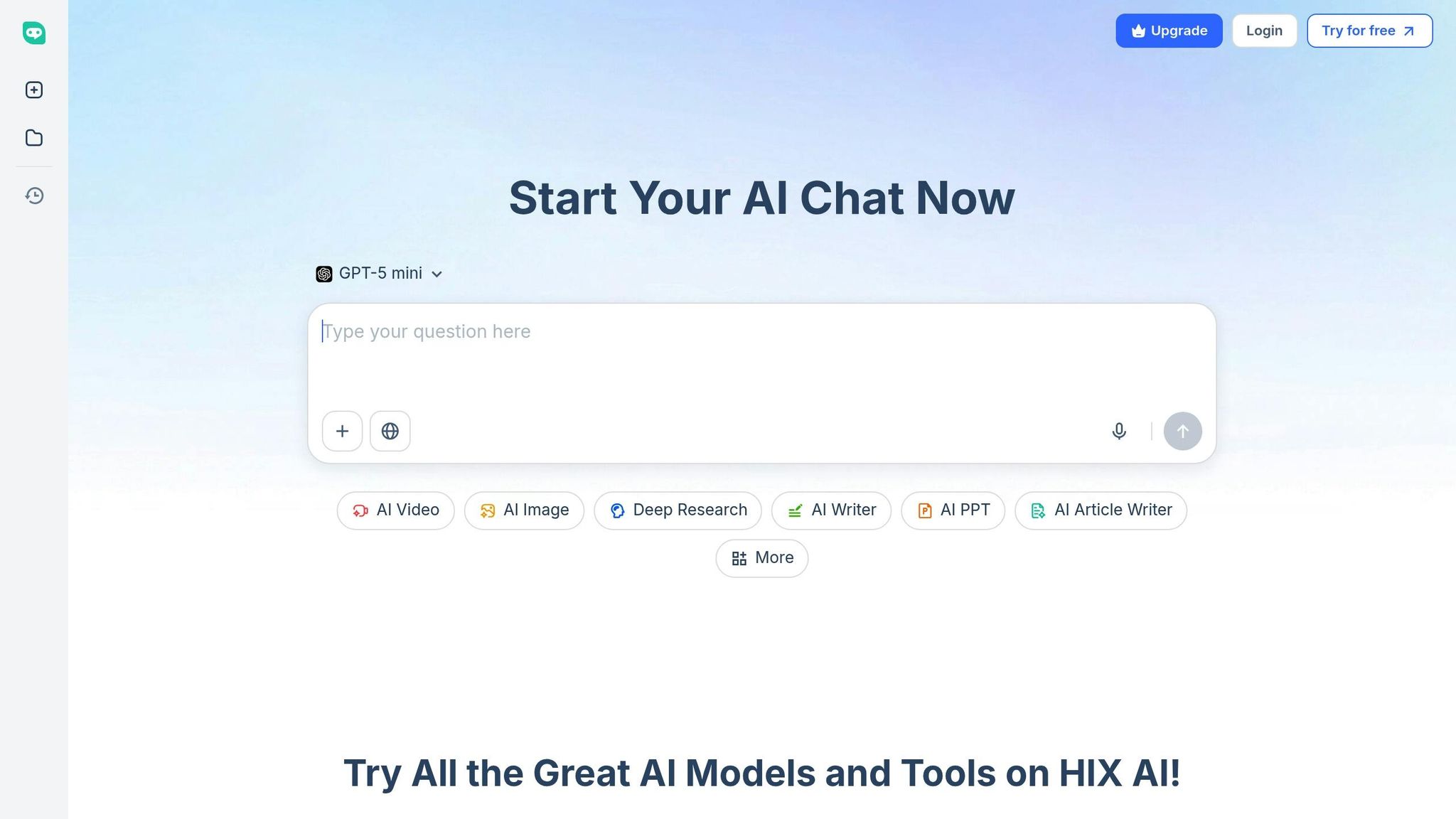
HIX AI serves as a writing assistant designed to streamline content creation through a library of prompts. However, publicly available details about its AI model compatibility, integration options, and pricing structure are limited. Positioned within the realm of multi-model prompt libraries, HIX AI focuses on supporting content workflows and offers an alternative to the more detailed platforms mentioned earlier.
AI Model Compatibility and Prompt Library
HIX AI is marketed as a tool with a variety of prompt templates tailored to different content needs. That said, specifics about the AI models it supports or the exact organization and breadth of its prompt library are not disclosed. This lack of clarity leaves potential users with limited insight into its full capabilities.
Integration and Accessibility
Information regarding HIX AI's integration features - such as browser extensions, API support, or other workflow tools - is also unavailable. Additionally, details about its pricing model have not been shared publicly. For those interested in exploring its potential, consulting official resources might provide more clarity. Despite these gaps, HIX AI presents a basic framework for writing assistance that could be worth considering for those looking to simplify their content creation process.
Advantages and Disadvantages
Choosing the right multi-model prompt library means carefully weighing the benefits and potential drawbacks of each platform. Take God of Prompt as an example - it boasts a vast library, consistent updates, and flexible pricing tiers. These features make it easier to integrate into workflows and offer solid value over time.
Beyond specific platforms, broader considerations often come into play. Think about factors like how easily the tool integrates with your existing systems, its user-friendliness, how steep the learning curve is, and whether it provides regular content updates. For instance, some platforms include handy API integrations or browser extensions that make using prompts a breeze. On the flip side, others might require more manual effort. If a tool is packed with developer-focused features, it could demand a higher level of technical know-how, while those tailored to business users tend to be more accessible. Additionally, the way content is presented - whether it aligns with your workflow or not - can make a big difference in usability.
Key evaluation points like integration options, user interface design, technical skill requirements, and the level of community support can significantly influence how efficiently a tool fits into your workflow and how well it’s adopted across your team. With these pros and cons in mind, the next section will dive into our final recommendations.
Final Recommendations
When selecting a prompt library, it’s essential to align your choice with your immediate needs and long-term goals. For those seeking broad compatibility across major AI platforms, God of Prompt offers a standout option with its extensive multi-model prompt collection. The Complete AI Bundle, priced at $150.00, is an excellent option for U.S.-based organizations looking to streamline AI-driven tasks across various departments. This package provides a solid foundation for businesses aiming to integrate AI into multiple workflows.
For marketing and agency teams, the Writing Pack from God of Prompt ($37.00) delivers tools specifically designed for content creation. Meanwhile, the Complete AI Bundle ($150.00) includes marketing, SEO, and sales prompts, offering a more all-encompassing solution for simplifying campaign planning and content production.
On the technical side, teams with advanced expertise may find LangChain to be a strong choice, thanks to its robust API integrations and support for custom workflows. For those who prefer a more user-friendly approach, God of Prompt's Notion-based access eliminates technical hurdles while providing lifetime updates for continued value.
Small businesses and solopreneurs will appreciate the flexibility of God of Prompt's tiered pricing and its 7-day money-back guarantee, making it accessible for businesses of all sizes. Entry-level options like the ChatGPT Bundle ($97.00) or the Midjourney Bundle ($67.00) allow smaller organizations to start small and scale up as their needs grow.
FAQs
What are the main advantages of using a multi-model prompt library like God of Prompt for businesses?
Using a multi-model prompt library such as God of Prompt can bring several advantages to businesses. For starters, it simplifies workflows by offering a collection of ready-made prompts that work seamlessly with popular AI tools like ChatGPT, Claude, Gemini, and MidJourney. This eliminates the need to spend time crafting prompts from scratch, allowing teams to focus on more critical tasks.
It also enhances productivity by enabling smooth integration across different AI platforms. Whether it's for marketing campaigns, content creation, or data analysis, this library makes it easier to produce high-quality results. Its adaptability allows businesses to accomplish more with less effort, driving both efficiency and outcomes.
How does God of Prompt work seamlessly with popular AI models like ChatGPT and MidJourney?
God of Prompt is built to work seamlessly with some of the top AI models out there, including ChatGPT, Claude, Gemini, and MidJourney. With its extensive library of multi-model prompts, it makes integrating and fine-tuning workflows across these platforms a straightforward process.
This flexibility means users - whether individuals or businesses - can save time, boost productivity, and take full advantage of their chosen AI tools without getting bogged down by technical hurdles.
What should I consider when selecting the best pricing tier for God of Prompt?
When deciding on a pricing tier for God of Prompt, it's important to evaluate what fits your needs best. Consider factors like how many prompts you'll need and which features are most important for your projects. Also, think about how often you'll use the platform and whether advanced tools or integrations are crucial for your workflow.
If you're not entirely sure which tier is right, it’s a good idea to start with a basic option. This lets you explore the platform's features without a big commitment, and you can always upgrade later as your requirements expand.
Related Blog Posts

Loved by Business Owners


Based on 1K reviews
Get smarter on AI every week.
Ready to transform your business?