
Top Image Generation Prompt Collections for Professionals


AI image generation tools like Midjourney, DALL-E, and Stable Diffusion have reshaped visual content creation, producing over 15 billion images since 2022. But the challenge isn’t access to these tools - it’s crafting effective prompts. Detailed prompts lead to precise, high-quality visuals, while vague ones often fall short.
Curated prompt collections simplify this process, offering pre-tested, reliable templates that save time and ensure consistency. These collections are essential for professionals in marketing, design, branding, and more, helping them generate everything from product mockups to social media visuals and architectural renderings.
Key highlights from the article:
- Midjourney Prompt Bundles: Pre-validated prompts for cinematic visuals, saving hours of trial and error. Example: God of Prompt’s bundle with 10,000+ prompts for $67.
- Marketing & Branding Prompts: Align visuals with brand identity using specific details like color schemes and emotional tones. Consistency can boost revenue by 20%.
- Design & Visualization Prompts: Ideal for architectural renders and product prototypes. Detailed instructions on materials, lighting, and style improve outcomes.
- Professional Portrait Prompts: Tailored for corporate headshots or artistic portraits, focusing on attire, settings, and lighting.
- Industry-Specific Prompts: Fashion, architecture, and entertainment professionals can use detailed templates for polished visuals.
Curated AI prompt collections enhance efficiency, reduce revisions, and improve visual quality, making them a game-changer for professionals.

AI Prompt Collections Impact on Business Productivity and Brand Consistency
How to Write Great Prompts for AI Image Generators
1. Midjourney Prompt Bundles
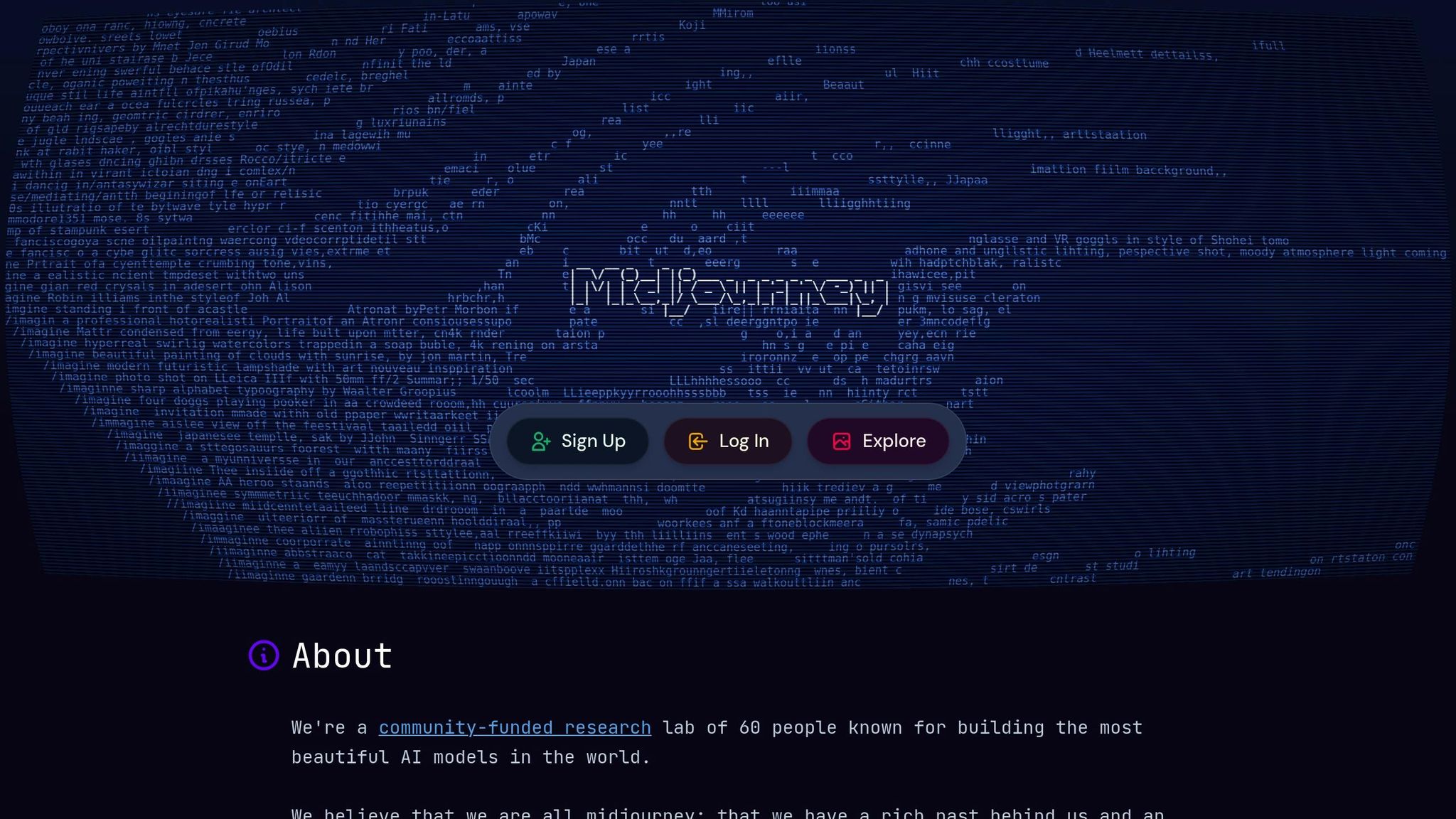
Midjourney prompt bundles are a game-changer for anyone looking to streamline their creative process. They take the guesswork out of crafting the perfect prompt by providing pre-validated options that balance speed and quality. Instead of spending hours tweaking word combinations and settings, these bundles act as a shortcut, helping you skip the trial-and-error phase and dive straight into creating. It's all about saving time without sacrificing the final result.
With over half of marketers now using AI for image creation, these bundles make rapid iteration more manageable. Frank Chen, Founding Member at Typeface, highlights the importance of refining prompts to narrow down to the ideal image, and these bundles give you a solid head start. They let you focus on perfecting your visuals rather than starting from scratch, making the creative process much smoother.
The best bundles include detailed prompts covering aspects like subject, environment, composition, style, lighting, and camera settings. This level of detail ensures the visuals align with your brand's identity, which is essential for maintaining consistency across your projects.
Take, for example, the God of Prompt's Midjourney Bundle. For $67.00, you get access to over 10,000 prompts, guides, and lifetime updates - far more affordable than purchasing individual prompts at $2.99 to $5.99 each. With this bundle, you can create cinematic visuals instantly, bypassing the need for traditional production workflows. Not only does it cut costs, but it also ensures your visuals maintain a professional and consistent quality, setting a high standard for your projects.
2. Marketing and Branding Prompts
Marketing and branding prompts take Midjourney bundles to the next level, offering a way to refine your creative process even further. These prompts help professionals craft visuals that align perfectly with their brand identity while speeding up content production. By incorporating elements like brand keywords, color schemes, lighting styles, and emotional tones that match your messaging, they ensure consistency and impact. The key is specificity - clear and detailed prompts guide the AI to deliver results that align with your brand's vision.
A strong marketing prompt includes details about the image type, subject, background, and style. For example, instead of requesting "a product photo", you could specify, "a photorealistic image of a skincare bottle on a marble countertop with warm lighting and earthy tones." This level of detail ensures the output aligns with your brand's visual language right from the start. Such precision not only creates visuals that resonate but also reinforces the consistency of your brand's identity.
Consistency matters. A 2023 study revealed that maintaining consistent branding can boost revenue by up to 20%, while visual consistency enhances brand recognition by as much as 80%. Additionally, a Nielsen report from the same year highlighted that brand recall, accounting for 38.7%, was the most significant driver of brand lift - outperforming even baseline brand awareness.
Social Media and Ad Campaign Visuals
When it comes to social media and ad campaigns, having a prompt library tailored to your brand makes creating engaging visuals much easier. This involves crafting reusable prompts that incorporate your brand’s unique color palette, photography style, and personality. For example, if your brand is known for being "energetic" and "modern", these descriptors, paired with specifics about composition and lighting, should be part of your prompts.
With this approach, you can generate multiple versions of campaign visuals in just minutes instead of days. This not only saves time but also allows for more creative experimentation and strategic planning. For those looking to streamline the process even further, tools like God of Prompt's Complete AI Bundle offer a collection of over 30,000 prompts, including dedicated marketing and business categories. Priced at $150.00, this bundle provides ready-made templates that can be customized to suit your brand guidelines, ensuring professional-quality visuals across all platforms.
3. Design and Visualization Prompts
Design and visualization prompts are essential for creating high-quality architectural renderings and product prototypes. The way you structure your prompts can dramatically influence the results. As noted by MIT Sloan Teaching & Learning Technologies, "The granularity of your input is directly proportional to the utility of the output you receive". In simpler terms, the more detailed and specific your instructions about elements like materials, lighting, perspective, and composition, the better the output will align with your vision.
For architectural visualizations, specificity is key. Include details such as lighting directions, viewing angles, material specifications, and color palettes. For instance, instead of a vague request like "a modern building", aim for something like: "a photorealistic 3D render of a glass-and-steel office building at sunset, viewed from street level with golden-hour lighting." Adding keywords like "high quality", "detailed", or "sharp" can elevate the professional quality of the render. These principles also apply seamlessly to product prototype creation.
In a creative workflow, structured prompts can simplify product visualization. Conversational, descriptive language often works better than overly technical jargon. A proven four-layer structure includes: Subject (what you're designing), Context (the setting or environment), Style (photorealistic, minimalist, etc.), and Technical Details (camera angle, resolution). This approach integrates smoothly into professional workflows and typically requires 3–5 iterations to achieve optimal results.
Product and Prototype Visualization
When creating visuals for presentations, catalogs, or pitches, having a library of well-tested prompts can save time and improve outcomes. Focus on describing elements like texture, materials, background details, and lighting setup. For example, a prompt such as "a high-fidelity 3D render of a matte black wireless earbud on a white marble surface with soft diffused lighting from the top-left" provides enough detail to produce a polished, professional image.
For those looking to streamline their process, the God of Prompt's Complete AI Bundle offers over 30,000 ready-to-use prompts across various categories, including design and visualization. Priced at $150.00, this bundle is a valuable resource for customizing prompts to suit projects ranging from architectural concepts to product mockups or interior design presentations. It supports platforms like ChatGPT, Midjourney, and others, offering flexibility and ease across different tools.
sbb-itb-58f115e
4. Professional Portrait Prompts
When it comes to crafting prompts for professional portraits, a layered approach works best. Start with a clear subject, such as "a woman" or "a middle-aged man", and then build on that foundation with details about actions, context, and style. Since AI tools tend to give priority to the first few words, always begin with the image type and subject before adding supporting elements.
For corporate headshots, focus on projecting professionalism. Specify details like attire (e.g., "a navy blue suit"), office environments, and lighting preferences - whether it's natural light or a studio setup - to create a polished and realistic look. On the other hand, for creative portraits, you can explore artistic themes such as cinematic, fantasy, or historical styles, along with dramatic lighting and dynamic compositions to bring a unique flair to the image.
Corporate and Creative Portrait Applications
Lighting and color play a crucial role in setting the tone and realism of a portrait. Be specific with instructions like "soft diffused light from the top-left" or "golden hour lighting with warm tones" to guide the AI effectively. Clear spatial descriptions, such as "a woman gazing out a window at a sunset over the ocean", help define composition and framing. However, avoid combining conflicting styles like "photorealistic" and "cartoon", as this can lead to inconsistent results. Precision in your prompts ensures they fit seamlessly into professional workflows.
For those looking to streamline their process, The God of Prompt's Complete AI Bundle offers an extensive collection of 30,000 prompts, including templates tailored for professional portrait generation. Priced at $150.00, this bundle caters to a range of needs, from corporate branding portraits to editorial fashion shoots. Compatible with platforms like Midjourney and Stable Diffusion, it covers everything from LinkedIn headshots to creative art projects, and it includes lifetime updates to stay aligned with evolving AI tools.
5. Creative and Industry-Specific Prompts
Tailored Prompts for Fashion, Architecture, and Entertainment
Crafting industry-specific prompts is like giving a blueprint to generate professional-quality visuals. In fields such as fashion, architecture, and entertainment, success often hinges on layering precise details - think subject, environment, style, and even camera settings. For instance, a fashion-related prompt might look like this:
"a model in a flowing silk gown, dramatic side lighting, shot with a 50mm lens at f/1.4, cinematic color grading."
On the other hand, an architectural visualization could include:
"modern glass facade, golden hour lighting, wide-angle 24mm perspective, high dynamic range."
By incorporating these specific elements, you can guide the AI to produce visuals that feel purposeful and polished. Fine-tuning details like lighting and mood adds another layer of sophistication. For example, neon lighting works well for urban scenes, golden hour lighting enhances lifestyle imagery, and dramatic side lighting is perfect for editorial shoots. Adding mood descriptors such as "gritty", "ethereal", or "high-octane" can further refine the output to match your creative vision. Referencing well-known photographers, art styles, or film genres also helps the AI grasp the desired aesthetic.
Tailored prompts go beyond just creative styling - they can also simplify workflows in specific industries. Branding teams, for example, use these prompts to generate logo concepts, merchandise mockups, custom illustrations, and mood boards. This approach not only ensures consistent visuals but also cuts down on post-production time and effort.
Conclusion
Curated AI prompt collections play a key role in simplifying visual content creation. By sharing prompt libraries, teams can boost productivity by 40%, saving each employee around 47 minutes every day.
But it’s not just about saving time - these collections elevate content quality in a big way. Companies using standardized prompt libraries report an 89% improvement in brand consistency and cut content revisions by 34%.
Adoption among teams also gets a major boost. For instance, new hires become proficient with AI tools 75% faster, translating into savings of approximately $4,200 per hire in training costs. Marketing teams, in particular, see impressive results: campaigns are developed 67% faster, and content quality scores improve by 43%.
These advantages highlight the practical benefits of refined prompt collections. They transform AI-driven image generation into a dependable and efficient process, delivering professional-grade visuals every time. Leveraging these curated collections is a smart investment, offering tools that have already proven their worth in countless professional settings. With them, professionals can consistently create visually stunning, brand-aligned content.
FAQs
How do curated prompt collections help maintain a consistent brand identity?
Curated prompt collections are a game-changer for maintaining a consistent brand identity. They provide pre-designed, standardized prompts that reflect your brand’s specific style, color palette, and tone. This ensures every AI-generated image stays in line with your branding guidelines, delivering a unified and polished look across all your platforms.
By simplifying the creative process, these collections not only save time but also minimize the chances of inconsistencies. The result? High-quality visuals that connect with your audience and strengthen your brand’s message effortlessly.
How can industry-specific prompts benefit professionals using AI tools?
Industry-specific prompts offer customized direction, enabling professionals to craft visuals that align closely with their unique goals and requirements when using AI tools. By addressing particular needs, these prompts help save time, spark new ideas, and simplify the creative process.
For fields like marketing, design, or branding, targeted prompts ensure your results meet industry expectations, improving both the quality and efficiency of your work.
How do detailed prompts enhance the quality of AI-generated images?
Crafting detailed prompts provides AI models with clear guidance, ensuring they grasp the content, style, and tone you're aiming for. This clarity helps the AI generate visuals that align with your vision and meet professional standards.
By specifying elements like colors, textures, lighting, or artistic styles, you can produce results that are not only precise but also visually engaging. Thoughtful prompts minimize back-and-forth adjustments, saving time and helping you achieve images that match your creative objectives.
Related Blog Posts

Loved by Business Owners


Based on 1K reviews
Get smarter on AI every week.
Ready to transform your business?