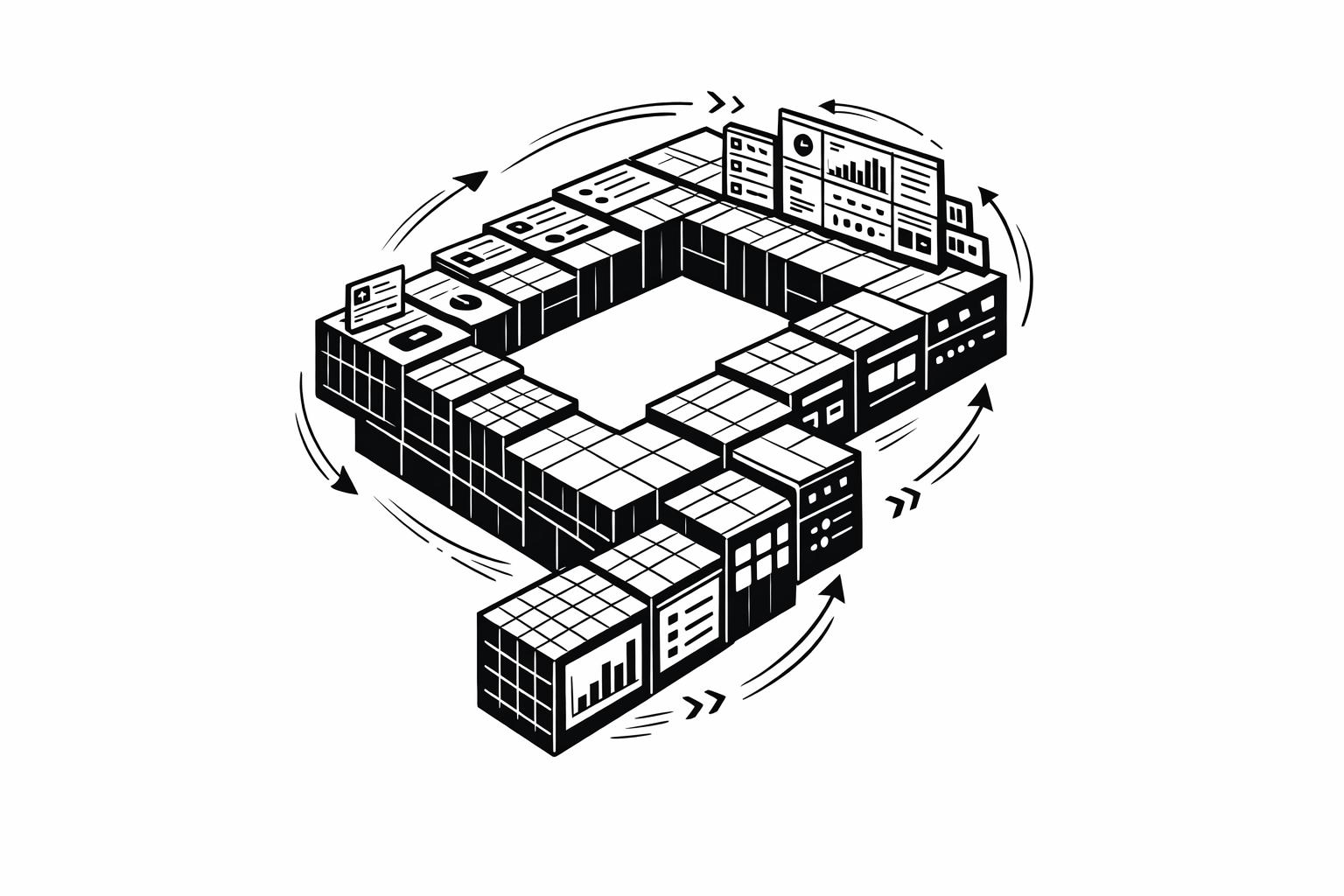

AI Workflow Monitoring Trends in 2026




AI workflow monitoring is no longer just about tracking systems - it’s about predicting issues, optimizing resources, and directly impacting business goals like revenue, customer satisfaction, and efficiency. Here’s what you need to know about how this field evolved in 2025:
- Shift to Predictive Monitoring: AI systems now forecast bottlenecks and risks weeks in advance, turning reactive processes into forward-looking strategies.
- AgentOps Framework: A new approach to managing intelligent agents that handle workflows across teams and systems.
- No-Code Tools: "AI Blocks" empower non-technical users to deploy monitoring solutions, making advanced tools more accessible.
- Industry-Specific Solutions: Tailored AI monitoring tools are replacing generic systems, with applications in healthcare, manufacturing, and finance.
Key Stats and Insights:
- Companies using predictive analytics report an average ROI of 41% and reduce project delivery times by 20%-30%.
- 79% of IT leaders increased automation budgets, with a 20% projected growth through 2027.
- Employees save 2.5 hours daily with AI tools, boosting productivity by 15%-25%.
Real-world examples include AI-powered workflows in Formula 1, smarter customer support agents, and predictive tools in banking and healthcare. As top AI tools for monitoring become indispensable, businesses are seeing faster decisions, better resource allocation, and fewer disruptions - all while maintaining human oversight for critical decisions.
AI workflow monitoring is transforming industries, but the next step is ensuring governance and trust in autonomous systems.

AI Workflow Monitoring ROI and Impact Statistics 2025
AWS re:Invent 2025-AI-Powered Observability & Observability for AI: The Two Sides of the Coin-AIM206
Predictive Analytics for Workflow Optimization
Predictive analytics is reshaping the way organizations manage workflows, turning reactive processes into proactive strategies. By identifying risks weeks in advance, companies can reallocate resources and address potential issues before they escalate. This shift has made workflow optimization more precise and forward-thinking.
At its core, predictive analytics relies on analyzing historical event logs and real-time data to identify patterns that might signal future problems. For example, if the system detects unusual spikes in failed transactions or a sudden drop in web traffic, AI models can intervene to adjust workflows, preventing data corruption or operational disruptions. Some advanced systems even act as self-healing pipelines, automatically rerouting data, modifying processes, or isolating problematic records - all without human input. These capabilities improve workflow stability and reinforce the growing role of AI in proactive management.
How Predictive Analytics Works in Workflows
Modern predictive tools juggle multiple variables to optimize how resources are allocated. They evaluate factors like employee skills, past performance, current workloads, and project complexity to assign tasks effectively. This approach prevents employee burnout while ensuring that organizational capacity is used efficiently. Studies show that AI-driven resource allocation boosts productivity by 15% to 25% across various departments.
Another standout feature is bottleneck forecasting. By applying machine learning to historical data, these systems can predict potential slowdowns or workload spikes well in advance. When issues arise, they don’t just send alerts - they conduct automated root cause analysis to pinpoint the exact source of the problem and assess its potential impact. This reduces troubleshooting time from days to just hours, allowing teams to focus on solving the issue rather than diagnosing it.
These advancements lead to tangible improvements in operational performance.
Research Findings on Workflow Performance
The numbers speak for themselves. Companies using AI-driven predictive analytics report an average ROI of 41%. Project delivery times are reduced by 20% to 30% when predictive insights are applied, and decision-making speeds up from days to mere minutes with real-time data. Additionally, AI-enabled organizations are 2.5 times more likely to achieve successful project outcomes.
Employees also benefit directly. On average, they save 2.5 hours daily when using AI-enhanced workflow tools, and satisfaction scores rise by 30% as repetitive administrative tasks are automated using specialized ChatGPT prompts. The adoption of AI is growing rapidly: 79% of IT teams are already exploring or using AI for incident monitoring and predictive analysis. Furthermore, 16% of operations leaders rank forecasting and predictive analytics as the most impactful area for ROI in their AI strategies.
AI and Machine Learning Integration
AI and machine learning have shifted workflow monitoring from a reactive process to a proactive tool for strategic business management. Instead of just tracking technical stats like server uptime or response times, modern AI platforms connect these metrics directly to business outcomes - things like revenue impact, customer satisfaction scores, and service level objectives. This shift gives organizations real-time insight into how technical issues influence their bottom line.
AI integration has become nearly universal. About 75% of organizations are increasing their observability budgets to manage AI adoption, and AI capabilities are now the top priority when choosing new monitoring solutions. Still, human oversight plays a key role, with 69% of AI-driven decisions requiring human verification to close the trust gap. This collaboration between AI and humans allows for smarter, real-time adjustments that drive better business results.
Real-Time Data Analysis and Adaptation
Modern AI systems excel at catching problems before they escalate by analyzing large volumes of logs and metrics. For instance, they can spot early warning signs like sudden transaction spikes or unexpected traffic drops. When anomalies occur, these systems can automatically reroute data, adjust transformations, or isolate problematic records to prevent further disruption.
This adaptability reduces resolution times significantly - what used to take days can now be addressed in hours. Machine learning models, trained on historical data, establish a baseline for "normal" behavior in workflows, enabling them to flag deviations instantly. By 2026, 81% of business leaders expect AI to enhance business processes directly, and 70% of executives plan to implement AI-driven automation within the next year.
Business Case Studies on AI Integration
Real-world examples highlight how AI is transforming industries through predictive analytics and workflow optimization.
In 2025, Aston Martin Aramco's Formula 1 team partnered with ServiceNow to integrate AI-powered workflows. These workflows automate routine tasks and provide real-time insights, improving decision-making during races and streamlining operations between events.
In the financial sector, Northern European bank SEB implemented the XINFO platform by Beta Systems in early 2025. This tool allows mainframe developers to perform precise impact analyses and work more efficiently through automation enabled by advanced observability.
Holland America Line created "Anna", an AI-powered customer support agent, using Microsoft Copilot Studio in just three months. Anna handles complex cruise bookings and general inquiries 24/7, using natural language to assist customers. Scot Pettit, Senior Director of E-commerce, remarked:
"What we're finding is that when customers engage with Anna, they are more likely to find the right cruise that fits their needs than if they do not engage at all".
Law firm Husch Blackwell also adopted Microsoft 365 Copilot to assist lawyers with tasks like summarizing meetings, reviewing documents, and drafting correspondence. This integration saved an estimated 8,800 hours, allowing staff to focus on higher-value client work.
These examples show how integrating AI into workflow monitoring not only boosts efficiency but also supports smarter decision-making across various sectors.
Real-Time Monitoring and Visualization Tools
Visual Dashboards for Workflow Tracking
Today's dashboards do more than just monitor technical performance - they connect it directly to business outcomes like revenue risks and customer experience metrics. While older dashboards focused solely on fault tracking, the latest tools go a step further, uncovering areas for improvement.
One of the standout advancements in 2025 is the rise of multi-object process mining. Unlike traditional dashboards that followed a linear "one case, one sequence" model, these modern tools can simultaneously map interactions between multiple object types - such as orders, items, deliveries, and invoices. Platforms like Power Automate Process Mining use this capability to expose bottlenecks that older methods couldn’t detect.
Another game-changer is the integration of agentic AI into dashboards. These systems now do more than just send reactive alerts - they autonomously drive business innovation. Teams can redirect their focus, spending 78% more time creating new software rather than maintaining existing systems , significantly boosting team productivity. That said, alert quality remains critical. Poorly managed alerts have caused outages in 73% of organizations, and 54% of professionals identify alert quality as the top factor influencing observability ROI.
The business impact of these tools is clear. Around 74% of organizations now emphasize monitoring crucial business processes through their observability software, and 65% report a positive effect on revenue from their observability practices. Teams leveraging frameworks like OpenTelemetry see an ROI that’s 53% higher than their peers.
These advancements are paving the way for deeper integration of IoT data into workflow analysis.
IoT Integration for Better Monitoring
IoT integration is taking monitoring systems to the next level by blending high-level process data with real-time physical insights.
IoT devices help close the gap between overarching process events and second-by-second sensor data. By incorporating "context events" - like temperature changes, mechanical vibrations, or pressure drops - monitoring systems can now account for environmental factors that influence workflow outcomes.
This capability allows for contextualized adjustments. For example, a package experiencing a shock or a sudden pressure drop can trigger immediate workflow changes. AI-IoT systems have achieved 98.7% accuracy in detecting temperature fluctuations in industrial settings, significantly enhancing the prevention of critical failures.
The move from reactive to predictive monitoring is gaining momentum. Observability platforms now link IoT telemetry - such as energy consumption in kWh - to business KPIs and sustainability goals. Over 70% of organizations use these tools to track sustainability initiatives, correlating IoT data with metrics like cloud spending and CO2 emissions. With businesses managing an average of 50 endpoints per process - a 19% rise over the past five years - comprehensive IoT integration is becoming essential for maintaining visibility.
sbb-itb-58f115e
Industry-Specific Trends and Applications
With advancements in predictive analytics and real-time monitoring, industries are leveraging these tools to achieve specific operational goals tailored to their needs.
Predictive vs. Reactive Monitoring: A Comparison
Reactive monitoring is all about responding to incidents as they happen, focusing on maintaining system uptime and reducing mean time to resolution (MTTR). It often relies on human oversight to verify and address issues.
On the other hand, predictive monitoring takes a forward-looking approach. By using machine learning triggers and anomaly detection, it identifies potential problems before they arise. This approach helps mitigate risks by addressing challenges early, which in turn reduces operational waste and lowers unit costs. While reactive monitoring excels at managing immediate failures, predictive analytics prioritizes proactive solutions, minimizing bottlenecks and continuously improving processes.
Here's a quick breakdown of the differences between these two approaches:
| Feature | Reactive Monitoring | Predictive Analytics & Monitoring |
|---|---|---|
| Primary Goal | Incident response and system uptime | Anticipating behavior and recommending actions |
| Mechanism | Human-verified decisions | ML triggers and anomaly detection |
| Efficiency Gain | Reduces MTTR after an event | Detects challenges early to lower risk |
| Business Impact | Keeps systems operational | Improves performance and reduces costs/waste |
| Data Usage | Real-time data | Process mining analytics to predict demand/delays |
Currently, 25% of organizations incorporate AI with process mining, and a remarkable 74% plan to adopt it in future projects. This shift underscores the growing preference for predictive optimization over reactive problem-solving. These distinctions pave the way for exploring how industries are applying these technologies.
Industry Use Cases and Benefits
Industries are customizing AI-driven workflow monitoring to address their unique challenges.
In healthcare, AI-enabled orchestration is being integrated into ERP systems like Workday to align financial and supply-chain workflows. Machine learning triggers predict inventory shortages and patient demand, ensuring hospitals are always stocked with essential supplies. Predictive monitoring also helps classify "deviant" versus "normal" activity patterns in hospital logs, cutting down on response times for critical patient care.
Manufacturing has seen improvements in equipment efficiency while reducing costs related to labor, maintenance, and warranties. For instance, AI-powered process mining in tools like SAP Extended Warehouse Management (EWM) identifies the root causes of bottlenecks and excessive rework, enhancing warehouse operations.
In financial services, institutions are using data-driven strategies to streamline legal workflows and consolidate technologies using AI for business. Predictive models help forecast loan application outcomes - whether approved or rejected - and map the next steps in banking operations. Additionally, AI tools enable impact analysis for mainframe developers, ensuring faster and safer code updates in legacy systems.
"If we're going to deliver true business transformation, it has to start by embracing unique, industry-specific solutions to create tangible results."
- Erica Volini, Executive Vice President Worldwide Industries, ServiceNow
Across all sectors, security and compliance have emerged as critical areas for AI applications. Nearly all security leaders (98%) now rely on AI for compliance monitoring, and 69% have increased budgets for AI-powered threat detection. These systems track software supply chains and monitor Common Vulnerabilities and Exposures (CVEs), which can see over 130 new entries daily. Despite the widespread adoption of AI - used in some capacity by 100% of surveyed organizations - human oversight remains vital to ensure trust and reliability in high-stakes decision-making.
God of Prompt Resources for AI Workflow Monitoring
As businesses increasingly rely on real-time and predictive optimization, God of Prompt steps up with tailored tools for workflow monitoring. By 2025, predictive and automated monitoring will become indispensable, and God of Prompt's Complete AI Bundle is designed to meet these evolving needs. Here's how their resources align with current trends in AI workflow monitoring and predictive analytics.
Prompt Bundles for Workflow Optimization
God of Prompt offers an impressive library of over 30,000 AI prompts aimed at automating tasks and improving workflows. These prompts are neatly organized into bundles for areas like marketing, business, copywriting, and productivity, allowing teams to quickly implement industry-specific monitoring solutions.
The platform also incorporates N8N automations, which support the shift from manual oversight to automated, real-time workflow monitoring - a key trend for 2025. By using these no-code automation templates, businesses can replace manual error-checking processes with real-time alerts, paving the way for predictive optimization.
Additionally, the Custom GPTs Toolkit empowers users to create tailored monitoring agents for specific departments, such as HR, Finance, or Marketing. This flexibility ensures that businesses can adapt their monitoring strategies to the unique needs of each team.
To complement these prompt bundles, the Complete AI Bundle consolidates essential tools, driving operational efficiency across the board.
Complete AI Bundle Features
The Complete AI Bundle acts as a centralized hub for various AI tools and platforms, giving modern enterprises the unified command center they need. Regular updates ensure compatibility with the latest AI models, such as GPT-4 and Claude 3, so monitoring strategies can evolve as new capabilities emerge.
This resource isn't just theoretical - it's making a real impact. Over 25,000 business owners report saving an average of 20 hours per week using God of Prompt's tools. The platform also boasts a 4.8/5 rating from 743 reviews, with users frequently citing noticeable productivity improvements.
"My team's output has drastically increased. Highly recommended." - Lucas Kendall
One standout feature is the Custom Instructions tool, which minimizes repetitive inputs and enhances the efficiency of AI-driven workflow analysis. This feature plays a crucial role in delivering the high-accuracy insights needed for modern monitoring systems. By leveraging machine learning, these systems can predict delays, capacity issues, and potential errors hours in advance, aligning perfectly with the trend toward predictive performance optimization.
Conclusion
By 2025, AI workflow monitoring has evolved from experimental trials to becoming a fundamental part of business operations. This shift highlights a move from reactive strategies to predictive, data-driven controls - an idea central to this discussion. The rise of AgentOps as a distinct discipline reflects how businesses are no longer just automating tasks but are now managing networks of intelligent agents (often requiring a specialized system prompt generator) capable of reasoning, adapting, and handling complex workflows independently.
Industry statistics paint a clear picture of the benefits. Companies leveraging AI-driven workflow tools report cutting project delivery times by 20% to 30% and boosting productivity by 15% to 25%. These numbers underscore the growing confidence in predictive and real-time monitoring solutions.
Tools like God of Prompt are playing a pivotal role in this transformation. Their Complete AI Bundle - featuring over 30,000 AI prompts, guides, and toolkits - helps businesses streamline operations while staying aligned with advancements in predictive analytics and real-time monitoring.
As we look toward 2026 and beyond, the focus will need to shift toward stronger governance for autonomous agents, ensuring technical metrics tie directly to business outcomes, and maintaining human oversight for critical decisions. Balancing advanced AI capabilities with thoughtful human input will be key to driving the next phase of operational success.
FAQs
What’s the difference between predictive monitoring and reactive monitoring?
Predictive monitoring takes advantage of AI and machine learning to foresee potential issues before they arise. By analyzing data patterns, logs, and metrics, these systems can spot anomalies early, giving organizations the chance to address problems before they escalate into outages or performance disruptions.
On the other hand, reactive monitoring operates differently. It depends on static thresholds and manual interventions, which can struggle to keep up in more intricate environments. Predictive monitoring stands out by being proactive - it learns from historical data, adapts to evolving conditions, and works to enhance system reliability while cutting down on downtime.
What are the advantages of using no-code tools like AI Blocks for monitoring workflows?
No-code tools, such as AI Blocks, simplify workflow monitoring by letting users automate and manage complex processes - no advanced programming skills required. This approach opens the door for teams across an organization to play a role in improving workflows.
These platforms also shine when it comes to speed and flexibility. Businesses can quickly adapt to shifting demands while integrating different tools and systems effortlessly. This reduces manual work, cuts down on errors, and enhances productivity. In short, tools like AI Blocks help businesses refine operations and move faster toward their digital transformation goals.
How are AI-driven monitoring tools transforming industries like healthcare and finance?
AI-powered monitoring tools are transforming industries like healthcare and finance by boosting efficiency, precision, and decision-making capabilities.
In healthcare, these tools are making a huge impact. By 2024, over 70% of non-federal hospitals are expected to integrate AI into their electronic health records (EHRs). This shift allows for better patient risk prediction, early detection of conditions like sepsis, improved staffing processes, and automated billing systems. Beyond enhancing clinical care, these tools help reduce physician burnout by taking over repetitive administrative tasks, giving doctors more time to focus on patients.
In the financial sector, AI tools are reshaping how organizations operate. They help optimize workflows, ensure compliance with regulations, and manage risks more efficiently. For example, process mining solutions offer detailed insights into operations, enabling financial institutions to meet regulatory requirements while increasing transparency and streamlining processes.
Whether in healthcare or finance, these technologies are driving smarter, data-backed decisions and encouraging progress, making them vital for staying competitive in today’s fast-changing world.
Related Blog Posts

Loved by Business Owners


Based on 1K reviews
Get smarter on AI every week.
Ready to transform your business?