

Why AI Amplifies the Need for Data Removal Tools



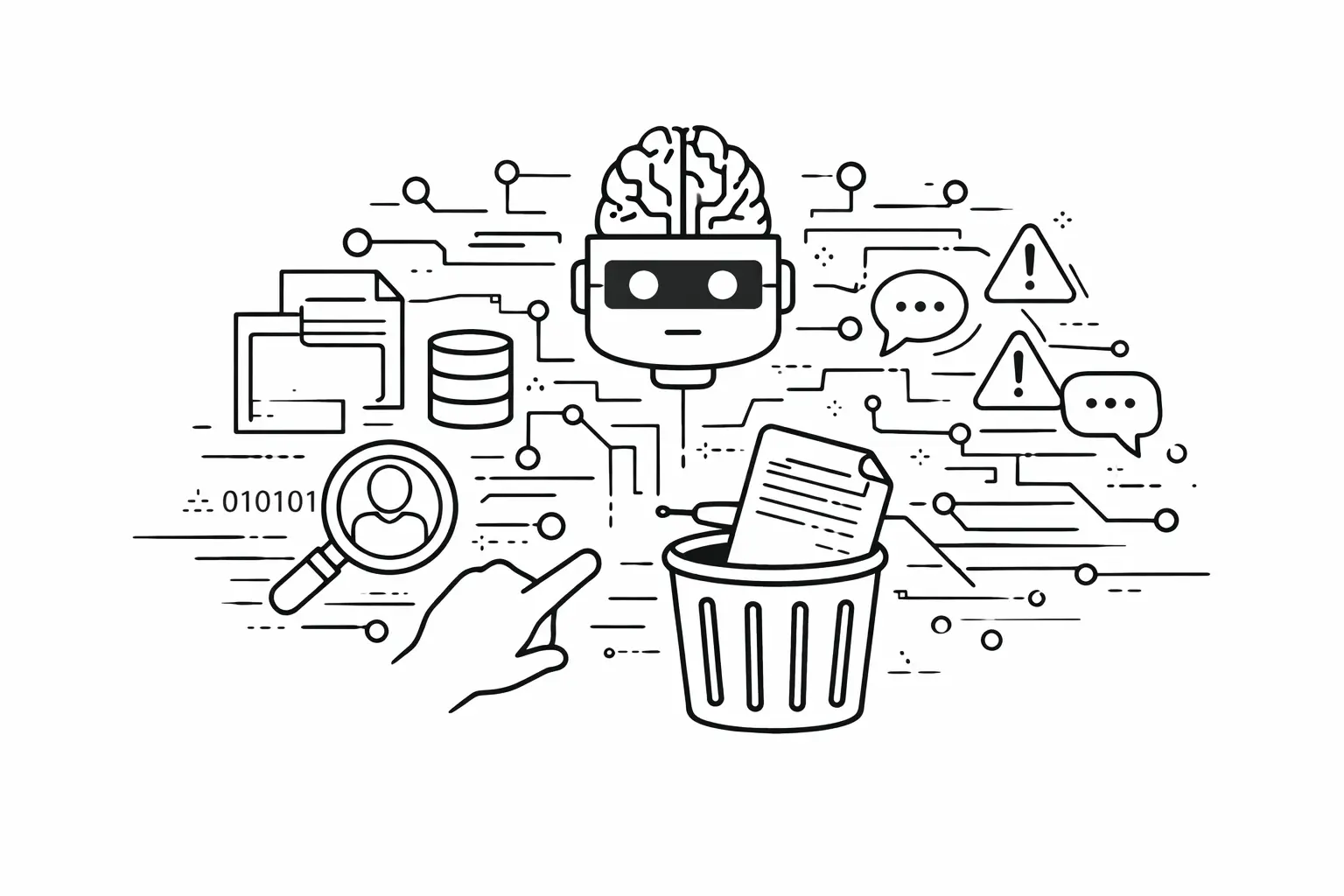
Artificial intelligence is no longer an emerging concept but a reality that people live by every day.
Whether it is content development, automation, customer service, or analytics, artificial intelligence is already deeply interwoven into how businesses, or individuals, function online.
However, with increased capabilities, artificial intelligence is now facing an important concern that many people tend to ignore: data privacy.
AI requires data. The more data it processes, the better it performs.
And this vulnerability has inadvertently made personal, professional, and proprietary information even more visible on the web.
The need for data deletion tools promises to have never been greater.

AI’s Appetite for Data
AI learns from the digestion of massive amounts of information. Even seemingly benign tools, such as an ai flashcard used for learning or knowledge retention, rely on processing user-provided inputs, which can unintentionally include personal or sensitive information that later becomes part of broader AI training or reuse cycles. People search sites (PSS), blogs, forums, social media sites, and databases all add to the training sets used in contemporary models. Even though this helps in achieving innovative advancements, it also tends to diffuse the boundaries related to publicly available information and personal exposure.
As soon as the information is online, it doesn’t just exist in one spot on the internet. The information will be replicated, indexed, summarized, and re-processed, sometimes with the aid of automated tools. Even seemingly harmless information in the past will be considered problematic if and when it is compiled, brought to the forefront in a different light, and then re-used at a later date.
According to the Gen AI and LLM 2025 privacy ranking, even platforms that seem trustworthy, like ChatGPT or Mistral AI, collect user inputs and publicly available data for training models, highlighting the importance of controlling what data appears online.
The rise of AI accelerates this. Where once it took months to manually scrape this data, now it can be accomplished in seconds, and this makes information that is out-of-date and/or sensitive more persistent than ever before.
How AI Makes Personal Data Harder to Control
The classical issue was associated with search engines and databases. The issue becomes more complex with the introduction of AI. Even if the data is erased from the source, the AI-generated result may still derive from the same source in an indirect manner.
For example:
- An AI tool may summarize or paraphrase content that once contained personal data
- Automated systems may repackage existing data into new formats
- AI-powered analytics tools may surface insights based on historical data
Some platforms, like Meta AI or Gemini, do not allow users to opt out of having their prompts used to train AI models, making the persistence of personal data harder to avoid.
This persistence is exactly why proactive data management is now essential, not optional.
The Role of Data Removal Tools in the AI Era
These tools help individuals take back control of their online presence by identifying where personal information is held by data brokers and sending legal removal or suppression requests to reduce the visibility of that data, thereby shrinking their digital footprint.
Within the AI-based ecosystem, they play several major roles:
- Reducing the amount of personal data available for AI training or reuse
- Limiting exposure to data brokers and aggregators
- Protecting brand reputation & personal identity
Importantly, Data removal tools help mitigate risks arising from AI platforms that may automatically reprocess publicly available data even after the original source has been removed. As AI adoption accelerates, these tools act as a counterbalance, ensuring innovation doesn’t come at the cost of privacy. Don’t wait, take control of your data before it spreads further.
AI-Generated Content and the Rise of Detection Needs
Another challenge introduced by AI is the explosion of automated content. While AI-generated text is efficient, it can also be misused, spreading misinformation, impersonating individuals, or recycling sensitive data.
This is where an AI detector becomes relevant. Detection tools help distinguish between human-written and AI-generated content, which is increasingly important for:
- Publishers maintaining editorial integrity
- Businesses verifying outsourced content
- Educators and researchers ensuring authenticity
When paired with data privacy strategies, detection tools help prevent the misuse of personal or proprietary information in AI-generated outputs.
Some AI platforms, according to the 2025 ranking, may share user data with third parties or research collaborators, which makes combining detection tools with data removal practices even more critical.
Accessibility Tools and Unexpected Privacy Risks
AI has made digital accessibility significantly better. Solutions like text to speech online platforms allow content to be consumed in more inclusive ways, helping users with visual impairments, learning differences, or language barriers.
However, these tools also process large amounts of text-based data. If that content includes personal or confidential information, it can be stored, cached, or reused depending on the platform’s policies.
This doesn’t mean such tools should be avoided, but it does highlight the importance of knowing:
- What data is being processed
- How long it’s stored
- Whether it’s shared with third parties
AI convenience should always be balanced with informed privacy decisions.
AI Utilities and Smart Data Distribution
AI utility tools are becoming even more viable with integration into daily life routines. Such tools, for example, QRNow, make tasks of data sharing, automation, and interaction easier with intelligent QR applications.
Even for basic utilities, there’s the risk of data exposure through links, profiles, or landing pages that feature relevant information. This trend is bound to increase as more and more utilities are enhanced by artificial intelligence.
This once again makes the importance of data removal and surveillance software in a good digital hygiene regime, a key consideration.
Businesses Face Higher Stakes Than Ever
For businesses, unmanaged data exposure can have serious consequences. Employee details, outdated service descriptions, internal documents, or misrepresented brand information can spread quickly once AI systems pick them up.
This can lead to compliance issues, reputational damage, and loss of trust. As companies adopt AI for marketing, analytics, and operations, they must also invest in systems that limit unnecessary data visibility and keep their digital presence accurate.
AI platforms vary widely in privacy practices. For example, ChatGPT allows opt-out options for using prompts in training, while Meta AI does not, increasing business risk if sensitive data is exposed.
Data removal tools are no longer just for individuals, they are becoming a core component of enterprise-level risk management.
A Smarter Balance Between Innovation and Privacy
AI is not intrinsically damaging to privacy. This is a problem, really, of scale and speed. AI processes data at speeds beyond human tracking, so strategies for privacy would need to evolve as quickly.
In this regard, a balanced approach would include knowing how different AI tools collect and process data, using data removal solutions to reduce one's exposure, and choosing platforms that are more transparent. When innovation and responsibility move together, AI becomes a powerful ally rather than a privacy liability.
Final Thoughts
AI changed how we create, distribute, and reuse information. But with great change comes great responsibility: the smarter our tools become, the more deliberate we must become in safeguarding data.
That's why data removal tools are no longer niche solutions; they are a given in this AI-driven world. By bringing innovation together with privacy-conscious practices, individuals and businesses can enjoy the benefits of AI without losing control of their digital identity.

Loved by Business Owners


Based on 1K reviews
Get smarter on AI every week.
Ready to transform your business?





Claude Code in 2026: The Complete Beginner's Guide (Installation, Features & Real Examples)
Complete Claude Code guide for 2026: installation, setup, prompting techniques, slash commands, keyboard shortcuts, good vs bad examples. Master Anthropic's AI coding tool from beginner to power user.

Alex Prompter