
Best AI Prompt Libraries for Product Managers




AI prompt libraries can save product managers time by offering ready-made templates for tasks like competitive analysis, feature prioritization, and user research. Instead of creating prompts from scratch, these libraries provide structured instructions for AI tools like ChatGPT or Claude, helping you work faster and more efficiently.
Here’s a quick breakdown of five popular libraries for product managers:
- God of Prompt: Offers 30,000+ prompts across multiple platforms, including ChatGPT and Midjourney. Paid plans start at $37, with a $150 bundle for full access and lifetime updates.
- TopFreePrompts: Free resource with prompts for general tasks like email drafting and brainstorming. Limited product management focus and no direct integrations.
- Glean Prompt Library: Enterprise-focused with prompts for synthesizing notes and analyzing feedback. Integrates with Slack, Jira, and Confluence for contextual workflows.
- Productboard AI Prompt Templates: Embedded in the Productboard platform, offering six templates for tasks like PRD drafting and user research. Requires a Productboard subscription.
- Revo AI Prompt Library: Focuses on AI basics but lacks specific product management tools, examples, or integration details.
Quick Comparison:
| Library | Best For | Price Range | Prompt Count | Integration Support | Key Limitation |
|---|---|---|---|---|---|
| God of Prompt | Extensive multi-platform prompts | Free to $150 | 30,000+ | ChatGPT, Claude, Midjourney | None reported |
| TopFreePrompts | Free, general-use prompts | Free | Limited | GPT-based models only | Limited product management focus |
| Glean Prompt Library | Enterprise workflows | Custom pricing | Moderate | Slack, Jira, Confluence | High entry barrier |
| Productboard Templates | Productboard users | Included with Productboard subscription | 6 templates | Productboard platform only | Limited to Productboard users |
| Revo AI Prompt Library | AI basics and concepts | Contact for pricing | Limited | Not specified | Lacks product-specific tools |
Conclusion:
For a comprehensive library with broad coverage, God of Prompt stands out with its vast collection and lifetime updates. If you’re looking for free options, TopFreePrompts is a good starting point, though it’s less tailored to product management. Enterprise teams may prefer Glean or Productboard Templates for integrated workflows, while Revo AI is better suited for those new to AI concepts.
Prompt Engineering for Product Managers | Product Space
1. God of Prompt
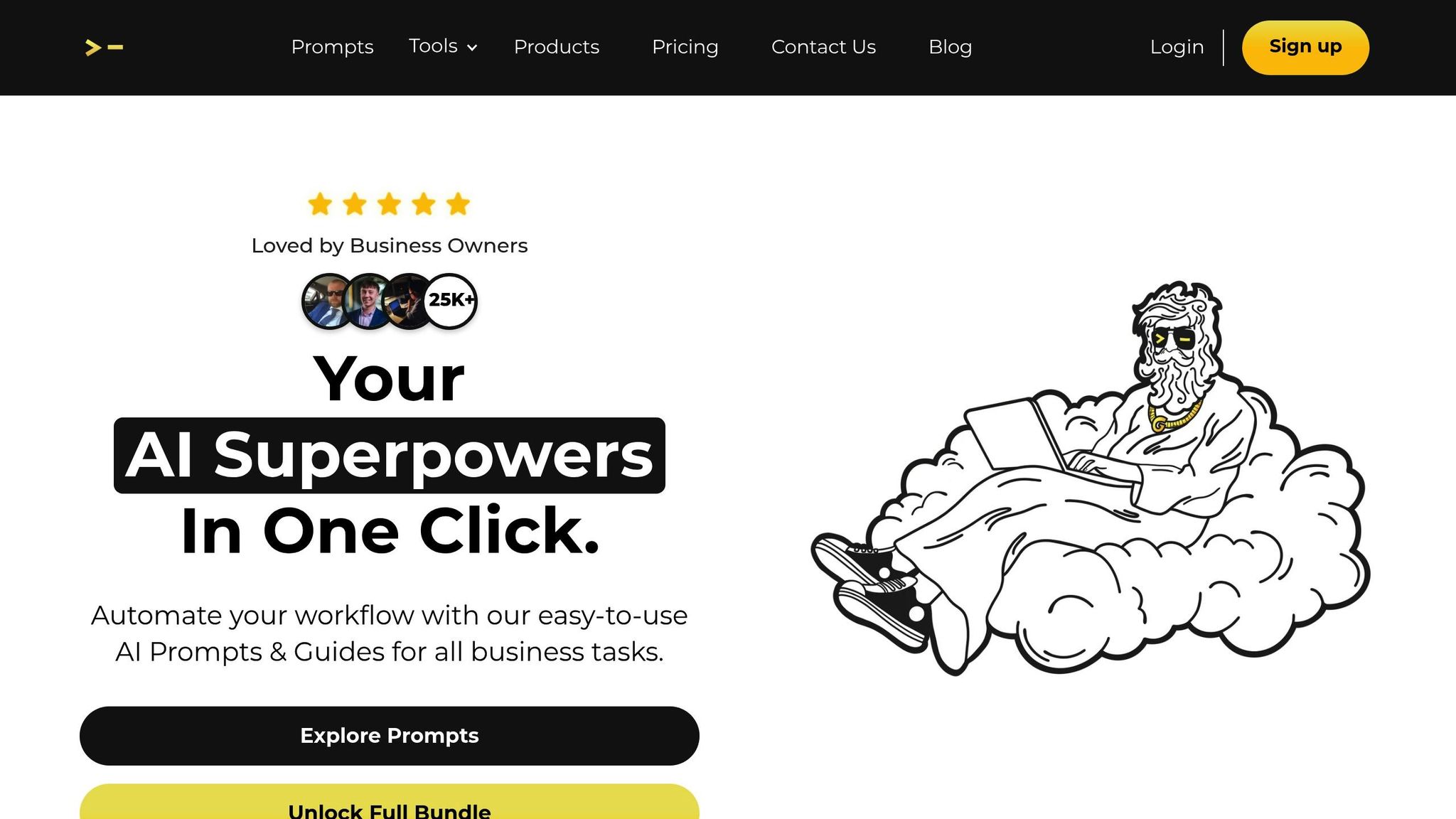
God of Prompt is a massive AI resource hub featuring over 30,000 prompts tailored to categories like Business, Marketing, Finance, E-Commerce, Education, Sales, Productivity, SEO, and Writing. These prompts are delivered via Notion, making them easy to organize and customize. Let’s dive into what this library has to offer.
Prompt Volume and Coverage
At its core, the library boasts a ChatGPT Bundle with over 2,000 advanced, multi-step prompts. This ensures users have access to a powerful set of tools for tackling both business and creative tasks.
LLM and Workflow Integration
God of Prompt is compatible with a wide range of AI platforms, including ChatGPT, Claude, Grok, and Gemini AI. It also works seamlessly with visual tools like Midjourney, Veo, and Sora. For those looking to fine-tune their experience, the library includes a Custom GPTs toolkit and prompt engineering guides, making it easier to tailor solutions to specific needs.
Pricing and Access
God of Prompt offers several pricing options to suit different needs:
- Free Plan: Get access to over 1,000 ChatGPT prompts and 100+ Midjourney prompts, with lifetime updates included.
- Writing Pack ($37.00): Perfect for improving documentation and communication, this pack includes 200+ Mega-Prompts.
- ChatGPT Bundle ($97.00): Unlock 2,000+ advanced prompts designed for a wide variety of business applications.
- Complete AI Bundle ($150.00): Gain full access to the entire library of 30,000+ prompts and the ability to create custom prompts.
All paid plans include lifetime updates, a 7-day money-back guarantee, and no recurring subscription fees.
2. TopFreePrompts
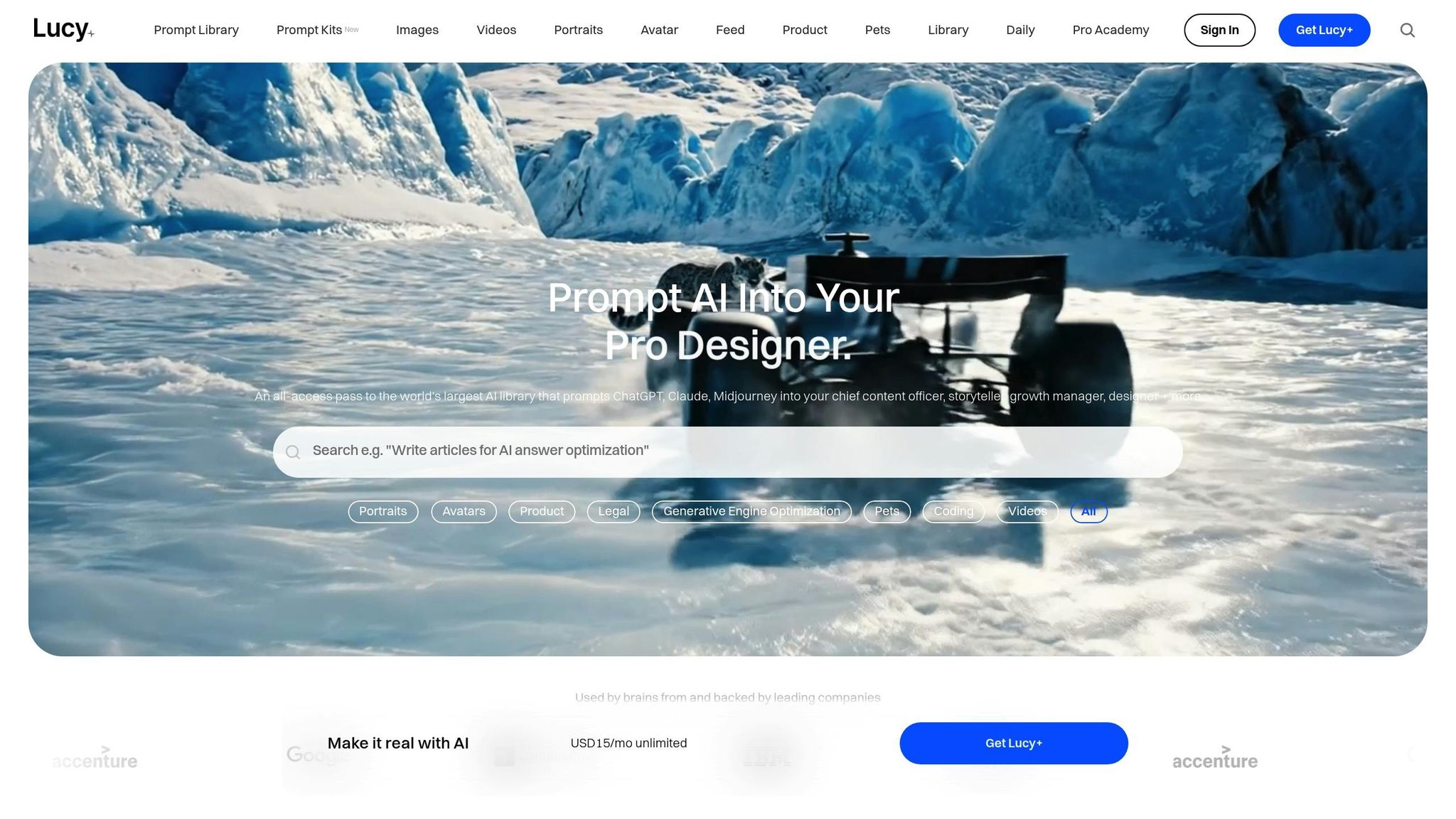
TopFreePrompts offers a collection of AI prompts across various categories, all available for free. There’s no need for payments or subscriptions, making it an accessible resource for anyone looking for ready-to-use prompts.
Prompt Availability and Product Management Relevance
The platform features a growing library of prompts grouped into broad business categories. While it doesn’t specifically focus on product management, there are prompts under sections like Business Strategy, Project Management, and Communication that can be relevant. Since the categories are broad, users may need to sift through to locate prompts tailored to product management tasks.
Compatibility with AI Models and Workflow
TopFreePrompts is primarily built for ChatGPT and other GPT-based models. Many of its prompts are optimized for OpenAI’s ecosystem. However, there’s no direct integration with project or product management tools, meaning users need to manually copy prompts into their AI interface. While this makes it quick and easy to access prompts for immediate tasks, it doesn’t support more intricate workflows or multi-step processes.
Practical Applications
The platform is best suited for handling routine tasks that don’t require deep customization. Some common uses include:
- Drafting emails for stakeholders
- Brainstorming ideas for features
- Creating simple user personas
- Writing meeting summaries or sprint retrospectives
- Generating release notes or interview questions for user research
For more complex tasks, like strategic planning or building detailed roadmaps, the prompts may need significant tweaking to meet specific needs.
Cost and Accessibility
TopFreePrompts operates on a completely free model - there are no hidden fees, premium tiers, or additional charges. Users can browse the site, pick prompts, and use them as needed without restrictions. This makes it an appealing option for individual product managers, small teams, or startups experimenting with AI-driven workflows. However, the free model does come with limitations. Features like prompt versioning, team collaboration, or formal quality checks aren’t included, so the quality and effectiveness of prompts can vary. This simplicity makes it stand apart from more feature-rich platforms, offering a no-cost entry point for AI-assisted tasks.
3. Glean Prompt Library
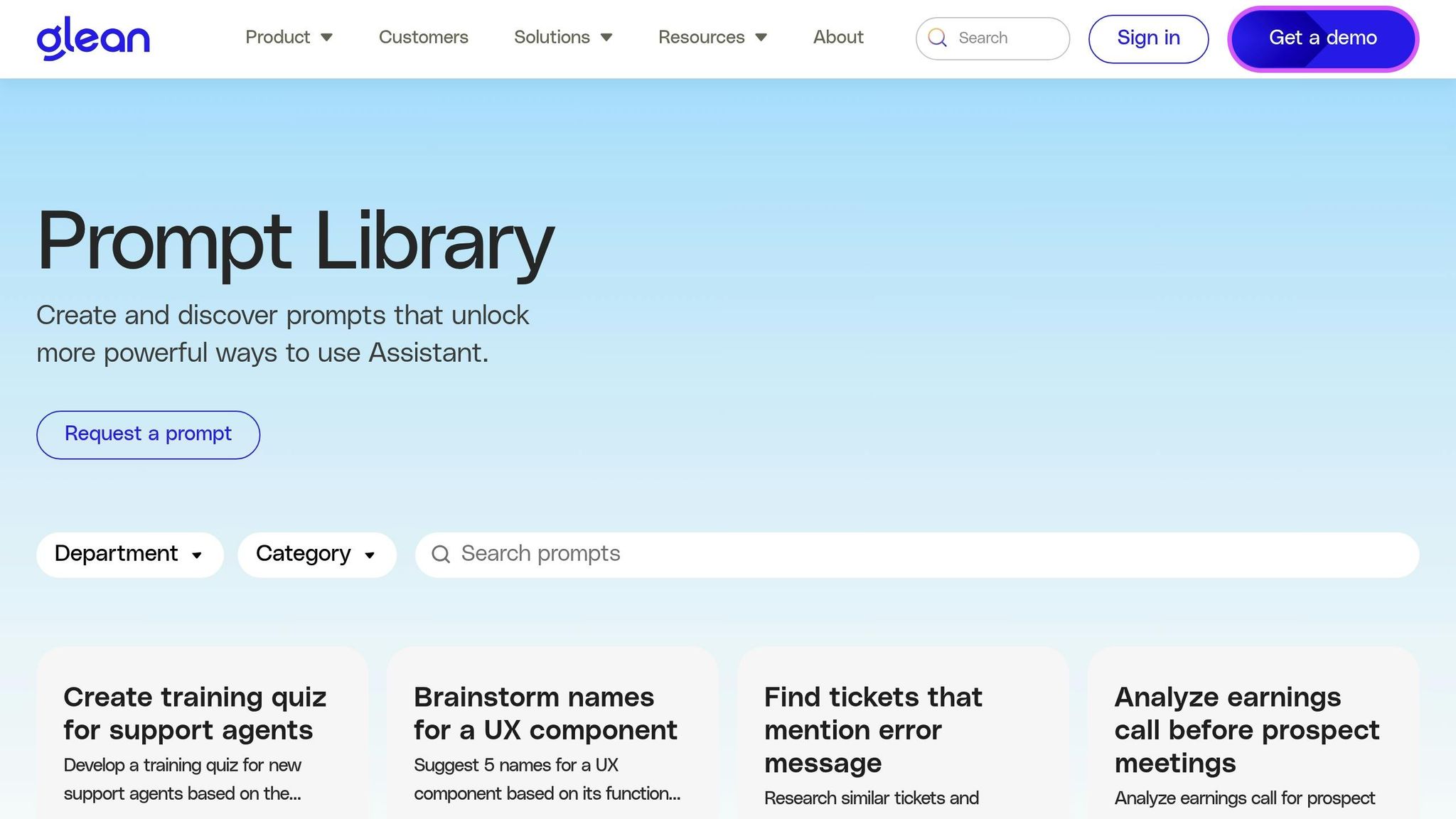
The Glean Prompt Library is part of an enterprise AI suite, offering structured templates tailored to key business functions, including product management.
Prompt Volume and PM Coverage
This library focuses on delivering high-quality prompts designed to meet enterprise needs. For product managers, the prompts are organized around common workplace scenarios, such as synthesizing meeting notes, analyzing customer feedback, and creating strategic documents.
While the product management coverage isn't extensive, the available prompts are practical and address real workflow challenges. Templates include tools for tasks like feature prioritization and stakeholder communication. However, if you're looking for prompts tailored to specialized methodologies or advanced analytics, the selection may feel limited. That said, the focused approach ensures these prompts integrate effectively into existing workflows.
LLM and Workflow Integration
Glean takes this curated library a step further by integrating it directly with tools like Slack, Google Workspace, Jira, and Confluence. This allows prompts to operate within your actual work environment, pulling context from relevant documents, past conversations, or project data, rather than functioning in isolation.
The library is powered by Glean's AI assistant, which utilizes multiple large language models (LLMs). Instead of being tied to a single AI provider, Glean routes queries to the most suitable model. For product managers, this means you can ask specific questions, like "What were the top customer complaints from last quarter?" and the AI will pull data from connected tools to deliver contextualized insights.
Another standout feature is prompt chaining, where the output of one prompt can feed into another. For example, you can extract key themes from user interviews with one prompt and then use those themes to generate user stories or feature requirements with another. This capability makes Glean particularly helpful for multi-step product development workflows.
Key Use Cases
Glean's library is especially useful for product managers tasked with synthesizing research from multiple sources, drafting product requirement documents, or preparing executive summaries of performance data.
It also shines in cross-functional communication. For example, product managers can use prompts to simplify technical specifications into executive summaries or transform high-level strategies into detailed engineering requirements. Additionally, the platform aids in onboarding new product managers and conducting retrospectives by retrieving historical context on legacy products. These features cater to the complex, multi-department workflows often found in larger organizations.
Pricing and Access
Glean operates on an enterprise pricing model, with custom quotes based on factors like company size, user count, and required integrations.
This model makes Glean ideal for mid-sized to large companies, offering features like single sign-on, role-based permissions, and data governance controls. However, the platform may not be suitable for startups, freelancers, or individual product managers due to its higher entry barrier and reliance on organizational buy-in. For companies already using Glean, the prompt library integrates seamlessly into their existing toolkit, proving particularly valuable for streamlining product management workflows.
sbb-itb-58f115e
4. Productboard AI Prompt Templates
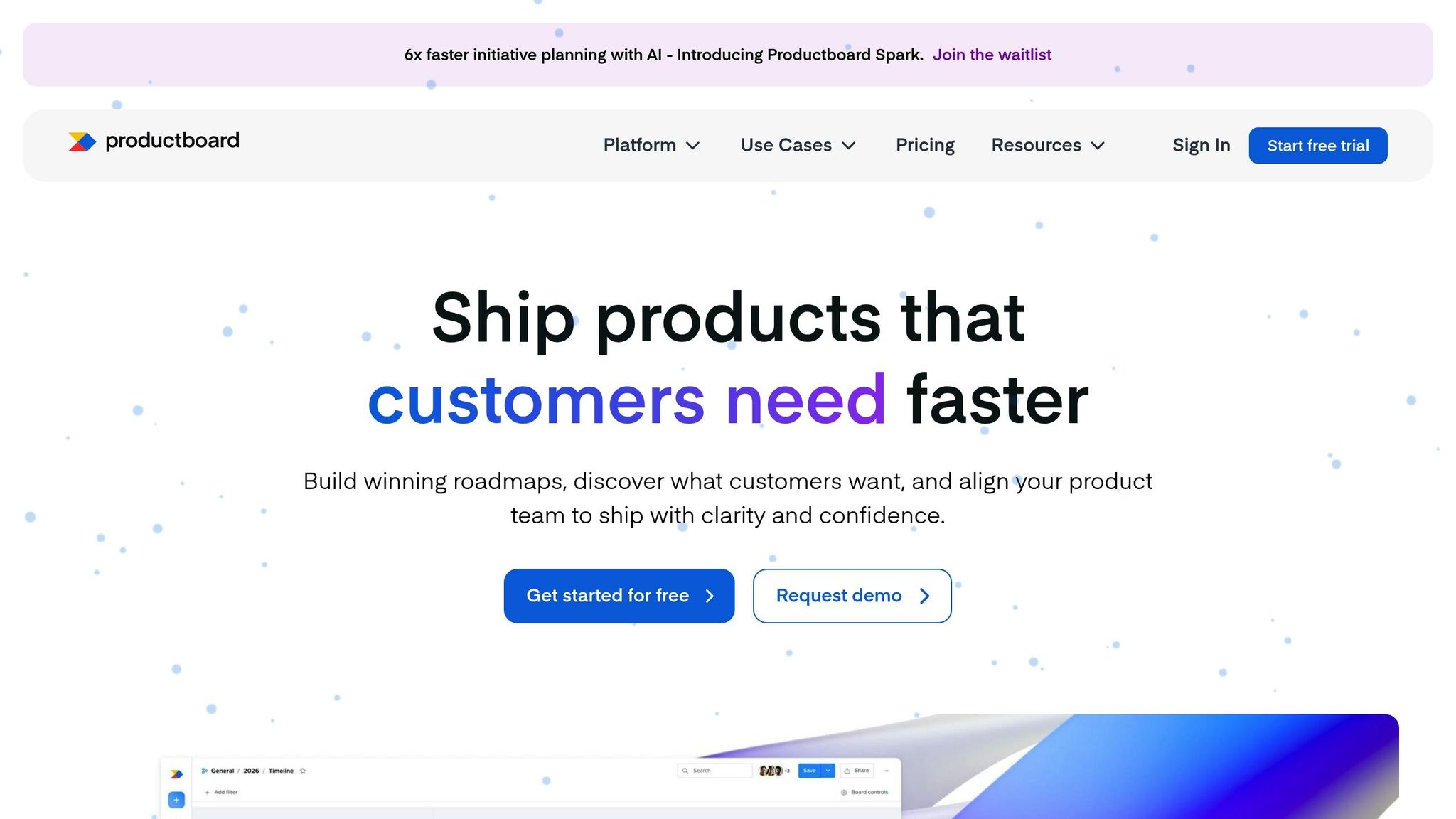
Productboard AI Prompt Templates is a set of tools built right into the Productboard platform, aimed at helping product managers simplify their workflows and focus on what matters most.
Prompt Volume and PM Coverage
Launched in April 2025, this collection of six templates is designed to make key product management tasks more efficient - from discovery to communication. These templates focus on tackling the most time-intensive parts of a product manager's job, offering a tool to assist decision-making without replacing the need for thoughtful analysis and strategy. The emphasis here is on quality and usability rather than trying to cover every possible scenario.
LLM and Workflow Integration
What sets these templates apart is their seamless integration with the Productboard platform. Instead of functioning as a separate tool, they work directly within your product management workspace, leveraging existing data like roadmaps, feature requests, and customer feedback. Productboard suggests structuring prompts with six components: Task, Context, Examples, Persona, Format, and Tone. For more advanced use, techniques like Zero-Shot, Few-Shot, and Chain of Thought prompting are supported. Breaking larger tasks into smaller, manageable chunks can also improve results. For instance, incorporating your company’s specific Product Requirements Document (PRD) template into a prompt can lead to more accurate and tailored outputs.
Key Use Cases
These templates shine in scenarios where product managers need to handle repetitive tasks or synthesize large amounts of information. They can help draft PRDs, analyze competitors, summarize user research, define features, and communicate updates to stakeholders. However, there are some limitations to keep in mind. For competitive analysis, the AI model's training data (updated as of March 2025) might not capture the latest market trends, so pairing AI insights with up-to-date research is essential. Similarly, when working with user research, the platform may have restrictions on the size of data uploads, meaning large datasets might need to be processed in smaller batches.
Pricing and Access
These templates are included as part of your existing Productboard subscription and aren’t offered as a standalone product. Access depends on your organization’s current Productboard plan. This makes them a great fit for teams already using the platform. However, for organizations not yet onboard with Productboard, adopting the full platform would be necessary to use these templates.
5. Revo AI Prompt Library
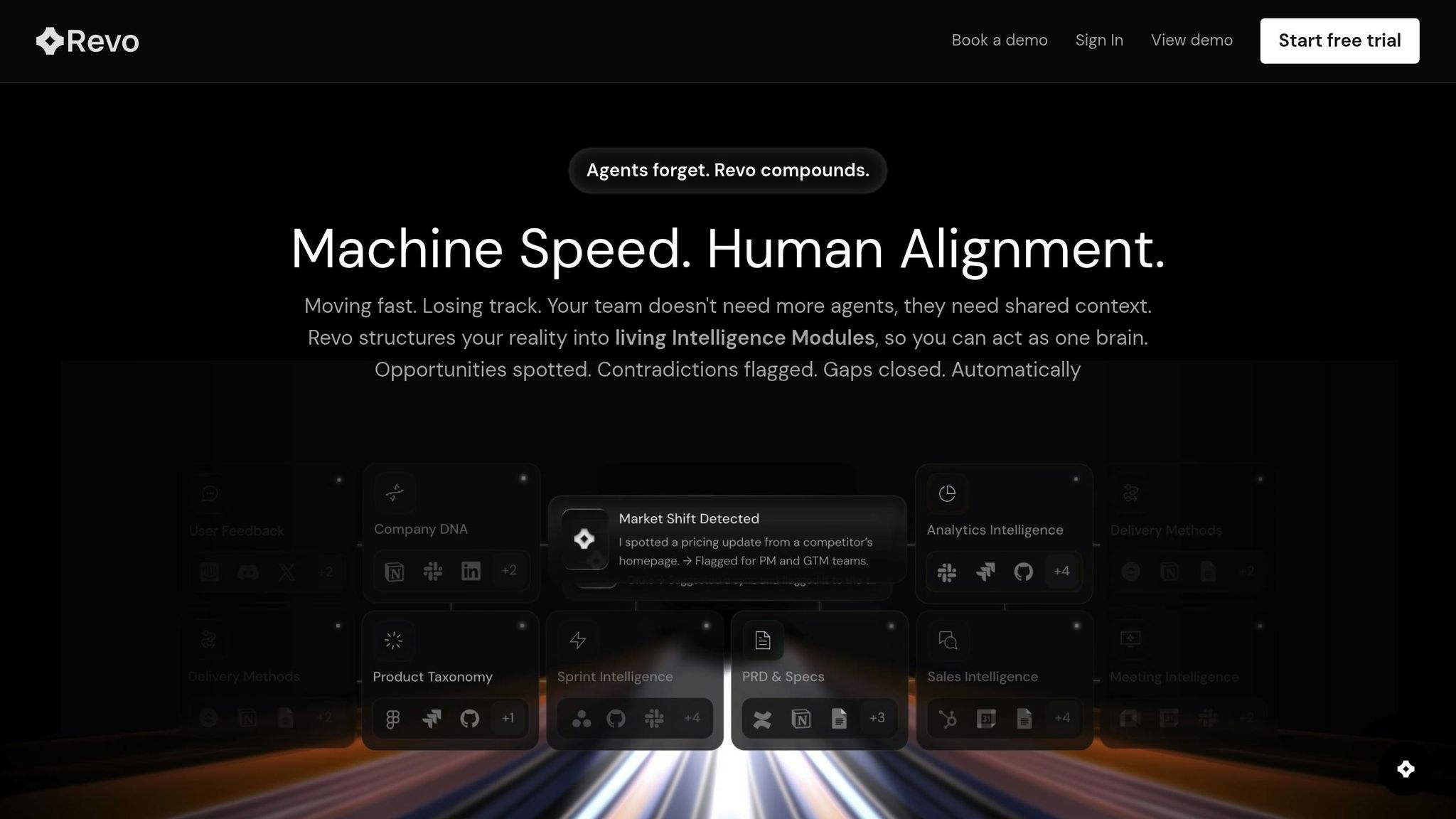
The Revo AI Prompt Library is presented as a tool for product teams looking to integrate AI into their workflows. However, it lacks detailed public documentation on features specifically designed for product managers. This sets it apart from other libraries that provide more tailored, product-specific prompts.
Emphasis on AI Basics
Rather than diving into product-specific tools, the library focuses on foundational AI concepts. The documentation highlights topics like the distinctions between AI Agents and AI Copilots, but it doesn't include ready-to-use templates or resources tailored to product management. For product managers, this means they may need to first gain a solid understanding of these AI principles before they can effectively use the library.
Missing Workflow Integration and LLM Details
The library does not offer specific details about workflow integration or compatibility with large language models (LLMs). Questions about how it integrates with existing project management tools or external APIs remain unanswered. For those needing this information, reaching out to Revo AI directly might be the best course of action.
Lack of Specific Use Cases
The absence of practical examples or detailed use cases leaves product managers without clear guidance for applying the library to tasks like market research or strategic planning. While the platform broadly discusses AI applications for product teams, it stops short of offering actionable insights tailored to the day-to-day needs of product managers.
Pricing and Accessibility
Information about pricing and access is not publicly available. Product managers interested in using the library will need to contact Revo AI for further details. Unlike libraries that provide clear, product-focused prompt collections, Revo AI takes a broader approach to AI, which might require additional effort from users to fully utilize its potential.
Pros and Cons
After thoroughly examining the features of God of Prompt, here’s a quick overview of what makes it stand out.
God of Prompt serves as a rich repository of AI prompts, offering more than 30,000 categorized prompts tailored for platforms like ChatGPT, Claude, Midjourney, and Gemini AI. For $150.00, you can purchase the Complete AI Bundle, which also includes lifetime updates - a one-time investment for ongoing access to new content.
Here’s a breakdown of the key details:
| Library | Best For | Price Range | Prompt Count | Multi-Platform Support | Key Limitation |
|---|---|---|---|---|---|
| God of Prompt | Extensive AI prompt collection | Free to $150 | 30,000+ | ChatGPT, Claude, Midjourney, Gemini AI, and more | None reported |
This table highlights why God of Prompt continues to be a top pick for product managers looking for diverse and well-organized AI prompt libraries.
Conclusion
Selecting the best AI prompt library as a product manager boils down to understanding your specific needs. If you’re after extensive coverage across multiple AI platforms with lifetime updates, God of Prompt is a strong contender. It offers over 30,000 prompts tailored for platforms like ChatGPT, Claude, Midjourney, and Gemini AI - all for a one-time fee of $150.00. This makes it a practical choice for product managers looking to streamline tasks and boost productivity.
For those just starting out, the free tier provides plenty of prompts to test the waters. If your focus is more specialized, the Writing Pack ($37.00) delivers over 200 advanced prompts, while the Midjourney Bundle ($67.00) caters specifically to visual content creation.
What really makes God of Prompt stand out is its thoughtful organization. Instead of dumping thousands of prompts into a single list, they’re neatly categorized by use case. Whether you’re planning an e-commerce product launch, conducting competitive analysis, or developing sales materials, you’ll find prompts tailored to specific business needs. This structure allows you to experiment with AI’s potential to enhance workflows before committing to a paid plan.
And with a 7-day money-back guarantee, trying out the platform comes with virtually no risk - making it easy to determine if it aligns with your goals.
FAQs
How do AI prompt libraries help product managers work more efficiently?
AI prompt libraries are a game-changer for product managers, taking the hassle out of repetitive tasks and offering insights that can drive smarter decisions. These tools can help with market research, writing user stories, and even strategic planning, freeing up time to focus on innovation and big-picture thinking.
By automating workflows, prompt libraries cut down on manual effort and save valuable time. Need fresh ideas? They can generate them in seconds. Want to analyze customer feedback? Done. Drafting detailed plans? That’s covered too. These libraries boost both productivity and creativity, making everyday tasks smoother and more efficient.
What should product managers look for in an AI prompt library?
When choosing an AI prompt library for product management, it's important to find tools that simplify complex concepts, improve workflows, and encourage continuous refinement. Seek out libraries that include essential elements such as task definitions, relevant context, clear examples, personas, formatting, and tone. These features ensure that your prompts are both accurate and impactful.
It's also wise to focus on libraries with practical applications specifically designed for product management. These might include prompts for tasks like conducting market research, crafting user stories, or developing strategic plans. A well-suited library can help you work more efficiently, spark new ideas, and drive meaningful results for your team and business.
What are the benefits of using AI prompt libraries with tools like Slack and Jira for enterprise product management teams?
Integrating AI prompt libraries with platforms like Slack and Jira can transform how enterprise product management teams operate. By embedding AI directly into these tools, teams can streamline workflows, automate mundane tasks, and enhance collaboration - all while staying within the platforms they already rely on.
Take Slack, for instance. AI prompts can draft user stories, summarize team discussions, or even help prioritize tasks - all in real-time. Over in Jira, AI can automate ticket creation, analyze project progress, and even recommend next steps based on past data. These integrations not only save time but also reduce manual work, allowing teams to dedicate more energy to strategic decisions and impactful initiatives.
Related Blog Posts

Loved by Business Owners


Based on 1K reviews
Get smarter on AI every week.
Ready to transform your business?