Best AI Prompts for SEO and Content Marketing
Practical AI prompts to speed keyword research, content ideation, optimization, local SEO, technical audits, and analytics.


On this page
- 8 FREE SEO Prompts (AI Ranking Hack!)
- 1. Keyword Research Prompts
- Long-Tail Keyword Discovery for Niche Topics
- 2. Content Ideation Prompts
- Content Pillar and Cluster Strategy Development
- 3. Content Optimization Prompts
- SEO-Driven Content Refinement and Readability Improvements
- 4. Local SEO Prompts
- Google Business Profile Optimization
- 5. Meta Tags and Technical SEO Prompts
- Regular SEO Audits and Technical Fixes
- 6. Content Personalization Prompts
- Personalizing Content for Specific Audience Segments
- 7. Competitive Analysis Prompts
- Uncovering Competitor Backlink Opportunities
- 8. Analytics and Performance Prompts
- Extracting Content Strategy Insights from GA4 Data
- 9. Internal Linking Prompts
- Building a Strategic Internal Linking Map
- 10. Audience Engagement Prompts
- Creating Interactive Content That Sparks Conversation
- Conclusion
- FAQs
- How can I use AI prompts in my SEO strategy while keeping my brand’s unique voice intact?
- How can I validate AI-generated keyword suggestions to ensure they match current search trends and user intent?
- How can I track the effectiveness of AI-optimized content on my website’s SEO and user engagement?
- Related Blog Posts
AI has transformed SEO and content marketing by automating tedious tasks and delivering actionable insights in minutes. With the right prompts, you can streamline keyword research, content ideation, optimization, and even competitor analysis. Here’s how AI can help you:
- Keyword Research: Generate niche-specific and long-tail keywords that align with user intent.
- Content Creation: Develop pillar-cluster strategies, uncover content gaps, and craft personalized messaging.
- Optimization: Refine content for SEO, readability, and featured snippets.
- Local SEO: Optimize Google Business Profiles and create location-specific content.
- Technical SEO: Identify site issues, improve meta tags, and generate schema markup.
- Competitor Analysis: Analyze backlinks, content strategies, and opportunities.
- Analytics: Turn GA4 data into actionable content strategies.
- Internal Linking: Map effective internal links to boost rankings and engagement.
- Engagement: Design interactive content, personalize emails, and involve your audience.
AI doesn’t replace your expertise – it complements it by saving time and offering data-driven suggestions. Start by testing a few prompts tailored to your needs, refine them, and track the results.
8 FREE SEO Prompts (AI Ranking Hack!)
1. Keyword Research Prompts
Keyword research is the backbone of SEO. With AI prompts, you can quickly uncover niche-specific keywords that align with current search trends. Instead of manually combing through keyword tools and spreadsheets, these prompts help generate relevant keyword ideas tailored to your niche, audience, and business objectives.
However, keep in mind that tools like ChatGPT don’t have access to real-time data, backlink analysis, or the latest updates to Google’s algorithms. Always verify AI-generated suggestions using dedicated SEO tools to evaluate search volume, competition, and keyword difficulty. AI can provide a great starting point, but it’s up to you to refine and validate the results. Beyond basic keyword generation, AI can also assist in crafting long-tail keywords aimed at specific user intents, which often attract more qualified traffic.
Long-Tail Keyword Discovery for Niche Topics
Long-tail keywords are highly specific phrases that better match user intent, often leading to higher conversion rates. These detailed queries are where AI shines, as it can generate nuanced variations by understanding context and user behavior.
For example, try this prompt:
"Generate 20 long-tail keyword variations for [your main topic] that target users at the consideration stage of the buyer’s journey. Focus on question-based queries and comparison searches."
If your topic is "email marketing software", AI might suggest phrases like:
- "Best email marketing software for small businesses under $50/month"
- "How to choose email marketing tools for e-commerce stores"
The key is specificity. Instead of requesting generic keywords, clearly define your audience, their intent, and where they are in the customer journey. You can even ask AI to segment keywords by factors like difficulty level or commercial intent. For instance, you might request a split between informational keywords (great for blog posts) and transactional ones (ideal for product pages).
These prompts set the stage for more advanced AI-driven content strategies, which will be explored in upcoming sections.
2. Content Ideation Prompts
Consistently generating new content ideas is no small task for marketers. Hours of brainstorming can often lead to topics that either feel overdone or fail to resonate with your audience. This is where AI prompts step in, offering a faster way to explore a variety of angles based on your niche, audience challenges, and trending topics.
AI has the ability to surface unexpected perspectives, identify content gaps, and propose creative formats, effectively broadening your range of ideas.
To make the most of these prompts, specificity is key. Vague prompts lead to vague results. Instead, include details about your audience, their pain points, and the types of content they engage with most. With this approach, you can turn these insights into a focused and effective content strategy.
Content Pillar and Cluster Strategy Development
One proven way to organize your content strategy is through a pillar and cluster model. This method groups your content into core themes, or "pillars", supported by related articles or "clusters." Not only does this structure improve internal linking opportunities, but it also signals to search engines that your site is a go-to resource for specific topics.
Here’s a sample AI prompt to get started:
"Develop a content pillar strategy for [your industry/niche]. Identify 3-5 main pillar topics, then create 8-10 supporting cluster topics for each. Each cluster should focus on a specific question or subtopic related to the main pillar. Suggest content formats (e.g., blog post, video, infographic) and target audience segments for each topic."
For instance, let’s say you run a digital marketing agency catering to small businesses. AI might suggest a pillar topic like "Social Media Marketing for Local Businesses", with cluster ideas such as:
- "How to create a social media calendar for restaurants with limited time"
- "Instagram vs. Facebook: Which platform drives more foot traffic for retail stores?"
- "5 social media mistakes that cost local service businesses customers"
This structured approach ensures every piece of content serves a purpose, contributing to a larger, cohesive strategy that addresses your audience’s needs from multiple angles. You can even refine this by asking AI to prioritize topics based on factors like search intent, content difficulty, or their alignment with your offerings.
Another useful technique is leveraging AI to identify content gaps. For example, you can list the topics you’ve already covered and ask for suggestions on overlooked areas. Use a prompt like:
"Here’s what I’ve written about: [list existing topics]. What related topics am I missing that would be valuable to my audience?"
The ultimate goal is to move away from random, one-off content and toward a well-thought-out framework that builds your authority over time. AI can quickly map out this framework, providing a clear roadmap for months of content creation. This foundation will set you up for the technical optimization and engagement strategies to come.
3. Content Optimization Prompts
Once you’ve brainstormed creative ideas, the next step is refining them for both search engines and readers. Creating content is just the beginning; the real challenge lies in optimizing it to perform well in search results while keeping it engaging for your audience. Many marketers produce well-written articles that fail to rank because they overlook key elements like strategic keyword placement, improved readability, or semantic relevance.
AI prompts can help bridge this gap by pinpointing specific areas for improvement. Instead of guessing what might work, you can use targeted prompts to identify weaknesses and make changes that enhance both search visibility and user engagement. By building on your keyword research and initial content ideas, these prompts can turn your work into a high-performing asset.
The trick is to approach optimization methodically, blending technical SEO with content that resonates with readers.
SEO-Driven Content Refinement and Readability Improvements
Once you’ve drafted a piece, the next step is polishing it to boost its search engine potential without compromising readability. This is where AI tools shine, offering insights on how to seamlessly incorporate keywords, improve sentence structure, and enhance overall flow.
Here’s an example of a detailed prompt to optimize your content:
"Review the following article: [paste your content]. Analyze it for SEO and readability improvements. 1) Identify where to naturally include the primary keyword ‘[your keyword]’ and 2-3 related semantic keywords without overstuffing. 2) Suggest changes to sentence structure, paragraph length, and transitions to improve readability. 3) Recommend where to add subheadings (H3s) to break up lengthy sections. 4) Highlight redundant phrases or jargon that can be simplified. 5) Suggest 2-3 internal linking opportunities. Provide before-and-after examples for each adjustment."
This approach delivers clear, actionable feedback rather than vague suggestions. For instance, AI might point out that your introduction is overly long at 250 words and lacks a strong hook. It could suggest breaking it into three shorter paragraphs, starting with a compelling question. Or, it might flag that you’ve used "utilize" excessively and recommend simpler alternatives like "use" to make the text more approachable.
By addressing multiple layers of optimization, you can naturally integrate primary and related keywords while improving the flow and readability of your content – creating something that appeals to both search engines and readers.
For even more precision, you can ask AI to refine content based on specific readability scores. For example:
"Rewrite the following paragraph to achieve a Flesch Reading Ease score of 60-70 while keeping the core message intact and including the keyword ‘[your keyword]’ once: [paste paragraph]."
This strategy ensures consistency across your content library, making it especially useful for updating older pieces that might not align with your current style or quality standards.
Another effective technique is optimizing for featured snippets, which appear at the top of search results and can significantly boost visibility. Try a prompt like:
"Analyze this section: [paste content]. Rewrite it in 40-60 words to clearly answer the query ‘[target question]’. Use direct language and ensure the answer is presented in the first sentence."
The goal here isn’t to manipulate search engines but to present information in a clear, straightforward way. When your content directly addresses user questions in a concise format, it’s naturally more likely to be chosen for featured snippets.
Optimization is an ongoing effort. As search algorithms evolve and user behavior shifts, your content needs regular updates to stay competitive. AI prompts make this maintenance process manageable, quickly identifying areas that need attention and suggesting improvements. With this systematic approach, your content can remain relevant and continue driving traffic well after its initial publication.
4. Local SEO Prompts
Standing out in local search results is crucial for businesses aiming to attract nearby customers. To achieve this, you need to focus on optimizing your Google Business Profile and building accurate local citations. AI-generated prompts can simplify these efforts by helping you craft content that appeals to your local audience while incorporating precise geographic details. One of the most important tools in your local SEO arsenal is your Google Business Profile.
Google Business Profile Optimization
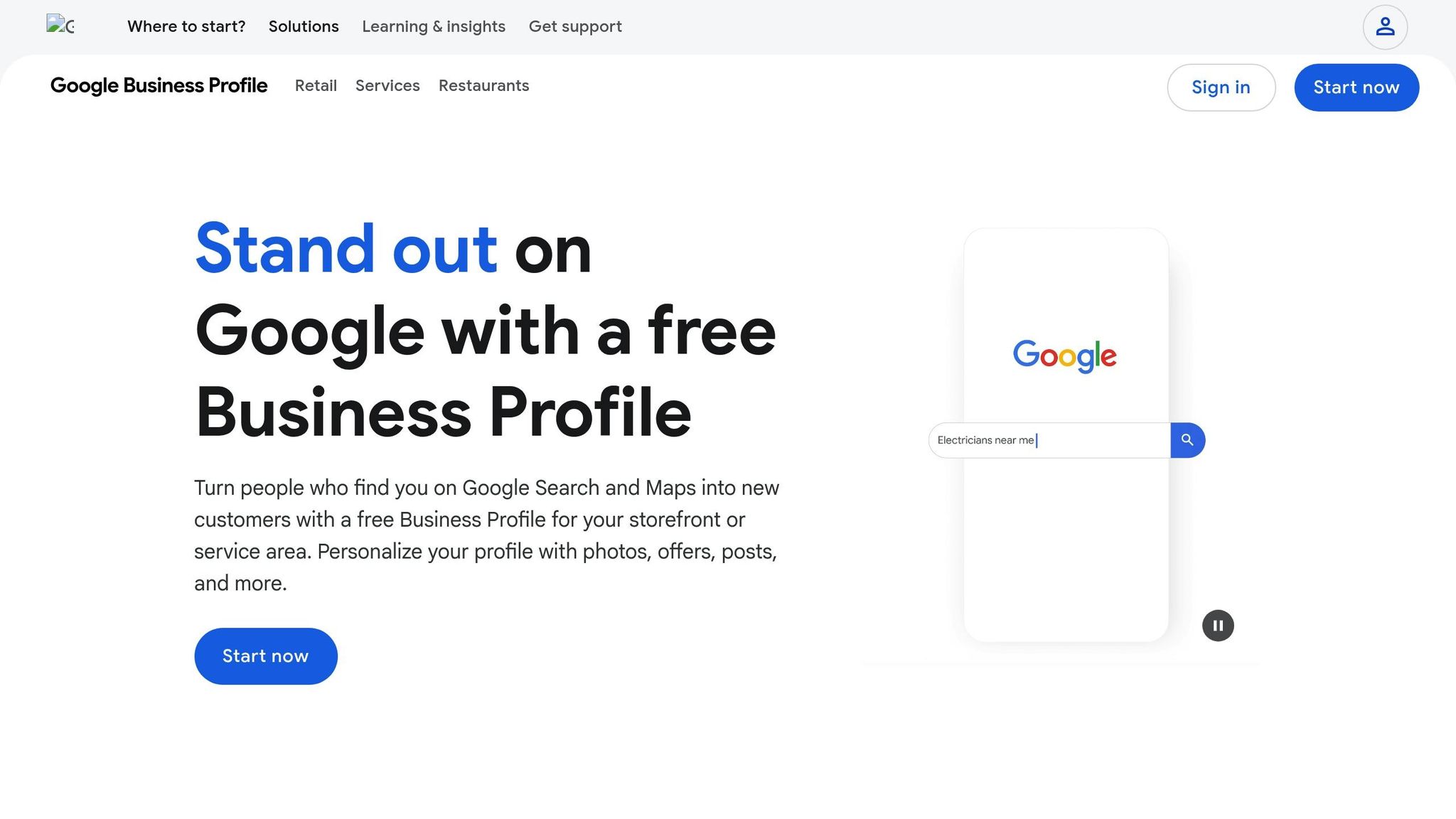
Your Google Business Profile (previously known as Google My Business) often serves as the first impression for potential local customers. A well-maintained and optimized profile can significantly improve your visibility in local search results and Google Maps. AI can lend a hand by generating descriptions that highlight your business’s strengths in a specific location. Here’s an example of an AI prompt you can use:
"Write a Google My Business description for a ‘[type of business]’ in ‘[city, state]’ showcasing its strengths."
This kind of prompt makes it easier to create tailored descriptions that enhance your local search presence and attract more customers.
5. Meta Tags and Technical SEO Prompts
Once you’ve tackled content optimization and local SEO, it’s time to dive into the technical side of things. These behind-the-scenes elements are the backbone of your site’s performance. With the help of AI prompts, you can quickly identify and address issues – like meta tags and overall site health – that help search engines rank your content effectively.
Regular SEO Audits and Technical Fixes
Keeping your site in top shape requires regular technical audits. AI can scan your website and pinpoint key problems, making it easier to resolve them. From broken links and sluggish page speeds to missing meta tags and indexing troubles, a single prompt can reveal it all.
Here’s a simple example to get started:
"Conduct an SEO audit of our website, pointing out critical issues and recommending fixes to improve our search engine rankings".
This kind of analysis highlights crawl errors, duplicate content, and other technical roadblocks, offering actionable fixes to safeguard your rankings.
After completing an audit, AI can also simplify the process of creating structured data. Adding structured data enriches your search listings with features like rich snippets, which can make your content more appealing to users. For instance, you can use targeted prompts to generate schema markup for specific page types.
For a recipe page, try: "Generate structured data schema using these details: [provide recipe details]." [Source: Search Engine People, March 2025].
For FAQ pages, a more tailored approach works best: "Act as an expert social media marketer. Create a FAQ page schema markup based on the following blog post for a business. Before you start with this task, ask me a few questions about the business so you can provide the best results possible. BLOG_POST: <blog post>" [Source: GoDaddy, March 2024].
If you’re updating older content, you can prompt AI to "propose suitable schema types and generate a JSON-LD template [Source: Target Internet]," giving you a ready-to-use framework that just needs a bit of customization.
The trick to getting the best results? Be specific. The more details you provide about your business, content type, and audience, the more precise and actionable the AI’s recommendations will be. These technical prompts work hand-in-hand with your content and local SEO efforts, ensuring your site is fully optimized from every angle.
sbb-itb-58f115e
6. Content Personalization Prompts
Once you’ve fine-tuned your content and technical setup, it’s time to make sure your messaging connects with the unique needs of different audience segments.
Personalizing Content for Specific Audience Segments
Generic messaging just doesn’t cut it anymore. Your audience expects content that feels tailored to their specific needs, challenges, and preferences. This is where AI prompts can step in to help you craft customized variations of your core message.
Start by segmenting your audience. Think about grouping them by factors like industry, job role, pain points, or where they are in the customer journey. Then, use AI to tweak your messaging for each group. For instance, if you’re discussing project management software, the tone and focus for startup founders will differ from what enterprise IT managers might need.
Here’s a prompt to try: "Rewrite the blog post introduction for [audience segment], addressing their primary challenge ([specific pain point]) in language suited to [industry/role]. Insert original content: [paste your content]."
You can also personalize email sequences based on user behavior. Let’s say someone downloads a specific resource – use AI to create follow-up emails that build on that interest. For example: "Write a personalized email series for users who downloaded our [resource name]. Address their likely next questions: [list 2-3 questions]. Limit each email to 150 words and include a clear call-to-action."
Another great use case is tailoring landing pages. AI can help you refine the copy to resonate with specific personas. For example, you could prompt it to: "Adjust this landing page copy for [persona name], emphasizing [specific benefit] over [other benefit]. Highlight case studies from [relevant industry] and adjust the tone to be more [formal/casual/technical]."
The trick to making this work is giving AI enough context about your audience. Include details like demographics, goals, challenges, and their preferred communication style. The more specific you are, the better AI can adapt the tone, examples, and messaging to align with what will resonate most with that group. This method is especially effective when you’re producing content for multiple channels or markets, as it ensures consistency while keeping the messaging relevant for each audience segment.
7. Competitive Analysis Prompts
Understanding what your competitors are doing well – and where they’re falling short – adds a powerful layer to your SEO strategy. By analyzing their strengths and weaknesses, you can uncover opportunities to improve your own approach. With AI, this process becomes faster and more precise, taking competitor research beyond the limits of manual effort. Let’s dive into how AI prompts can help you discover actionable backlink opportunities from your competitors.
Uncovering Competitor Backlink Opportunities
One of the most effective ways to leverage competitive analysis is by examining your competitors’ backlink profiles. These profiles can reveal untapped opportunities for building your own high-quality links.
AI tools can help you dig into competitors’ backlinks, identify patterns, and pinpoint high-authority referring domains. The goal? To focus on the quality of the links and the type of content that’s earning them.
Here’s a prompt you can try: "Analyze the backlink profile of [competitor domain]. Identify their top 10 referring domains by authority, the types of content that earn the most backlinks, and common characteristics of sites linking to them. Then suggest 5 realistic link-building opportunities for my site [your domain] based on gaps in their profile."
AI can also help you spot specific content that’s attracting a lot of backlinks: "Review [competitor URL] and list the top 5 pages with the most backlinks. For each page, describe the content format, topic angle, and what makes it link-worthy. Then suggest how I could create similar or better content on these topics: [list your relevant topics]."
Another valuable tactic is identifying broken or outdated links in your competitors’ profiles. This creates opportunities for outreach: "Identify potential broken link opportunities from sites linking to [competitor domain]. Focus on resources or tools pages in [your industry]. Suggest outreach angles I could use to offer my content as a replacement."
To get the most out of these prompts, be as specific as possible. Clearly define your industry, content focus, and target audience. This ensures the AI delivers insights that are highly relevant, helping you craft a backlink strategy that puts you ahead of the competition.
8. Analytics and Performance Prompts
Tracking SEO performance is one thing, but turning that data into actionable strategies is another. This is where AI steps in, transforming raw analytics into clear insights that help you understand what’s working, what needs improvement, and where to focus next. By using AI prompts, you can uncover meaningful patterns and recommendations from your website data, making tools like GA4 reports even more effective.
Extracting Content Strategy Insights from GA4 Data
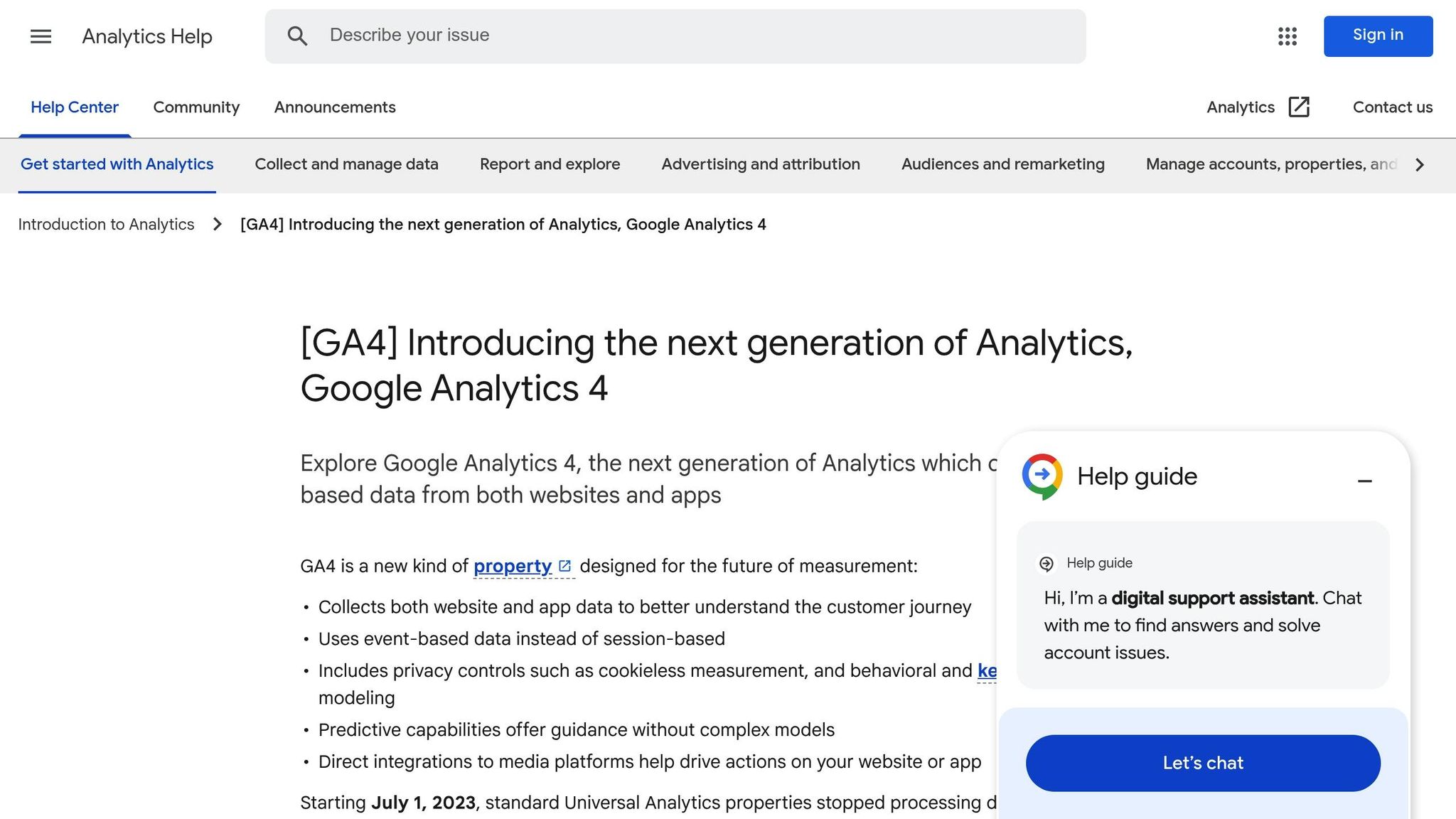
When it comes to refining your content strategy, Google Analytics 4 (GA4) is packed with metrics. But sorting through all that data can be overwhelming. AI can simplify the process by analyzing traffic trends and content performance across channels, helping you pinpoint what resonates most with your audience.
Start by exporting your GA4 data. A good place to begin is with the Pages and screens report, which includes metrics like page title, screen class, sessions, engagement rate, and average engagement time. Once you have this data, you can input it into an AI model for analysis.
Here’s an example of an AI prompt that can help turn your GA4 data into actionable insights:
"Analyze this GA4 data export [paste your data]. Identify the top 10 content pieces based on engagement rate and average engagement time. For each, note the primary traffic source (organic, social, direct, referral). Then, highlight 3 common themes among high-performing content and suggest 5 new article ideas that align with these patterns."
You can also use AI to evaluate how your content performs across different channels:
"Review this GA4 Pages and screens report [paste data]. Break down content performance by traffic source. Which topics perform best on organic search, social media, and email? Based on these insights, recommend a promotion strategy for my upcoming articles on [list your planned topics]."
Another powerful use of AI is identifying underperforming content that could benefit from optimization:
"Analyze this GA4 data [paste export] and find pages with high sessions but low engagement. For these pages, suggest possible reasons for the drop-off and provide specific tactics to improve engagement."
To get the most useful insights, it’s important to provide clean, detailed data. For example, include page titles instead of just URLs to give the AI more context about your content. The more specific and clear your data and questions are, the better the AI’s recommendations will be.
9. Internal Linking Prompts
A solid internal linking structure not only helps search engines understand your site’s hierarchy but also keeps visitors engaged for longer. However, manually mapping internal links can be daunting, especially for large content libraries. That’s where AI steps in – analyzing your content and suggesting effective internal linking opportunities to boost SEO and enhance user navigation. Once you’ve tackled technical optimization, refining your internal linking strategy can further elevate both search rankings and user experience.
Building a Strategic Internal Linking Map
Internal linking plays a crucial role in reinforcing your site’s structure and relevance. The key is to connect related content in a way that benefits both readers and search engines. AI can review your existing articles and identify natural opportunities for linking based on topic relevance, keyword overlap, and content depth.
To get started, provide AI with a detailed list of your content: titles, URLs, primary keywords, and brief descriptions. The more context you offer, the better the recommendations will be.
Here’s an example of a prompt to develop a comprehensive internal linking strategy:
"I have the following articles on my website [paste list with titles, URLs, and primary keywords]. Analyze the topical relationships between these pieces. Specify 3–5 internal links with anchor text for each article."
If you’re focusing on a specific article that needs more internal links, you can take a targeted approach:
"I’m updating this article about [topic] [paste article content or outline]. Here’s my full content library [paste list of articles with titles and brief descriptions]. Identify 5–7 opportunities within this article to add internal links, specifying the location, target, and anchor text."
Another valuable use case is addressing orphan pages – articles that have few or no internal links pointing to them. These pages often struggle to rank because search engines can’t easily discover them. Use a prompt like:
"Review my website’s content inventory [paste list of all articles with current internal link counts]. Identify articles with fewer than 3 internal links pointing to them. For each orphan page, suggest 5 existing articles where I could naturally add links to these underperforming pieces. Include the specific section in each article where the link would fit best."
You can also optimize your anchor text distribution to make your internal links more natural and effective. Instead of repeating the same anchor text, vary it with contextually relevant and semantically diverse options:
"I want to link to my pillar article about [topic] from 10 different blog posts. The target page focuses on [brief description and primary keyword]. Generate 10 different anchor text variations that are natural, contextually relevant, and include semantic variations of the main keyword."
10. Audience Engagement Prompts
Once you’ve nailed technical SEO and internal linking, the next big task is keeping your audience engaged. Traffic gets people to your site, but engagement is what turns casual visitors into loyal followers. AI can be a game-changer here, helping you craft content that resonates, sparks discussions, and builds lasting connections. Let’s explore how to take your audience interaction to the next level.
Creating Interactive Content That Sparks Conversation
After optimizing your site, interactive content can take your strategy even further. The goal here is to move readers from passively consuming content to actively participating in it. AI can assist in designing interactive features that encourage your audience to get involved.
Think about what kind of content naturally drives engagement. Polls, quizzes, discussion prompts, and thought-provoking questions are excellent starting points. However, they need to align with your audience’s interests and reflect your brand’s personality.
Here’s a prompt to brainstorm interactive content ideas:
"I run a [type of business] targeting [audience description]. My recent blog post about [topic] got good traffic but low engagement. Suggest 5 interactive content ideas I can add to this article to encourage comments, shares, and repeat visits. Include steps for implementation and a clear call-to-action."
To amplify reach, create seven social media posts tailored for platforms like LinkedIn, Twitter, and Facebook. Use engaging questions and encourage your audience to share their experiences. Don’t forget to include relevant hashtags and post at optimal times to maximize visibility.
For email campaigns, engagement often looks different – it’s about open rates, click-throughs, and replies. Use AI to craft personalized follow-up emails:
"I’m sending a follow-up email to subscribers who read my article about [topic] but didn’t take any action. Write 3 different email variations to re-engage them by asking for feedback, offering extra value, or addressing common objections."
Another powerful approach is community-driven content, where your audience helps shape future topics. This ensures your content meets their needs:
"I want to involve my audience in creating content for my [industry] blog. Design a survey with 10 questions to uncover their biggest challenges, preferred content formats, and topics they’d like me to cover. Include a mix of multiple-choice and open-ended questions to encourage detailed responses."
Finally, AI can help you craft thoughtful replies to audience comments. Instead of a generic “Thanks for reading!” response, aim to add value:
"A reader commented on my blog post about [topic] with this question: [paste comment]. Write a detailed response that answers their question, offers additional insights, and includes a follow-up question to keep the conversation going. Maintain a friendly and approachable tone."
Conclusion
AI prompts are changing the game for SEO and content creation, turning hours of manual effort into just minutes of focused, effective work. The examples shared in this article are practical tools you can start using right away to boost your digital marketing efforts.
These prompts bring both speed and flexibility to the table. Whether you’re a solo entrepreneur managing a small website or part of a marketing team juggling multiple client accounts, they can be tailored to fit your specific needs. For instance, you can use them to research keywords for a local bakery in Portland, Oregon, just as easily as you can optimize technical SEO for a nationwide e-commerce platform. The trick lies in asking the right questions and giving the AI enough context to deliver meaningful results.
From discovering hidden long-tail keywords to crafting click-worthy meta descriptions or fine-tuning your internal linking strategy, these prompts cover all the bases. Each one targets a specific aspect of SEO and content marketing, and you can combine them to tackle your top priorities.
Start by focusing on one area that addresses your biggest challenge. Test the prompts, tweak them based on your results, and gradually expand into other areas. Over time, you’ll get a feel for what works best in your industry and market.
AI doesn’t replace your expertise – it enhances it. While these prompts can generate ideas, frameworks, and drafts, it’s your industry knowledge, brand voice, and strategic insight that make the final content stand out. Always review AI-generated output with your audience and business goals in mind. Does the keyword align with your services? Does the content reflect your brand’s values? Your human judgment is what transforms AI’s suggestions into impactful marketing.
As the marketing landscape evolves and AI technology continues to advance, staying curious and experimenting will keep you ahead. Adapt the examples in this article to suit your unique needs, and explore new ways to combine prompts for more comprehensive workflows. Share your findings with your team and build a go-to library of effective prompts.
To put these strategies into action, choose three prompts from this article that address your current challenges. Test them using your AI tool of choice this week. Track the outcomes – whether that’s time saved, higher rankings, or better audience engagement. Refine your approach, expand your efforts, and take the lead over competitors still relying on manual methods. The time to start is now.
FAQs
How can I use AI prompts in my SEO strategy while keeping my brand’s unique voice intact?
To integrate AI prompts into your SEO strategy while keeping your brand’s voice intact, start by aligning the prompts with your brand’s tone and style. You can do this by providing examples of your existing content or clearly stating the tone and style you want the AI to follow within the prompt.
Specificity is key for better results. Make your prompts detailed by including clear instructions, relevant keywords, and specifying the desired format or length of the output. Once you have the AI-generated content, review and tweak it to ensure it meets your brand guidelines and truly connects with your audience.
How can I validate AI-generated keyword suggestions to ensure they match current search trends and user intent?
To make sure AI-generated keyword suggestions are effective, begin by comparing them with trusted keyword research tools. Check for search volume, competition levels, and relevance to confirm they align with current search behaviors.
Next, dig into the context of these keywords to see if they match your audience’s intent. Are they looking for information, ready to make a purchase, or simply navigating? Understanding whether the keyword fits an informational, transactional, or navigational purpose is key. Combining AI recommendations with solid data ensures your SEO strategy remains both accurate and audience-focused.
How can I track the effectiveness of AI-optimized content on my website’s SEO and user engagement?
To understand how AI-optimized content is performing, pay close attention to metrics that showcase both SEO progress and user engagement. Start by keeping an eye on conversion rates, scroll depth, and dwell time – these reveal how effectively users are interacting with your pages. On the search performance side, track shifts in keyword rankings, organic click-through rates (CTR), and bounce rates to see how well your content is resonating with search engine users.
For a more detailed picture, examine internal link activity. For instance, look at clicks leading to pricing or demo pages to measure how your content drives action. Also, check if your pages are securing featured snippet visibility, as this can significantly boost traffic. By regularly reviewing these metrics, you’ll get a clearer sense of how AI-driven optimizations are shaping your website’s performance.
Related Blog Posts
- SEO Optimization with AI: A Step-by-Step Prompt Guide
- Structuring AI Prompts for Maximum SEO Impact
- Best Prompt Collections for B2B Marketing Teams
- Ultimate Collection of AI Prompts for Business and Marketing
Put this into practice: browse AI marketing prompts and SEO prompts in the God of Prompt library — copy, paste, and run.
Prompts for this topic
Put this article to work with ready-to-use prompts from the God of Prompt library.
Keep reading

Ultimate AI Prompt Resources for Marketing and Content
Craft context-rich AI prompts, build a reusable prompt library, and choose the best tools to speed marketing and content work.


SEO Content Prompt Creator for Better Rankings
Struggling with blog ideas? Use our SEO Content Prompt Creator to craft optimized article prompts tailored to your niche and audience!

15 Must-Have ChatGPT Prompts for Content Marketing in 2026
Explore 15 essential ChatGPT prompts designed to streamline content marketing strategies for 2026, enhancing SEO, social media, and email campaigns.

The best of the blog, in your inbox
One email when notable prompts, tools, and model updates land. No spam, unsubscribe anytime.
Join 100,000+ subscribers. One email a week, real prompts, tools, and model updates. Unsubscribe anytime.