

Best Complete Prompt Solutions for Growing Companies




AI prompts can save businesses time and money. Tools like God of Prompt, PromptBase, and AIPRM offer different approaches to help companies improve operations, marketing, and customer service. Here's a quick overview of each:
- God of Prompt: Offers 30,000+ ready-to-use prompts for business tasks. One-time payment options make it budget-friendly for long-term use. Works with tools like ChatGPT and Midjourney and delivers via Notion for easy access.
- PromptBase: A marketplace to buy individual, user-generated prompts. Great for specific needs but costs can add up for frequent purchases.
- AIPRM: Designed for enterprises needing advanced prompt management. Subscription-based with tools for creating and refining custom prompts but requires technical expertise.
Key takeaway: God of Prompt is ideal for small to medium businesses needing a cost-effective, all-in-one solution. PromptBase suits niche needs, while AIPRM is best for large enterprises with dedicated technical teams.
Quick Comparison:
| Feature | God of Prompt | PromptBase | AIPRM |
|---|---|---|---|
| Prompt Access | 30,000+ pre-made prompts | Pay-per-prompt marketplace | Custom prompt management |
| Pricing | One-time payment ($37–$150) | Individual prompt prices vary | Subscription-based |
| Ease of Use | User-friendly (via Notion) | Flexible but requires testing | Requires technical expertise |
| Best For | Small/medium businesses | Niche, specific needs | Large enterprises with tech teams |
Each tool fits different needs, so choose based on your goals, budget, and team resources.
1. God of Prompt
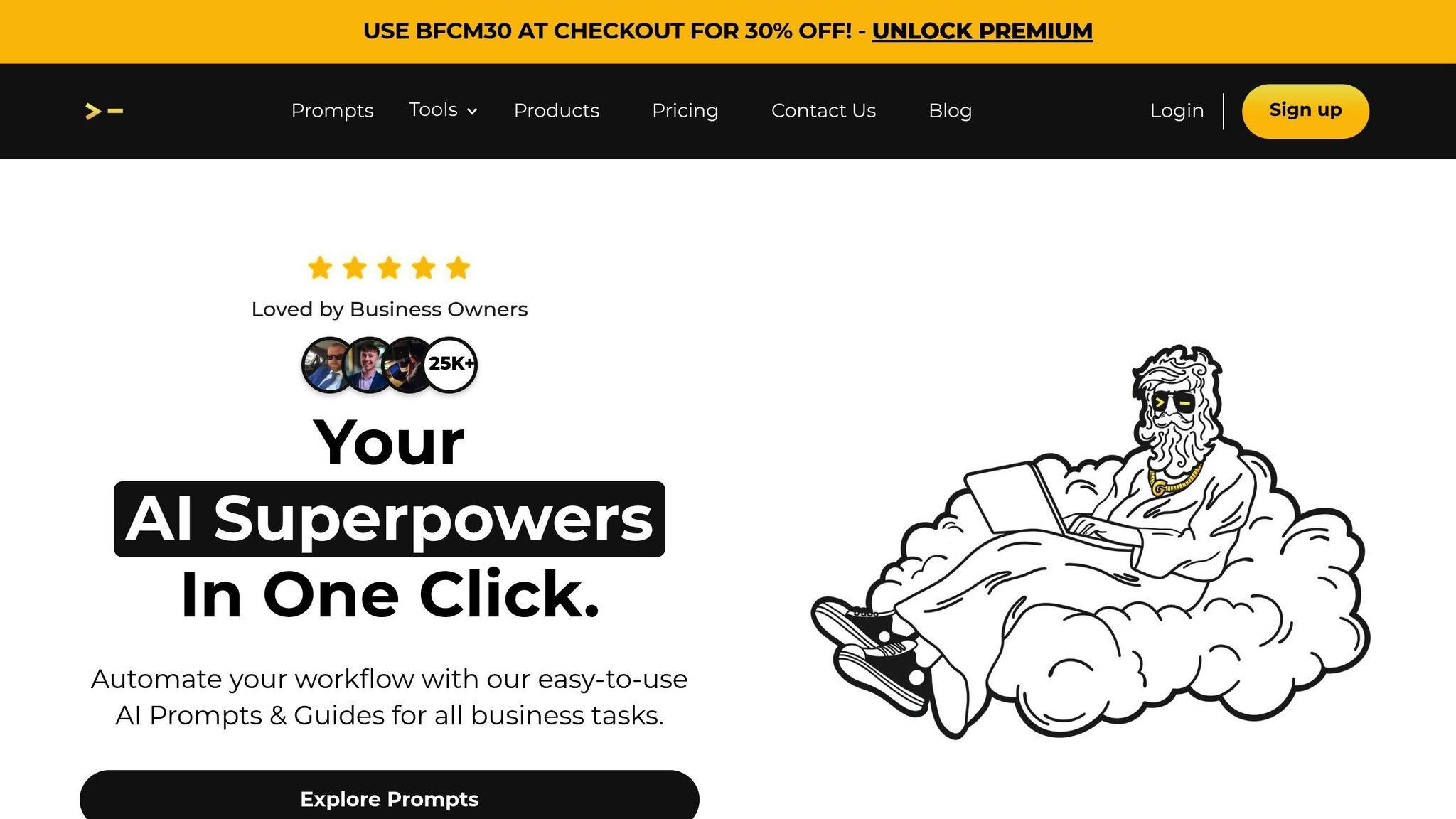
God of Prompt provides access to a massive collection of over 30,000 AI prompts, along with guides and toolkits, all available through a single one-time payment for lifetime access.
Prompt Library Size
The platform boasts an extensive library of more than 30,000 prompts tailored to key business functions. These prompts are neatly organized into focused bundles, such as the ChatGPT Bundle with 2,000+ prompts updated weekly and the Midjourney Bundle featuring over 10,000 visual prompts. The library covers categories critical for business growth, including:
- Business operations
- Marketing
- Finance
- E-commerce
- Education
- Sales
- Productivity
- SEO
- Writing
This structured organization ensures businesses can quickly find the tools they need without wasting time on irrelevant options.
Pricing and Affordability
God of Prompt offers a straightforward pricing model with lifetime access through a one-time payment. Here's a breakdown of the options:
- Complete AI Bundle: $150.00
- Writing Pack: $37.00
- ChatGPT Bundle: $97.00
- Midjourney Bundle: $67.00
There’s also a free tier that includes over 1,000 ChatGPT prompts and 100 Midjourney prompts. However, some advanced features require a ChatGPT Plus subscription priced at $20 per month.
This pricing approach can lead to significant savings over time, potentially cutting costs by hundreds of dollars over a couple of years compared to recurring subscription models.
Platform Compatibility
God of Prompt is designed to work seamlessly with popular AI tools, including ChatGPT (v3.5 and 4.0), Claude, Gemini AI, and visual platforms like Midjourney, Grok, Veo, and Sora. All prompts are delivered through Notion, ensuring smooth integration into existing workflows.
Business-Specific Features
The platform goes beyond just prompts by offering practical business solutions. It provides:
- Tailored templates
- Implementation guides
- A custom GPTs toolkit
To ensure confidence in their service, God of Prompt includes a 7-day money-back guarantee and regular updates via an AI tools directory. These updates help businesses stay on top of the rapidly changing AI landscape.
Additionally, the platform supports teams in adapting prompts to meet evolving needs, making it easier to evaluate whether AI can deliver the efficiency improvements they’re looking for. With its targeted solutions and regular updates, God of Prompt is a valuable resource for businesses navigating the dynamic world of AI.
2. PromptBase
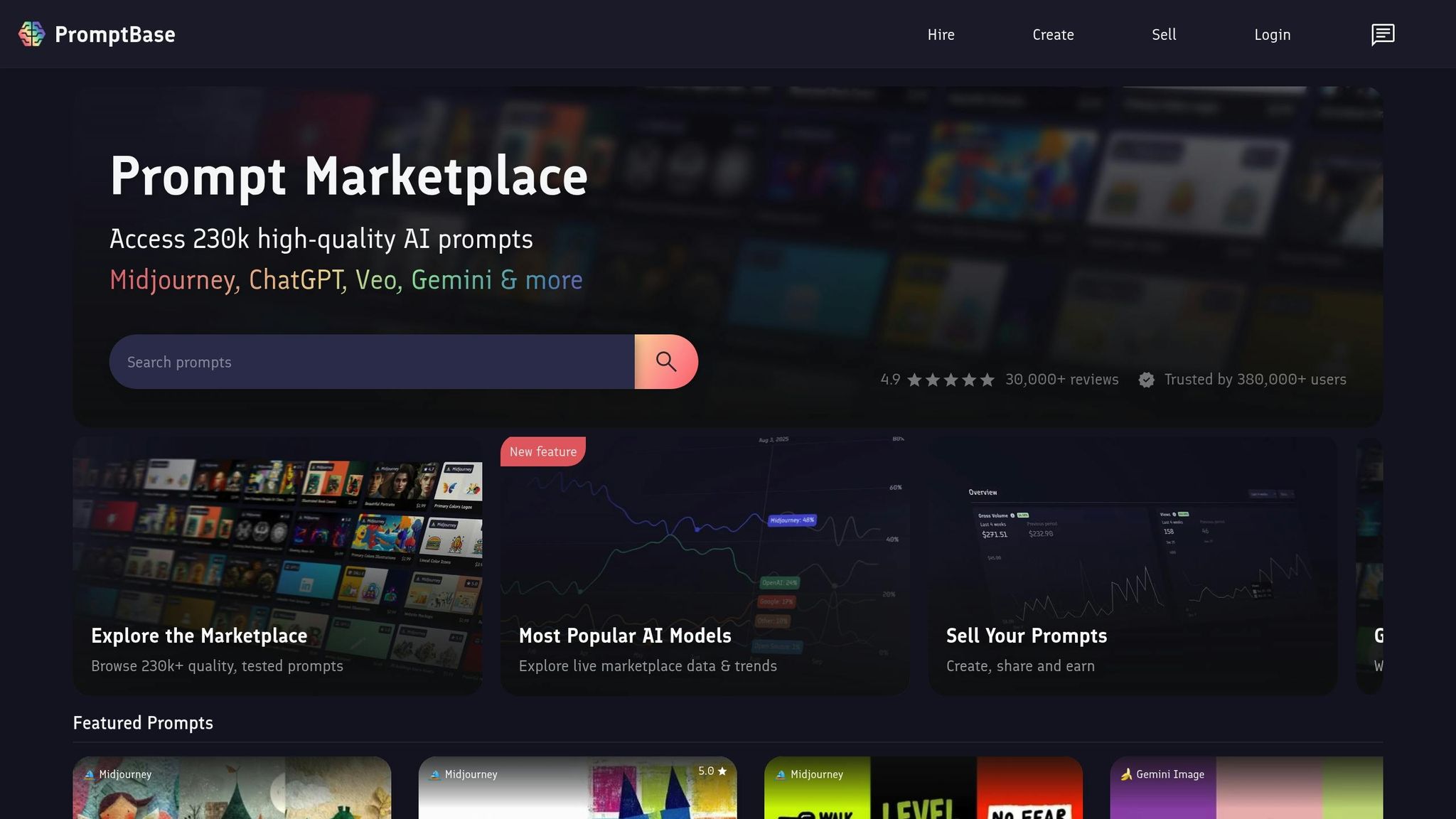
PromptBase is a marketplace where users can explore and purchase AI prompts crafted by various contributors. Instead of offering bundled collections, it follows a pay-per-prompt model, allowing businesses to buy exactly what they need, when they need it. This setup is ideal for those seeking precision and flexibility, especially compared to all-in-one bundle solutions.
Prompt Library Size
The platform features a wide range of user-generated prompts, giving businesses access to niche, specialized solutions designed by experts. Since PromptBase operates as a marketplace rather than a curated library, the selection depends entirely on what creators choose to upload and sell.
This approach is particularly helpful for companies looking to tackle unique challenges or address specific industry needs. Whether it’s a highly specialized workflow or an uncommon business issue, the marketplace offers a tailored solution for those who value precision over general-purpose prompts.
Pricing and Affordability
With PromptBase, users pay for each prompt individually. This eliminates recurring subscription fees but can become costly for businesses requiring multiple prompts. Prices vary based on the creator and the complexity of the prompt.
For example, a marketing team might need prompts for content creation, social media, email campaigns, and SEO. While this model allows businesses to avoid upfront subscriptions, the expenses can add up quickly as more prompts are purchased. Over time, this can make the pay-per-prompt model more expensive than a one-time payment bundle that provides broader access.
Platform Compatibility
Prompts available on PromptBase are designed to work with various AI platforms. However, compatibility depends on how each creator designs their prompts, so businesses may need to verify suitability for their specific tools.
Business-Specific Features
PromptBase offers both opportunities and challenges for growing companies. The platform's flexibility is its standout feature, giving businesses access to specialized prompts tailored to their needs. However, this flexibility comes with some trade-offs.
While the pay-per-prompt model allows businesses to test individual prompts before committing to larger investments, it can also lead to inconsistent quality. This variability means teams may need to spend extra time testing and refining prompts to ensure they meet their standards. For companies that rely on standardized, high-quality prompts across teams, this inconsistency can create workflow inefficiencies and additional overhead.
On the plus side, the ability to test prompts individually provides a low-risk way to evaluate their effectiveness before scaling up. However, compared to a pre-organized library with comprehensive options, this process can be more time-consuming, requiring additional effort to search, purchase, and test prompts.
3. AIPRM
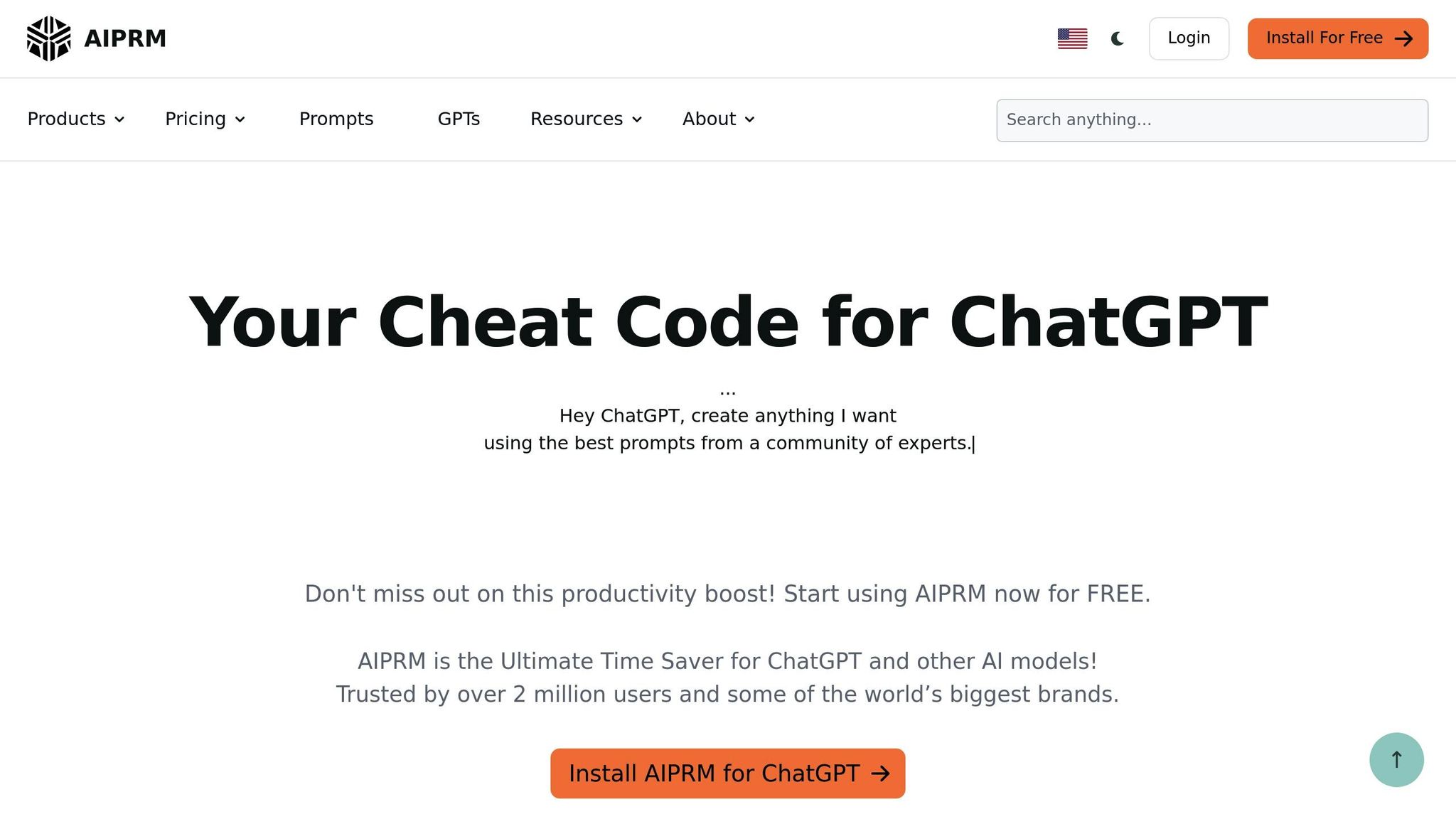
AIPRM is a platform designed to handle AI prompt management for businesses with complex workflows. It’s aimed at developers and enterprise teams that need advanced tools for testing, versioning, and managing custom prompts. This makes it a good fit for organizations ready to commit to building a robust AI infrastructure, rather than those looking for quick, plug-and-play solutions.
Prompt Library Size
Instead of offering a wide selection of pre-made prompts, AIPRM focuses on giving businesses the tools to create and manage their own. For companies with the resources to dedicate technical teams to this task, this approach can be highly effective. However, without those resources, you might find yourself paying for features you can’t fully use.
Pricing and Affordability
AIPRM operates on a subscription model, which means ongoing costs that need to be factored into your budget. Over time - think three to five years - these recurring fees could surpass the cost of investing in a one-time solution. While this pricing structure works well for large enterprises with ample AI budgets, smaller companies may find it less feasible.
Platform Compatibility
The platform is built with a focus on integrating deeply with existing systems, enabling automation and streamlining complex workflows. This makes it ideal for organizations with established tech stacks and dedicated technical teams to manage these integrations. Its strength lies in its ability to adapt to and enhance business-specific operations, but this also means it’s not the most user-friendly option for less tech-savvy teams.
Business-Specific Features
AIPRM shines in its ability to support advanced testing and versioning of custom prompts. These features allow businesses to systematically refine their prompts while maintaining strict version control, ensuring consistency and reliability in enterprise applications.
That said, the platform’s technical nature can be a hurdle for non-technical users. It often requires dedicated staff and significant training to make full use of its capabilities. For companies, this means weighing the benefits of its powerful tools against the challenges of complexity and the cost of ongoing support.
When deciding whether AIPRM is the right fit, consider your team’s technical expertise and your long-term AI goals. If you have developers on hand and need enterprise-level prompt management with robust automation, AIPRM could be a strong choice. On the other hand, if your focus is on empowering non-technical teams with ready-to-use prompts that deliver quick results, the platform’s complexity and recurring costs might outweigh its advantages.
Ultimately, businesses need to assess whether they prioritize the ability to build and manage custom prompts or prefer immediate access to pre-built solutions. This decision should align with your technical resources and long-term strategy.
sbb-itb-58f115e
Pros and Cons
Let’s break down the key highlights and considerations of God of Prompt to give you a clear picture of what it brings to the table.
What stands out about God of Prompt:
- Extensive, well-organized prompt library: Covers a wide range of areas like business operations, marketing, SEO, and productivity, making it a versatile tool for different needs.
- Bundles tailored for efficiency: Categorized prompt bundles are designed to streamline workflows for specific business functions, saving time and effort.
- One-time payment structure: No recurring fees mean simpler budgeting and cost management.
- User-friendly access via Notion: Built with non-technical teams in mind, ensuring ease of use for all.
- Helpful extras included: Comes with how-to guides, practical tips, and a 7-day money-back guarantee for added peace of mind.
Things to consider:
While God of Prompt has a lot going for it, there are a few factors to weigh. For instance, some advanced features may require a ChatGPT Plus subscription, so it’s worth checking if this aligns with your specific needs.
These points highlight why God of Prompt has become a popular choice for companies looking to enhance their productivity and streamline their processes.
Conclusion
After a deep dive into its features and benefits, it's clear that God of Prompt stands out as a practical tool for improving operations and fueling business growth. Choosing the right AI prompt solution often boils down to your company’s current stage and unique challenges. For growing businesses juggling tight budgets, small teams, and the need to scale effectively, God of Prompt offers a compelling option.
What makes God of Prompt particularly appealing is its one-time payment model, which eliminates the ongoing costs of subscriptions - expenses that can quickly pile up as your team grows. With a library of over 30,000 prompts covering areas like business operations, marketing, SEO, and productivity, it’s designed to address all major business functions.
For teams with diverse needs, the Complete AI Bundle offers the most comprehensive coverage, supporting everything from content creation to sales and operations. On the other hand, businesses just starting out or focusing on specific areas can opt for specialized bundles, ensuring you get exactly what you need without paying for extras you won’t use.
Another advantage is its Notion-based delivery, which allows your team to hit the ground running - no technical training or lengthy onboarding required. Add in the included how-to guides, lifetime updates, and a 7-day money-back guarantee, and you’ve got a low-risk, high-reward solution that evolves alongside your business.
For startups and small businesses with limited resources, the free tier provides a chance to explore its value before committing financially. As your company grows, you can seamlessly transition to paid bundles that align with your scaling needs.
FAQs
How does God of Prompt keep its AI-generated prompts relevant and effective for growing businesses?
God of Prompt keeps its AI-generated prompts sharp and effective by constantly updating them to reflect the latest industry trends, user insights, and evolving business needs. By using advanced algorithms and analyzing real-time data, the platform fine-tunes its prompt suggestions to ensure they remain practical and relevant to current market conditions.
On top of that, God of Prompt specializes in providing customized solutions for key business areas like marketing, automation, and productivity. This approach ensures that companies, especially those in growth phases, can depend on prompts designed to tackle their specific challenges and support efficient scaling.
What advantages does God of Prompt's one-time payment model provide over subscription-based services?
God of Prompt's one-time payment model brings some clear advantages for companies looking to grow. One of the standout perks is cost predictability - no monthly fees to monitor, making it easier to plan budgets without surprises. This can be a game-changer for businesses expanding their operations, as it removes the headache of tracking recurring charges.
Another big plus? Long-term value. With a single payment, businesses don’t need to worry about future price hikes or hidden costs popping up later. On top of that, it reduces administrative work - no need to juggle subscription renewals or payments. For companies focused on cutting down on distractions and prioritizing growth, this approach offers an efficient and stress-free way to manage expenses.
How can businesses seamlessly use God of Prompt’s AI prompts with Notion to improve workflows?
Integrating God of Prompt's AI-generated prompts into your Notion workflows can simplify processes and help you get more done. Start by pinpointing areas in your Notion setup where these prompts could make a difference - think project management, task organization, or content planning. Once you've identified those, copy the relevant prompts from God of Prompt and tailor them to fit your specific Notion templates or databases.
To make things even smoother, consider building custom templates in Notion that already include these prompts. This not only saves time but also keeps your team's workflows consistent. Be sure to periodically review and tweak how you're using the prompts to ensure they stay aligned with your business goals as they evolve.
Related Blog Posts

Loved by Business Owners


Based on 1K reviews
Get smarter on AI every week.
Ready to transform your business?