
Do AI Models Respond Differently Depending on Region? Unpacking the Localized Nuances of Global AI



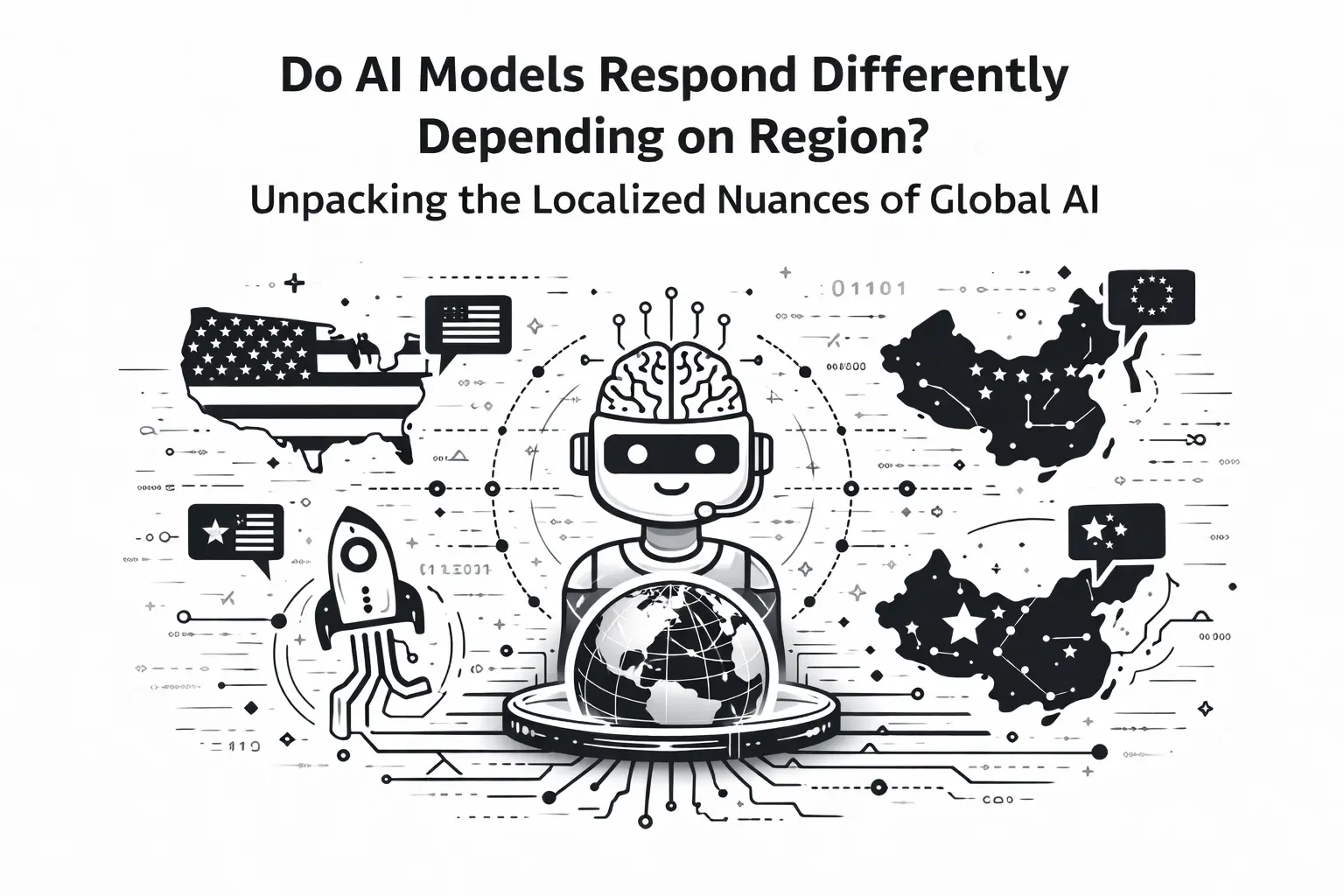
If you travel often and use AI tools, you've probably noticed your AI assistant behaving a bit differently when you’re abroad. This is the result of the localization aspect of AI models.
Like the real world, the digital world is shaped by a mix of cultural, legal, and linguistic nuances that influence how AI models behave. That localization factor is incorporated into your friendly neighborhood AI, which results in some interesting regional differences in its responses.
From the way a prompt is interpreted to the "safety" filters applied to the output, geography plays a massive role in your AI experience.
ALSO READ: 15 NotebookLM Prompts That Actually Work (Copy, Paste, Done)

Is Localization Only Language?
When we talk about "localized results," many people think primarily about language differences. However, when we talk about localization from the AI model's perspective, we talk about how AI changes what it shows depending on where you are. We're talking about cultural context, societal norms, and even legal frameworks. All of this changes in order for you to get the most "native" results wherever you are.
Linguistic Lenses: Beyond Translation
Sure, an AI can translate "lift" to "elevator," but true linguistic localization goes much deeper. Consider idioms, slang, and cultural references. An AI trained predominantly on American English datasets might struggle with the nuances of British sarcasm or Australian colloquialisms without specific fine-tuning.
For instance, a query about "getting your ducks in a row" might be interpreted literally by an unlocalized AI, whereas a localized model would understand the figurative meaning. Several aspects showcase this:
- Dialect and accent recognition: Speech-to-text models can vary in accuracy depending on the regional accent or local vernacular.
- Formal vs. informal language: The level of formality can shift significantly based on location; an AI model in Tokyo needs to navigate honorifics differently than one in Los Angeles.
- Cultural references: An AI model needs to understand when to use local holidays, historical figures, or popular media to resonate with a regional audience.
The Regulatory Maze: Guardrails and Guidelines
Incorporating regulations into AI localization adds complexity, as different countries have varying rules on data privacy and content moderation.
If you’re using AI in Europe, regulations like GDPR can even shape what features you can access. ChatGPT’s memory feature, which allows the chatbot to retain details across multiple conversations, has been unavailable to users in the EEA and the UK due to data compliance concerns.
The difference is not only in how AI operates, but also in the implications that may follow. Many countries have bans on specific types of content (e.g., China, India), while others restrict AI and how it can be used. This leads to AI models having different filtering or knowledge bases depending on where they originate from.
It’s like having different sets of encyclopedias, each written for a specific national library. AI governance is increasingly fragmented by national interests, directly shaping how these models "think" and interact with us.
Data Sovereignty and Ethical AI
The idea of data sovereignty, which states that information is governed by the laws of the nation where it is gathered, makes things even more difficult. This can affect everything, including how an AI model is trained and how it reacts to questions about delicate political subjects. An algorithm deemed biased in one region but not in another may lead to different approaches to model training and deployment.
You might be thinking, "But my AI is cloud-based; it's everywhere!" Yes, that's true, but where you're accessing it from affects what you get as well. Because most users prefer localized results, AI providers often use IP addresses to estimate a user's location and give them the "closest" relevant answers.
This isn't just to show you the local weather; it can also influence how AI produces its responses. In certain regions, AI chatbots may prioritize results citing local sources.
Geography can also determine whether you can use AI search engines at all. As of 2025, ChatGPT is blocked or unsupported in around 20 countries. For anyone in those regions or for tourists passing through them, using ChatGPT with a VPN is often the only way to access it. By masking your IP address, a VPN lets you connect as though you're in a supported country.
Conclusion
The trend of hyper-localization is only going to accelerate, as AI starts to be integrated into every aspect of our daily routines. We'll see models that are not only country-specific, but possibly city- or demographic-specific as well, recognizing regional slang and knowledge.
What does this mean? We can expect the world to move toward AI models that are contextually aware and capable of delivering a more personalized and richer experience.

Loved by Business Owners


Based on 1K reviews
Get smarter on AI every week.
Ready to transform your business?