
AI for Product Lifecycle: Risk Use Cases




AI is reshaping how risks are managed in product development by identifying and addressing potential issues early. Instead of relying on manual reviews or waiting for problems to arise, AI tools monitor data, predict challenges, and suggest solutions throughout the product lifecycle. Key benefits include:
- Early Risk Detection: AI analyzes data in real time, identifying issues like compliance gaps, data quality problems, or project delays before they escalate.
- Shift Left Approach: Risk management starts early in development, ensuring compliance, security, and accessibility are built into products from the beginning.
- Continuous Monitoring: AI tracks risks across all stages, from planning and data preparation to deployment and maintenance, reducing long-term vulnerabilities.
For example, companies like Reddit and GitHub have integrated AI to streamline processes, improve compliance, and reduce manual effort. AI also helps mitigate risks like data poisoning, model collapse, and unauthorized tool usage. By combining predictive assessments, automated identification, and intelligent mitigation, businesses can create safer, more reliable products while staying ahead of potential disruptions.
Lauren Burke-McCarthy - AI Risk Management as a Product
sbb-itb-58f115e
AI Risk Management Across Product Lifecycle Stages

AI Risk Management Across Product Lifecycle Stages
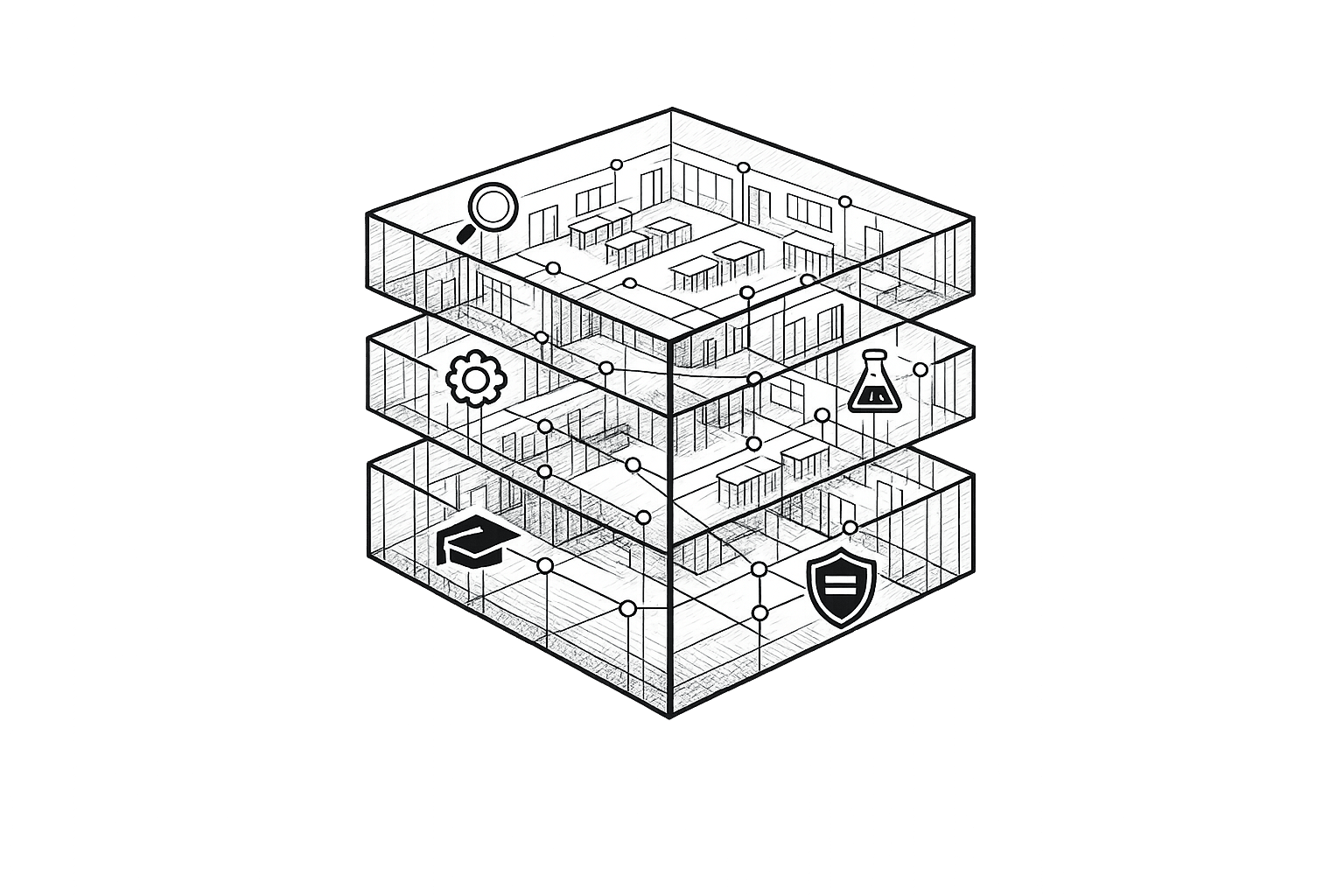
Every stage of a product's lifecycle carries its own set of challenges, and AI has become an essential tool for identifying and addressing these risks early. By integrating risk management into every phase - from initial planning to ongoing maintenance - organizations can create products that are not only reliable but also inspire greater trust. This approach ties early development efforts to continuous oversight, reinforcing the importance of proactive risk prevention.
Scoping & Requirements: Defining Success Metrics
The planning phase is often where risks first take root, especially when goals are unclear or ethical considerations are overlooked. AI helps tackle these issues by analyzing system capabilities and identifying potential harm pathways before development begins. This early intervention, often called a "shift left" strategy, ensures minor oversights don’t snowball into major compliance issues later.
One growing concern during this stage is unauthorized AI usage. A staggering 60% of AI tools used in enterprises today operate without IT oversight or control. For example, employees might use tools like ChatGPT without realizing they’re introducing unmanaged risks. AI-powered discovery tools can scan enterprise software usage, identifying these blind spots and bringing them under governance. This is critical, given that while over 80% of enterprises use AI, fewer than 25% have a formal AI governance framework in place.
Organizations must also define success metrics that go beyond basic functionality. These metrics include validity, reliability, safety, security, accountability, transparency, and fairness. AI systems, being socio-technical in nature, create risks not only through their technical design but also through the way they’re deployed. Factors like who uses the system, how it’s used, and the societal vulnerabilities it might affect all play a role.
According to the NIST AI Risk Management Framework, "Risk management efforts start with the Plan and Design function in the application context and are performed throughout the AI system lifecycle".
| Risk Identification Method | Description | Primary Goal |
|---|---|---|
| Map Function (NIST) | Establishes context and identifies key actors and impacts | Provides a clear understanding of risks in the application context |
| Aspect-Oriented Analysis | Systematically examines system capabilities and knowledge | Pinpoints hazards inherent to the AI's design |
| Threat Modeling | Links system aspects to societal vulnerabilities | Identifies potential pathways for harm |
| Shadow AI Discovery | Scans enterprise software to detect unauthorized tools | Brings hidden AI usage under governance |
Data Collection & Preparation: Ensuring Data Quality
Once success metrics are defined, maintaining high-quality data becomes the next critical step. AI tools can now automate the detection and correction of missing values, duplicates, incorrect labels, and corrupted datasets, reducing the risk of training failures. These automated processes scale far beyond what manual reviews can achieve, catching issues that might otherwise go unnoticed.
However, data poisoning represents a serious threat. Attackers can tamper with training data directly by altering samples or indirectly by polluting publicly available information before it’s collected by web scrapers.
Google warns, "Each of the stages of data cleaning and transformation introduces the potential of data poisoning or other types of tampering".
Another emerging risk is model collapse, where AI performance deteriorates because it’s trained on "polluted" data - data that may have been generated by other AI systems.
To address these challenges, AI systems now track data lineage and source provenance. Lineage documents every transformation applied to the data, while provenance records the original sources. Together, these tools form the backbone of model governance, helping to pinpoint which models are impacted if a training environment is compromised. Cryptographic signatures can further verify data integrity, flagging any manipulation before ingestion.
Organizations also use automated PII removal and synthetic data generation to protect privacy. Synthetic data, in particular, allows for the creation of training datasets that retain essential features while safeguarding real user information.
Model Development & Training: Building Dependable Models
With safeguards in place during earlier phases, the focus shifts to robust model training. AI streamlines Test, Evaluation, Verification, and Validation (TEVV) processes, ensuring models meet technical, societal, and ethical standards before deployment. These continuous evaluations provide critical insights and help maintain compliance.
It’s also crucial to establish metrics that compare AI performance to human benchmarks using scientifically repeatable methods. Since AI often approaches tasks in ways fundamentally different from humans, these comparisons offer a clearer picture of its capabilities .
Infrastructure safeguards are equally important during training. For instance, access controls ensure that training jobs only use the data they need, reducing the risk of "covert data poisoning", where attackers exploit a model to access or corrupt unrelated data storage layers. These controls also enforce the principle of least privilege, minimizing damage in case of credential compromise.
The "black box" nature of some AI models adds another layer of complexity. When models lack transparency, it becomes harder to measure risks or ensure compliance. For this reason, building interpretability into the model architecture from the outset is far more effective than attempting to add it later.
Monitoring & Maintenance: Continuous Risk Assessment
Risk management doesn’t stop after deployment. AI systems require ongoing monitoring to maintain integrity, especially as data drift - where operational data diverges from the training set - can degrade performance over time . Real-time monitoring tools can detect these shifts early, allowing teams to address issues before they impact users.
Nidhi Jain, CEO and Founder of CloudEagle.ai, emphasizes, "I've seen it happen too many times, an employee changes roles, yet months later, they still have admin access to systems they no longer need. Manual access reviews are just too slow to catch these issues in time".
Automated access reviews address this by regularly revoking unnecessary permissions and identifying dormant accounts or unused API keys. Implementing Identity and Access Management (IAM) best practices can reduce unauthorized access risks by up to 70%.
The rise of autonomous AI agents - systems capable of triggering workflows and making decisions independently - requires additional safeguards. These include safety sandboxing and human oversight to ensure agents don’t exceed their intended authority. A commonly used benchmark, the "30% rule", suggests that no more than 30% of critical business decisions should be made autonomously by AI, with humans retaining oversight for the remaining 70%.
Organizations are also moving toward prospective risk analysis, a forward-thinking approach that anticipates potential failure modes and capability trajectories before they occur. This shift is critical as AI evolves rapidly, often outpacing historical data's ability to predict new risks.
Shamla Naidoo, Head of Cloud Strategy at Netskope, sums it up well: "Compliance is not security. But security must always be compliant".
This distinction underscores the importance of going beyond regulatory checklists. True risk management demands proactive security measures that address both known and emerging threats.
AI Tools and Frameworks for Risk Mitigation
Structured frameworks are shifting risk management from a reactive approach to a more proactive one. One of the most widely used voluntary frameworks is the NIST AI Risk Management Framework (AI RMF) 1.0. This framework was developed collaboratively with over 240 organizations, including private companies, academic institutions, civil society groups, and government entities. It organizes risk management into four key functions:
- Govern: Establishing a culture that prioritizes risk management.
- Map: Identifying the context and specific risks.
- Measure: Using both quantitative and qualitative tools to analyze risks.
- Manage: Prioritizing and acting on identified risks.
For more complex AI systems, the Probabilistic Risk Assessment (PRA) for AI adapts techniques from industries like aerospace and nuclear power, which are known for their high reliability. This method uses "aspect-oriented hazard analysis" to systematically catalog AI capabilities, relevant domain knowledge, and potential risks. It then maps these elements to identify pathways that could lead to harm. PRA includes a workbook tool that consolidates its findings into a risk report card, making it easier to communicate risks to stakeholders. Together, these frameworks provide a foundation for deeper threat analysis.
Threat Modeling Frameworks for AI Systems
Effective threat modeling is critical for predicting how AI systems might cause harm. One example is risk pathway modeling, a method within the PRA framework. This approach traces causal chains from AI capabilities (referred to as "source aspects") to their societal effects (called "terminal aspects") using propagation operators. Additional techniques, such as event and fault trees - borrowed from traditional safety engineering - illustrate how initial failures can escalate into larger problems. Prospective risk analysis goes a step further by identifying new failure modes and projecting harm trajectories before they occur.
Cross-Functional Collaboration for Risk Management
Beyond specialized AI tools, collaboration across diverse teams enhances risk identification. No single group can anticipate every potential risk. Effective AI risk management requires input from product managers, data scientists, engineers, compliance officers, and domain experts throughout a system's lifecycle.
As the NIST AI RMF highlights, "identifying and managing AI risks and potential impacts requires a broad set of perspectives and actors across the AI lifecycle".
Involving teams with varied expertise and experiences helps uncover risks that specialized teams might overlook.
Another key component is validating the context of use. AI developers often lack full visibility into how their systems will be deployed in real-world conditions. Collaboration between developers and those responsible for deployment ensures that assumptions about operating environments are accurate, reducing the likelihood of failures when systems are used outside their intended settings. Bringing in independent assessors during the "Measure" phase also helps minimize internal biases and potential conflicts of interest.
Integrating AI risk management with broader enterprise strategies - such as cybersecurity and privacy protocols - can improve organizational efficiency and create more cohesive outcomes. This effort involves defining clear roles for human-AI interactions and establishing feedback loops to gather insights from end-users and affected communities.
Treating Risk as Technical Debt
While frameworks and collaboration can address many risks, not all can be completely eliminated.
The NIST AI RMF notes that "attempting to eliminate negative risk entirely can be counterproductive in practice because not all incidents and failures can be eliminated".
Instead, organizations should focus on prioritizing risks based on their impact and likelihood, allocating resources to areas where they will make the biggest difference. This approach is similar to how engineering teams manage technical debt: acknowledging that some issues will persist but concentrating on the most critical ones.
Development should pause when risks become unacceptable until they are adequately mitigated. For risks that remain unresolved, organizations must document this residual risk so that end-users and downstream acquirers are aware of potential negative impacts.
Risk management is an ongoing process. Regular reassessment ensures that strategies evolve alongside new threats.
As Douglas Robbins, Vice President at MITRE, explains: "Extracting maximum value from AI while protecting against societal harm requires a repeatable engineering approach for assuring AI-enabled systems in mission contexts".
Use Cases: AI in Risk Management
Supply Chain Optimization and Vendor Risk Assessment
AI is transforming supply chain management by predicting and preventing disruptions before they can affect production. Take IBM, for example. They implemented a cognitive control tower powered by an AI digital assistant to oversee their global supplier network. The result? A staggering $388 million saved through reduced inventory costs, more efficient shipping, and faster decision-making - cutting response times from days to mere seconds. This system taps into historical data, weather trends, financial records, and even social media sentiment to forecast potential material shortages and transportation delays.
One standout feature is the ability to achieve deep supplier transparency. AI tools equipped with optical character recognition (OCR) can analyze historical contracts and bills of materials, mapping out Tier 2 and Tier 3 suppliers. Why is this important? The disruption risk increases as you go deeper into the supply chain - 21% higher at Tier 2 compared to Tier 1 and 27% higher at Tier 3 compared to Tier 2. With this level of visibility, companies can uncover hidden vulnerabilities, like single-source dependencies, buried deep in their supply chains. Early adopters of AI in this space have reported 72% higher net profits and 17% greater revenue growth.
"AI and ML bolster supply chain risk management by identifying vulnerabilities and predicting potential disruptions... allowing organizations to develop contingency plans and mitigate risks before they impact operations." – Gartner
AI doesn’t stop there. It also streamlines compliance processes, automating regulatory checks on documentation.
Automated Compliance Checks for Documentation
Keeping up with ever-changing regulations is a daunting task, but AI-powered systems make it manageable. These systems continuously monitor updates from regulatory bodies and automatically adjust internal policies to meet new requirements. A great example is Amazon Global Trade and Product Compliance, which used AWS Supply Chain’s sustainability features to automate the collection of regulatory compliance data from its suppliers. This move saved the company an estimated 3,000 operational hours annually.
By leveraging natural language processing (NLP) and OCR, AI scans contracts and audit reports to flag potential violations. Companies are even creating AI "personas" modeled after regulatory agencies to test their plans before implementation. These virtual regulators help organizations avoid non-compliance penalties by generating the necessary documentation for testing and monitoring. In fact, when risks are flagged during assessments, 57% of companies now choose to take corrective action - up from just 17% in 2023. Real-time monitoring is also replacing traditional annual audits, with 57% of risk leaders citing operational risks as a key focus when evaluating third parties, a jump from 40% in 2023.
Beyond compliance, AI is proving its worth in analyzing market feedback to stay ahead of competitive risks.
Market Feedback Analysis for Competitive Intelligence
AI is taking market research to the next level by turning it into a continuous process for detecting risks that could impact revenue. Instead of relying on periodic validations, AI scans financial news, earnings call transcripts, and social media in real time to gauge market sentiment. It picks up on early warning signs - like subtle drops in engagement or inconsistencies in customer behavior across specific segments - long before they show up in revenue metrics.
The accuracy of these AI-powered systems outshines traditional methods, improving multidimensional risk profiling by as much as 85%. Companies are also experimenting with "simulated societies" of generative agents to predict how consumers might react to changes in pricing or product features. Digital twins of real people have shown an impressive 88% accuracy in mimicking human behavior during test-retest scenarios.
"AI does not replace judgment, but it widens the lens through which risk is evaluated." – Appinventiv
Building an AI-Driven Risk Management System
Establishing Key Metrics for Risk Tracking
To build an effective AI-driven risk management system, start by identifying the most pressing risks during your initial evaluation. These risks - whether related to data bias, model drift, or operational failures - become the key metrics you’ll monitor closely.
Develop metrics that cover four main areas: technical performance (e.g., prediction accuracy, false positive rates), trustworthiness (e.g., fairness and explainability scores), operational efficiency (e.g., risk detection lead time, budget usage), and safety (e.g., response time to failures, adversarial robustness). Implementing a Test, Evaluation, Verification, and Validation (TEVV) framework can help ensure these metrics are well-defined and actionable. Additionally, calculate a Risk Index Number (RIN) by weighing the severity and likelihood of each risk. This helps prioritize resources effectively.
Keep in mind that most risk management tools need 6–12 months of historical data to generate reliable insights. If certain risks can’t be measured, document these gaps to maintain transparency. These metrics lay the groundwork for creating real-time alerts and actionable insights for your team.
Setting Up Feedback Loops and Alert Systems
Real-time monitoring is a must for managing AI risks. Set up automated alerts that activate when thresholds are breached - whether it’s a spike in code complexity, faster-than-expected budget usage, or a drop in model performance. Each alert should have a clear protocol: who gets notified, how it’s prioritized, and what actions are required to initiate an investigation.
"Risk management should be continuous, timely, and performed throughout the AI system lifecycle dimensions." – NIST
Establish feedback channels for users and impacted communities so they can report issues or contest system outcomes. These external reports often reveal risks that internal teams overlook. Formalize processes to integrate this feedback into your evaluation metrics. It’s also crucial to involve independent reviewers who weren’t part of the development team. These reviewers can offer fresh perspectives and identify blind spots.
While automated alerts enable agility, they’re only as effective as the team interpreting them. Skilled professionals are essential to act on these insights and ensure risks are managed appropriately.
Training Teams for AI-Specific Risk Management
Even the most advanced AI systems fall short without properly trained teams. Training should focus on helping team members interpret AI insights, understand confidence levels, and know when human judgment should take precedence over AI recommendations. AI is a tool to enhance decision-making, not replace it. Teams must learn to differentiate between high-confidence predictions and borderline cases that need further review.
"Every sector that adopts AI inherits its power and its peril. Risk mitigation isn't a cost of innovation - it's the foundation that allows innovation to endure." – Nizar Hneini, Senior Partner, Managing Director Middle East, Roland Berger
Start by training teams in one specific phase, such as planning or quality assurance. This phased approach allows them to build confidence without becoming overwhelmed. Clearly define roles within human-AI workflows: who oversees operations, who monitors performance, and who has the authority to deactivate systems if outcomes deviate from intended purposes. Aligning these governance practices with standards like ISO/IEC 42001 ensures your organization not only manages AI responsibly but also meets regulatory requirements.
Conclusion
The Competitive Advantage of AI in Risk Management
AI-powered risk management isn't just about sidestepping disasters - it’s about gaining an edge in competitive markets where speed and accuracy are everything. A report by KPMG reveals that 98% of executives believe digital acceleration, including AI and advanced analytics, has already transformed how they identify and address risks. This shift doesn’t just prevent issues from spiraling into crises; it also cuts costs tied to emergencies, opens doors to advanced analytics, and levels the playing field for smaller companies.
As KPMG states, "AI is not just a tool for risk management; it is a catalyst for transformation".
This advantage pushes organizations to rethink their strategies as both technology and threats continue to evolve.
The Evolving Nature of AI Risk Management
Risk management isn’t something you can "set and forget." AI requires constant monitoring and fine-tuning as new data emerges and risks evolve. Unlike traditional methods that rely on outdated data - sometimes months old - AI works with real-time information, spotting threats as they arise.
The industry is also moving toward agentic AI, where systems manage entire risk workflows with minimal human oversight. To keep up, companies need to treat their AI Risk Management Framework as a dynamic tool, revisiting it regularly - quarterly, for example - to update models, tweak alert thresholds, and ensure seamless integration with existing processes. This shift also calls for a workforce transformation, with roles evolving from traditional auditors to AI strategists, model validators, and digital architects capable of critically assessing AI outputs.
The organizations that strike the right balance between AI automation and skilled human oversight will thrive in navigating today’s increasingly complex risk landscape.
FAQs
How does AI help identify risks early in product development?
AI plays a key role in spotting risks early during product development. It can automatically flag potential issues, predict risks using historical data, and provide real-time monitoring. This gives teams the chance to tackle problems head-on, cutting down on delays and costly mistakes.
By using AI, companies can make smarter decisions, simplify processes, and create a more seamless product development journey. The result? A more efficient workflow and improved results.
What does the 'shift left' approach mean in AI risk management?
The 'shift left' approach in AI risk management focuses on tackling potential risks right at the beginning of the design and development process, rather than waiting until after deployment. By addressing issues like biases, safety concerns, or unintended behaviors early on, organizations can save on costs while improving the reliability and safety of their AI systems.
This method integrates risk assessments and safeguards throughout the AI lifecycle - from the initial concept stage to deployment. Consistent monitoring and updates further help manage any new risks, ensuring AI solutions remain secure and dependable over time.
How can businesses ensure their AI systems are compliant and well-governed?
To ensure AI systems operate responsibly and stay compliant, businesses need to adopt structured frameworks and follow established best practices. One effective method is using an AI risk management framework like the NIST AI RMF. This framework offers clear guidelines for responsibly designing, deploying, and monitoring AI systems. It emphasizes the need for transparent policies and processes to address risks at every stage of the AI lifecycle.
Another key aspect is setting up accountability structures by clearly defining roles and responsibilities for the teams managing AI systems. Regular training is essential to keep these teams informed about ethical standards and regulatory updates. Businesses can also establish AI guardrails - rules designed to align AI applications with company values and policies - to ensure ethical and compliant usage. Lastly, continuous monitoring and updates are critical to managing new risks and maintaining compliance as technologies and regulations evolve.
Related Blog Posts

Loved by Business Owners


Based on 1K reviews
Get smarter on AI every week.
Ready to transform your business?